Blog

  • Crimson Peak (2015) #SherylPuthur

    Crimson Peak (2015) #SherylPuthur

    Directed By: Guillermo del Toro

    Written By: Guillermo del Toro and Matthew Robbins

    Cast:

    Mia Wasikowska – Edith Cushing

    Jessica Chastain – Lady Lucille Sharpe

     Tom Hiddleston – Sir Thomas Sharpe

    Charlie Hunnam – Dr. Alan McMichael

    Jim Beaver – Carter Cushing

    Burn Gorman – Mr. Holly

    Language: English                                        Genre: Gothic Romance; Horror


    Crimson Peak is a gothic horror romance by Guillermo del Toro. The film is not the usual horror as most would assume, instead also possesses all the stock elements of a gothic romance such as Jane Eyre.

    The film begins with Edith (Mia Wasikowska) bloodied and shaken and then slowly slips back in time. She explains that since her mother’s death, she has seen ghosts and while frightened of them, she believes they have a purpose. In fact, her mother’s ghost comes to warn her about ‘Crimson Peak’ – a place, that when time comes, she should avoid.

    Fast forward a few years, and we see Edith as an aspiring novelist and an eccentric heiress. Her father Carter Cushing (Jim Beaver) is worried she won’t settle down to a sensible marriage and tries to foist her old friend Alan (Charlie Hunnam) as a possible suitor.

    Things change when two strangers from England come into her town – Sir Thomas Sharpe (Tom Hiddleston) and Lady Lucille Sharpe (Jessica Chastain), his sister. Sir Thomas approaches Mr. Cushing, with a business proposition. His lands on which his mansion Allerdale Hall stands is known for the finest red clay. He comes with a model for a clay mining machine that he believes will revolutionise clay mining.

    He fails to make an impression on Mr. Cushing but he does, however, make Edith aware of him as a man. She finds herself attracted to him and her father tries to dissuade her from her fonder inclinations for him. They however, eventually marry but not before the mysteries that surround his home in England begin to envelope her and supernatural instances become more common. The house in fact, is known as Crimson Peak.

    When they move to England, the claustrophobic fear of the old mansion, Allerdale Hall makes Edith uneasy. She slowly tries to uncover the secrets of the house and finds herself battling life and death.

    While the narrative has, the usual trapping of a gothic story – a threatening mystery, looming curse over a doddering mansion, supernatural elements, hidden passages, it like Jane Eyre subverts binaries of male and female. Edith is not the typical damsel in distress rather she is strong-willed and knows her own mind. As a budding novelist, her figure of aspiration, as she mentions it, is Mary Shelley rather than Jane Austen; so a controversial figure as opposed to a respectable one.

    The similarities between Crimson Peak and Jane Eyre don’t end there. Both Thornfield Hall and Allerdale Hall hide terrible secrets. And even when the two women suspect that there may be an unpleasant secret that the male protagonists are hiding, they continue to love them. It is rather like the old legend, Bluebeard’s Castle – a macabre story of warning.

    There is an interesting scene when Lucille and Edith are in a park and looking at butterflies and Lucille’s conclusion is that beautiful things are fragile when Edith observes that they are dying. The scene isn’t openly menacing but conveys a lot of beliefs of the times that are subverted by the female leads themselves.

    The story does have quite a few clichés, but at the same time it has a very interesting plot twist. The characterisation is very interesting as well, with well sketched out individuals. A lot has been said about the sex scene in the film. It is as egalitarian as spoken about (to read further check http://www.bustle.com/articles/117413-tom-hiddlestons-crimson-peak-sex-scene-is-ruled-by-mia-wasikowska-thats-a-big-deal).

    The film cinematically retains an old world feel by using irises as a fade out almost episodically, quite like chapter ending in a book. This adds to the charm of the film.

  • Only Lovers Left Alive (2013) #SherylPuthur

    OnlyLoversLeftAlive 1

    Directed By: Jim Jarmusch

    Written By: Jim Jarmusch

    Cast:

    Tilda Swinton – Eve

    Tom Hiddleston – Adam

    Mia Wasikowska – Ava

    John Hurt – Christopher Marlowe

    Anton Yelchin – Ian

    Jeffrey Wright – Dr. Watson

    Slimane Dazi – Bilal

    Yasmine Hamdan – Yasmine

    Language: English                                                                 Genre: Drama


    Only Lovers Left Alive opens with an image of the night sky which slowly revolves into a gramophone record. The camera slowly spins, taking in Eve’s room (Tilda Swinton) in a circular fashion, and then Adam’s (Tom Hiddleston). The camera moves closer and as the song ends, they open their eyes because their day (our night) has begun.

    The slow measured and lyrical pace of the opening sequence sets the stage for the film’s ambience. It reiterates the theme that they are vampires who have seen worlds come and go.

    Jarmusch’s poetic tale of love tells the story of two vampires Adam and Eve, who have been married for centuries and hence believe in giving each other their space. Eve lives in Tangier and Adam in Detroit. They stay in touch in their own quaint way, which is telling of how they see the world. Eve is open to technology and hence uses an I-Phone whereas Adam has built his own communication system through outdated equipment.

    Eve is adventurous and open to experiences. Her close friend is Kit (John Hurt), otherwise known as Christopher Marlowe who centuries ago staged his death and chose to continue writing. Some of his plays were attributed to his then contemporary Shakespeare. Kit considers Adam to be the prototype of Hamlet and tells Eve that if he had known him when he was writing it, it would have been perfect.

    Adam, in contrast to Eve, is a recluse. He is an underground musician who influenced the careers of many artistes such as Schubert, whom he gave an adagio for a string quartet. He is a pack rat who collects instruments, creates music and conducts various experiments à la Tesla. He doesn’t like his music released and has a horror of crowds and too many people. So he procures his instruments through Ian (Anton Yelchin), a human who idolises him. He rarely steps out unless he needs to collect ‘good’ blood from Dr. Watson (Jeffrey Wright), who he meets dressed as a doctor with a face mask styling himself as Dr. Faust or Dr. Caligari (two interesting references).

    Adam and Eve’s relationship is marked by old world charm, silent companionship and a fluidity of movements and thought that is beautiful. Their idea of small talk is philosophical conversations.

    Adam’s despair at the ‘zombies’ or humans, is matched by Eve’s optimism. She has seen too much and for too long to be very depressed. But Adam’s tirade is a telling commentary on present society which he contrasts with his friends and the people he admires – Kafka, Tesla, Einstein, Schubert, Billie Holiday etc., who showed passion and involvement.

    The dissonance in their relationship comes with the entry of Ava (Mia Wasikowska). Ava doesn’t understand their old world concerns and she is a threat to their carefully ordered world. Adam despises her for things she has done in the past and these are hinted upon.

    The film is littered with literary puns and inter-textual references of music, film, philosophy, science and literature. It contemplates on the human race, art aesthetics, morality and the paradox of not wanting to live and living.

    Beauty fades, but we want to possess it. Does living mean, loving too much and too fast because it cannot be held? Should we live in the moment and consider the consequences? Or should we be cautious about life? And most importantly, is morality and principles really important in the face of survival?

    The film is a rich text that the viewer can luxuriate in. However, it will appeal most to someone who understands all the references. It is a postmodern film. After all, it makes Einstein’s Theory of Entanglement seem romantic –

    “When you separate an entwined particle and you move both parts away from the other, even at opposite ends of the universe, if you alter or affect one, the other will be identically altered or affected.”

  • Five Minutes of Heaven (2009) #SherylPuthur

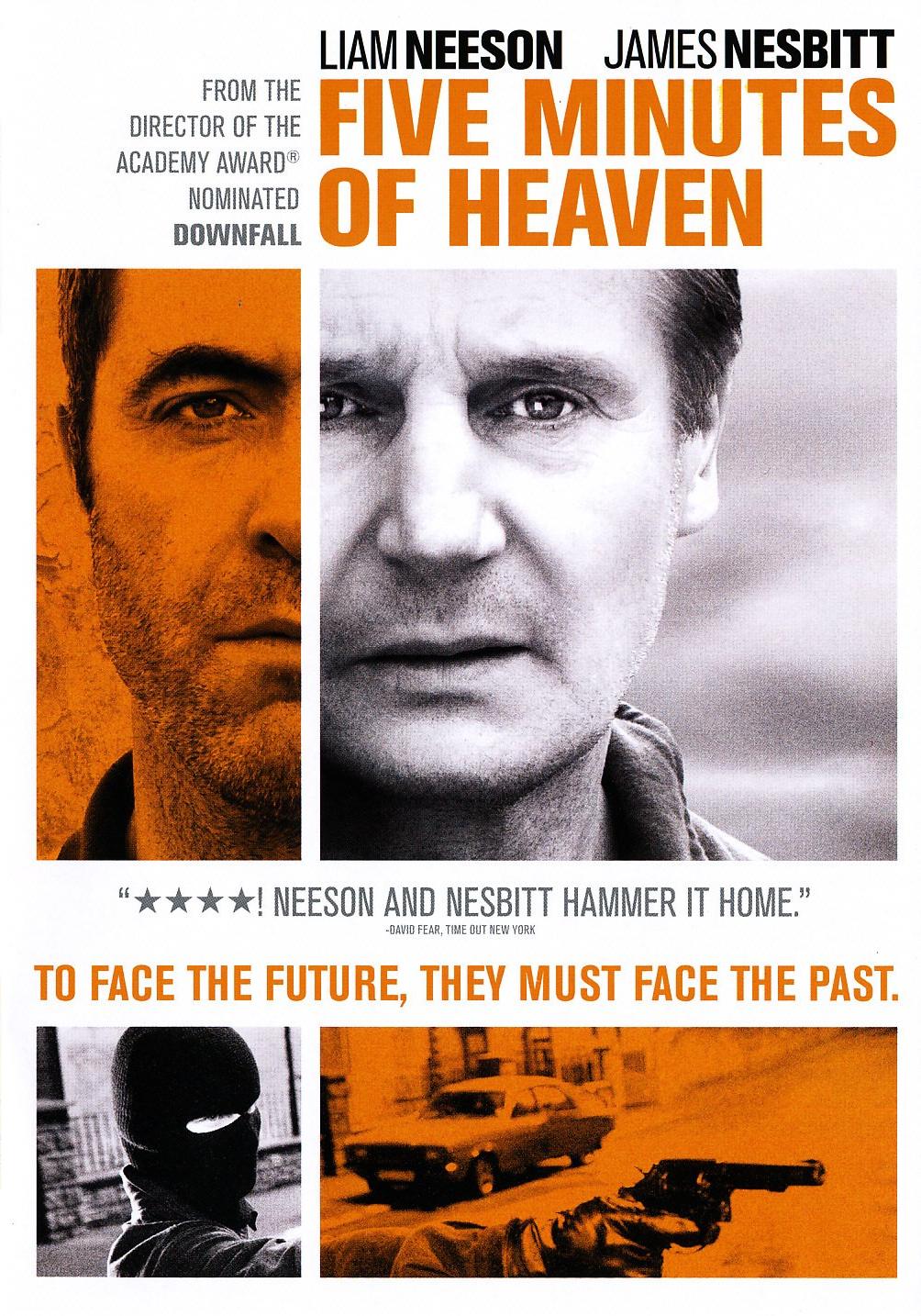
    Five_Minutes_Of_Heaven_(2009)Directed By: Oliver Hirschbiegel

    Written By: Guy Hibbert

    Cast:

    Mark Davison – Young Alistair

    Kevin O’Neill – Young Joe

    James Nesbitt – Adult Joe

    Liam Neeson –Adult Alistair

    Richard Dormer –Michael

    Anamaria Marinca – Vika

    Barry McEvoy – Joe’s Chauffeur

    Richard Orr – Alistair’s Chauffeur

    Language: English                                                          Genre: Drama; Thriller

    Five Minutes of Heaven is a fictional account of what would happen if two people, whose only connection was an act of violence, were thrown together.

    Alistair Little (Mark Davison) is a seventeen year old lad who has been influenced by the UVF (Ulster Volunteer Force) to do something drastic that will right the wrongs done to the Protestants of Ireland, by the Catholics.

    The UVF is loyal to the British Crown and believes in the idea of the United Kingdom. The IRA (Irish Republican Army), which is manned by Irish Catholics, believes in an independent status for Ireland. Both groups have been responsible for much violence in Northern Ireland, which is referred to as ‘The Troubles’.

    Under Little’s leadership, his friends plan to kill a young Catholic man James Griffen, who the UVF intends as a warning to the IRA. Little shoots him down while he’s at home and this is viewed by his 8 year old brother Joe Griffen (Kevin O’Neill). Joe is shell-shocked by the violence and Little is sentenced to twelve years in prison.

    Fast forward many years, a reconciliation project attempts to facilitate a conversation between the two. Little (Liam Neeson) has been working at rehabilitating children who have been pushed into violence and seems self-possessed. Joe (James Nesbitt) on the other hand, is fidgety and nervous.

    The car journey the two make separately are very telling. Joe’s Chauffeur (Barry McEvoy) is unsure of his passenger’s mental state. Joe makes him stop so that he can smoke a cigarette and he keeps making disjointed conversation, attempting to be jovial. He frequently steps back into unwanted memories related to the aftermath of his brother’s murder. Alistair’s Chauffeur (Richard Orr) makes polite and general conversation with Alistair who seems strangely emptied out. There is blankness to his features. It is like he has been deadened by all the violence he has seen.

    Alistair consented to the meeting because he understands that he has no right to ask for forgiveness but that Joe has every right to want to personally confront him. However, Joe does not want reconciliation with someone who destroyed his life and family. He wants to kill Alistair and experience his “five minutes of heaven”. Both want closure. It’s just that they want it differently. Alistair probably wants retribution or some kind of understanding that the past has changed his present and he is now a different person. Joe, on the other hand, hasn’t left the past because the memory of his mother cursing him for not having done anything haunts him.

    Is reconciliation really a possibility post such traumatic experiences? Does a perpetrator really have the right to ask for forgiveness? And what is the price of vengeance? The film throws up very importantly, how far we are willing to be swept away by ideals and beliefs and, how one can be seemingly sane at the face of such an event.

    The deliberate movements of the camera, the editing and the pared down, raw acting throws up in relief all these emotions.

    It is a brief film with quiet yet tense action broken by intense moments. A tightly wound script, it is an important take on the turbulence in Northern Ireland.

  • Kapoor and Sons (2016) #SherylPuthur

    kapoor-sons

    Directed By : Shakun Batra

    Written By: Shakun Batra and Ayesha Devitre Dhillon

    Cast:

    Rishi Kapoor – Amarjeet Kapoor (Dadu)

    Fawad Khan – Rahul Kapoor

    Siddharth Malhotra – Arjun Kapoor

    Ratna Pathak Shah – Sunita Kapoor

    Rajat Kapoor – Harsh Kapoor

    Alia Bhatt – Tia Malik

    Sukant Goel – Wasim

    Amarjeet – Plumber

    Language: Hindi                                        Genre: Drama; Comedy; Romance


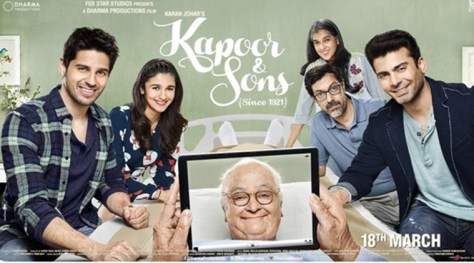
    At the heart of Kapoor and Sons is the idea of family. The need for acceptance, validation and consolation, you require from your immediate family members. The Kapoor family is certainly dysfunctional but then every family is. It’s just a question of degree.

    The characters may seem callous but it is the kind of indifference that sets into any kind of long-term relationship. Which is why when the characters see themselves at the receiving end of such indifference, they act out to gain attention. Be it Dadu (Rishi Kapoor) playing dead, Sunita (Ratna Pathak Shah) throwing tantrums because she feels rejected or Arjun (Siddharth Malhotra) storming out after a family feud.

    Harsh (Rajat Kapoor) feels persecuted by his wife’s demands and alienates her even more – adding to her need to act out. However, it is Rahul (Fawad Khan) who tries to keep the family together. He acts the responsible adult when everyone else seems to be giving in to their infantile side. But he may be the one most splintered on the inside because of the secrets he has to keep.

    In fact, as the story progresses, the characters get more and more unhinged, till the lines between their public appearances and private selves come dangerously close.

    What keeps the film from becoming an absurdist, dark Pinteresque drama is the humour, warmth and the Indian melodrama. Honestly, the latter isn’t a Bollywoodisation rather an inherently cultural pattern, albeit sometimes exaggerated in cinema.

    The catalyst of the film’s action is Dadu, whose heart attack brings the estranged sons – Rahul and Arjun home to Coonor. The two siblings have a complex relationship. Rahul is the successful novelist while Arjun is struggling to find his space as a writer while doing odd jobs. He is jealous of Rahul’s success and the obvious preference his parents seem to have for Rahul.

    There are characters who try vainly to hold on to their safety cloaks of upright behaviour. In fact, the younger characters seem to shield their inner selves more than the older ones. Sunita and Harsh openly argue, even in front of the plumber (Amarjeet) who thinks it’s perfectly alright to comment on their argument. Dadu is too old to care about public opinions and sees no point in it. Which is why, he openly expresses his displeasure, inappropriate humour and so on.

    Maybe, it’s because with your family you should be able to express the unsavoury aspects of your personality. There is also an interesting cast of side characters like Tia (Alia Bhatt), Wasim (Sukant Goel), his brother and others. Tia for instance is this bubbly girl who is fond of both brothers which considering their uneasy relationship is worrisome. She however, just like the other characters has another side to her personality that is not easily apparent.

    The central motif of the film is the family photo that Dadu wants to take. He wants it be titled ‘Kapoor and Sons since 1921’ probably as a reminder that the family is still together. He wants everyone to be together, to be happy and to be present. However, when all players come together for the photo, things fall apart.

    Obviously watch it for the performances by seasoned actors like Rishi Kapoor, Ratna Pathak Shah and Rajat Kapoor. Yet, the performance that stands out is Fawad Khan’s sensitively handled performance of the “perfect bachcha”. He carries the film and could very well find another nomination coming his way, preferably in the Best Actor category. The sibling dynamics are well-portrayed by the lead actors. They are convincing in how they fit into the moulds of older and younger siblings.

    Therefore, one could say the psychological detailing of the script and the masterful direction keeps the narrative tight.


  • Fitoor (2016) #SherylPuthur

    fitoor-trailer-postersDirected By: Abhishek Kapoor

    Written By: Abhishek Kapoor; Supratik Sen

    Cast:

    Aditya Roy Kapur – Noor

    Katrina Kaif – Firdaus

    Tabu – Begum Hazrat

    Mohammed Abrar – young Noor

    Tunisha Sharma – young Firdaus

    Rahul Bhat – Bilal

    Akshay Oberoi – Mufti

    Talat Azmi – Salman

    Lara Dutta – Leena Becker

    Rayees Mohi-ud-din – Junaid

    Kunal Khyaan – Aarif

    Khalida Jaan – Rukhsar

    Ajay Devgan – Mirza Beg

    Sameer Roy – young Salman

    Language: Urdu; Hindi                                               Genre: Romance; Drama

    Abhishek Kapoor’s adaptation of Charles Dickens’ Great Expectations is set in Kashmir. At first, it seems a cinematographic choice but slowly certain themes emerge. The desolate beauty of the landscape, the changes in the season and the almost painful need for beauty and freedom that the characters express comes to us through the land just as it does through the narrative.

    Noor (Mohammed Abrar) meets Firdaus (Tunisha Sharma) when he accompanies his brother in-law Junaid (Rayees Mohi-ud-din) to Begum Hazrat’s (Tabu) mansion. For him she seems like a dream riding a horse, free, imperious. Their relationship from their first meeting emphasises the class divide. He is eventually made her playmate and it is increasingly apparent that he is obsessed with her. Begum Hazrat soon parts them and commands him to become worthy of Firdaus.

    Years later, when Noor (Aditya Roy Kapur) is busy honing his skills at art, he receives an art scholarship from an unknown benefactor and has to move to Delhi. He knows from prior information that Fridaus (Katrina Kaif) is in Delhi as well. So he sees this as an opportunity to better his lot and inhabit her world.

    What becomes central to this romance is the power play between the characters. Begum Hazrat, due to an ill-fated romance tries to take revenge on fate and people by playing Noor and Firdaus against each other. Firdaus, having been trained by her mother, is unpredictable in her affections towards Noor. And it is not just the control the two of them exert on him but ‘fate’ itself seems to be controlling him and forcing him to feel obliged for any baksheesh (alms/bribe) he receives.

    Does the political situation actually figure in the story? It certainly has the socio-economic concerns of Dickens’ novel and strangely enough, the political implications of the land do figure.

    Firdaus is to be married to Bilal (Rahul Bhat), the next governor in Pakistan. And this is where the line from the trailer enters – “Doodh maangoge toh Kheer denge, Kashmir maangoge toh cheer denge” – If you ask for milk, we will give you pudding, if you ask for Kashmir we will give you a thrashing.

    Noor sees Fridaus as Kashmir – pure and beautiful. Then if Bilal is Pakistan, is he India? Or is he also Kashmir? He after all admits to be living in the past. Firdaus for him represents a way of life in Kashmir that is open only to those who have the wealth to remain unconstrained. But there is a fallacy in this, because Begum Hazrat controls Firdaus so everything has become tainted.

    Most of the people Noor meets at Delhi are Kashmiri in origin. And while he feels slightly overwhelmed in the beginning with the grandeur, he fits in. If anything, it becomes his space. Aarif (Kunal Khyaan) does not wish to return to Kashmir and neither do most of the others because for all its beauty, they would choose freedom instead. Rather than hearing stories of a Kashmir that was liberal, they would rather live liberated lives.

    Most of the characters live in the past. Begum Hazrat, unable to find closure, continues to live in a past of abandonment. Salman (Talat Azmi), Bilal’s father, also never forgets Hazrat who was once his fiancée despite the fact that she left him.

    Having seen a previous adaptation of Great Expectations, there was personally no element of surprise but the film is nevertheless a good screen adaptation. All the characters were well cast; in fact, the younger selves of Noor, Firdaus, Hazrat (Aditi Rao Hydari) are uncannily perfect. Tabu in fact has the done the dubbing for Aditi Rao Hydari with probably some pitch modifications to sound younger. Thus it retains authenticity in the film. However, Ajay Devgan was wasted in the film. His character of Abel Magwitch in Great Expectations had so much more to it. And yet it just wasn’t explored in this film. He was downsized to a plot device. The ending of the film, is tame to put it mildly. The whole film expects the narrative to reach a satisfying crescendo and that does not happen.

    The artwork and the cinematography were stirring; and the music and dialogues – poetic. The title Fitoor means obsession/ passion/ insanity and it is most apparent in Noor and Hazrat because the others hide it better. Yet it comes out in the restrained violence of Bilal; the longing in Salman and the loss in Junaid.

    Note: I was pleasantly surprised to see a friend and fellow actor Sameer Roy in the film. He plays a small role, that of the young Salman, but it was great seeing him in Fitoor.

  • De-Lovely (2004) #SherylPuthur

    de-lovely

    Directed By: Irwin Winkler

    Written By: Jay Cocks

    Cast:

    Kevin Kline – Cole Porter

    Ashley Judd – Linda Lee Thomas/Porter

    Jonathan Pryce – Angel Gabriel

    Kevin McNally – Gerald Murphy

    Sandra Nelson – Sara Murphy

    Allan Corduner – Monty Woolley

    Peter Jessop – Diaghilev

    Peter Polycarpou – Louis B. Mayer

    Keith Allen – Irving Berlin

    Language: English                                                            Genre: Musical Biopic


    The scene opens and it looks suspiciously like a stage production, the lights slowly coming on, one after the other, to reveal an old man seated near a piano. Another person, dressed in a suit calls him out and he wheels himself out. The man now seated near the piano ready to play the music is Cole Porter and we realise that the old man in the wheelchair was Cole Porter as well.

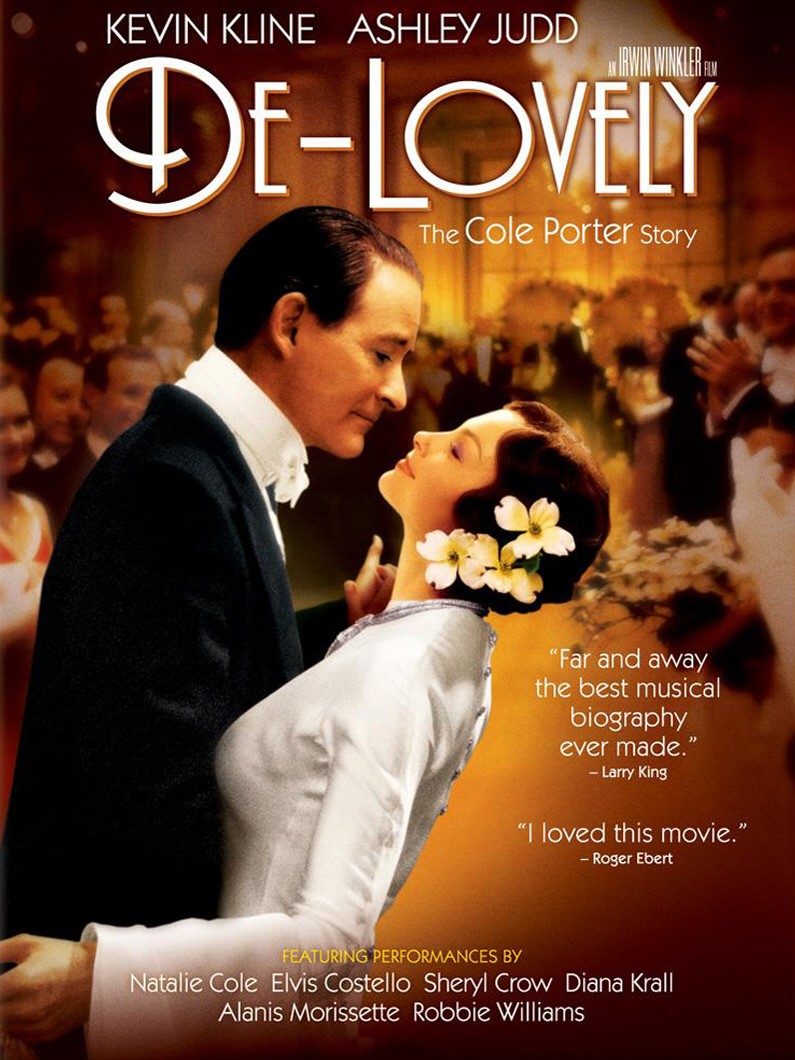
    De-Lovely is a musical biography on Cole Porter that portrays his life, marriage, other relationships both professional and personal, and his career alongside his music. We see Cole Porter (Kevin Kline) meeting Linda Lee (Ashley Judd) and deciding to marry. There’s was an advantageous marriage because Linda, much like a manager does everything to promote his career. She believes implicitly in his music and his music’s ability to move people. She also uses the trajectory of his career to take him away from relationships she does not approve.

    It is a strange portrait of a marriage, the usual ups and downs but also their rather particularly different dynamics, with his interest in men and her tacit acknowledgment of it. She wants him to be discreet but he is too flamboyant in his affections. Yet he cares deeply for her and she is in many ways central to his music.

    The film is like a meta-narrative with the older Cole Porter feeling the need to portray things differently or finding the act of watching his life played out before him too disturbing. The director – Angel Gabriel (Jonathan Pryce) however, categorically tells him that he cannot interfere because his story will be reinterpreted based on what others feel. Also, once a story is in the public domain (and sometimes even when it’s not) one can take artistic liberties with a narrative. This is true of the film and every biopic.

    However, while making the biography a review by the older self of the real-life persona is a refreshing take, it makes it hard for the viewer to relate to the characters on the screen because of the alienating effect of seeing the older Cole Porter questioning his life. It is nevertheless, more realistic in its portrayal than his contemporaries who romanticised his story. In fact, there is a scene in the film wherein Cole and Linda watch a private screening of Night and Day and wryly comment on how sugary a portrayal it is and yet how it is flattering to have yourself immortalised as Cary Grant.

    One must also remember Brecht who spoke about how the alienation effect in theatre was necessary to keep the audience from being sucked into the story. Instead, they should reason and question what they are seeing. So also here, while watching De-Lovely one can’t help but ponder over their relationship and wonder why Cole and Linda chose to be with each other. It is thus a unique portrayal of a person’s life through their own eyes and their music.

    De-Lovely has Cole Porter’s music performed by contemporary singers who play the role of club singers and actors in his productions, it shows how contemporary and popular his music still is.

    A special mention: the make-up. It is very realistically done and shows the aging of the characters really well.

  • The Danish Girl (2015) #SherylPuthur

    danish girl

    Directed By: Tom Hooper

    Written By: David Ebershoff; Lucinda Coxon

    Cast:

    Eddie Redmayne – Lili Elbe/ Einar Wegener

    Alicia Vikander – Gerda Wegener

    Matthias Schoenaerts – Hans Axgil

    Ben Whishaw – Henrik

    Amber Heard – Ulla

    Sebastian Koch – Dr. Warnekros

    Language: English                                                   Genre: Biographical Drama


    The film opens with the hauntingly empty yet darkly green Danish landscape. A series of lonely yet similar trees mark the spot and later feature in varying moods in the paintings of Einar Wegener (Eddie Redmayne). His wife Gerda (Alicia Vikander) on the other hand, finds it astonishing that he can paint the same landscape over and over again. She prefers painting portraits. Whatever they choose however, is revelatory of how they see; either introspective or else the female gaze.

    Painting is the central motif of the film. It is also a metaphor of creation and storytelling. Just like how two colours are mixed on a palette to create a new colour and how a dab of fresh paint can be fused into a painting – the story similarly unfolds, slowly, deftly, leading to that moment of poignant awareness that you have grasped what the narrative is about.

    Einar poses for his wife in stockings, holding a dress against his body because her model failed to turn up. For Einar, it is a strange sensation to watch how the clothes feel so beautiful against his skin. What starts as just a momentary experience becomes more and more the centre of their marriage. He secretly wears his wife’s nightdress and while perturbed, she encourages his exploration of sexuality by taking on a dominant and supposedly masculine role in their lovemaking. The female Einar – Lili Elbe, who Gerda introduces as Einar’s cousin begins to step into the public space more often. Then the barriers separating the private space from the public space, begin to come crashing down.

    The ebb and flow of the narrative – the growing consciousness and the crashing reality is accompanied by Alexandre Desplat’s music which lends it a stirring quality like breakers on a desolate yet verdant coast.

    The film portrays a different idea of marriage and poses a hard question – can you love someone so much that you would be willing to aid them in their journey of self-awareness, even it if erases you?

    Alicia Vikander gives a powerfully moving portrayal of a woman who supports her husband’s need to be a woman even though as she puts it she “needs her husband…and I need to hold my husband.” Eddie Redmayne as Einar/Lili is devastatingly vulnerable in his exploration of the psyche of a person who realises that they are not living their true self. The film may seem lengthy to some and probably melodramatic in its portrayal but it is still a powerful exploration of identity and sexuality.

    Sexuality is a misunderstood concept even today, though the very real possibility of being forcibly locked up because you’re a threat does not exist anymore.

    The Danish Girl portrays how people are quick to classify something as abnormal and then attempt to suppress it, even harshly if required. It brings out also, the fragility of our identities. How a certain kind of realisation can change how we perceive things and how we are perceived. For instance, Einar in the beginning, dressed as a man walking out, is not noticed, but a slightly feminised version of his attire and mannerisms leads him to be assaulted on the streets. But what has been acknowledged in the narrative is the role of people like Hans (Matthias Schoenaerts), Ulla (Amber Heard) and Henrik (Ben Whishaw) who are sympathetic of another’s exploration probably out of an understanding of their frailty.

    The unsettling question is how far have we chosen our own identity and how far would we take that exploration?

    Related text: Kathleen Winter – Annabel

  • Wazir (2016) #SherylPuthur

    wazir

    Directed By: Bejoy Nambiar

    Written By: Vidhu Vinod Chopra; Abhijat Joshi

    Cast:

    Farhan Akhtar – Danish Ali

    Amitabh Bachchan – Pandit Omkarnath Dhar

    Aditi Rao Hydari – Ruhana Ali

    Manav Kaul – Yazaad Qureshi

    Anjum Sharma – Sartaj

    Neil Nitin Mukesh – Wazir

    John Abraham – S. P.

    Language: Hindi                                                                  Genre: Action Thriller

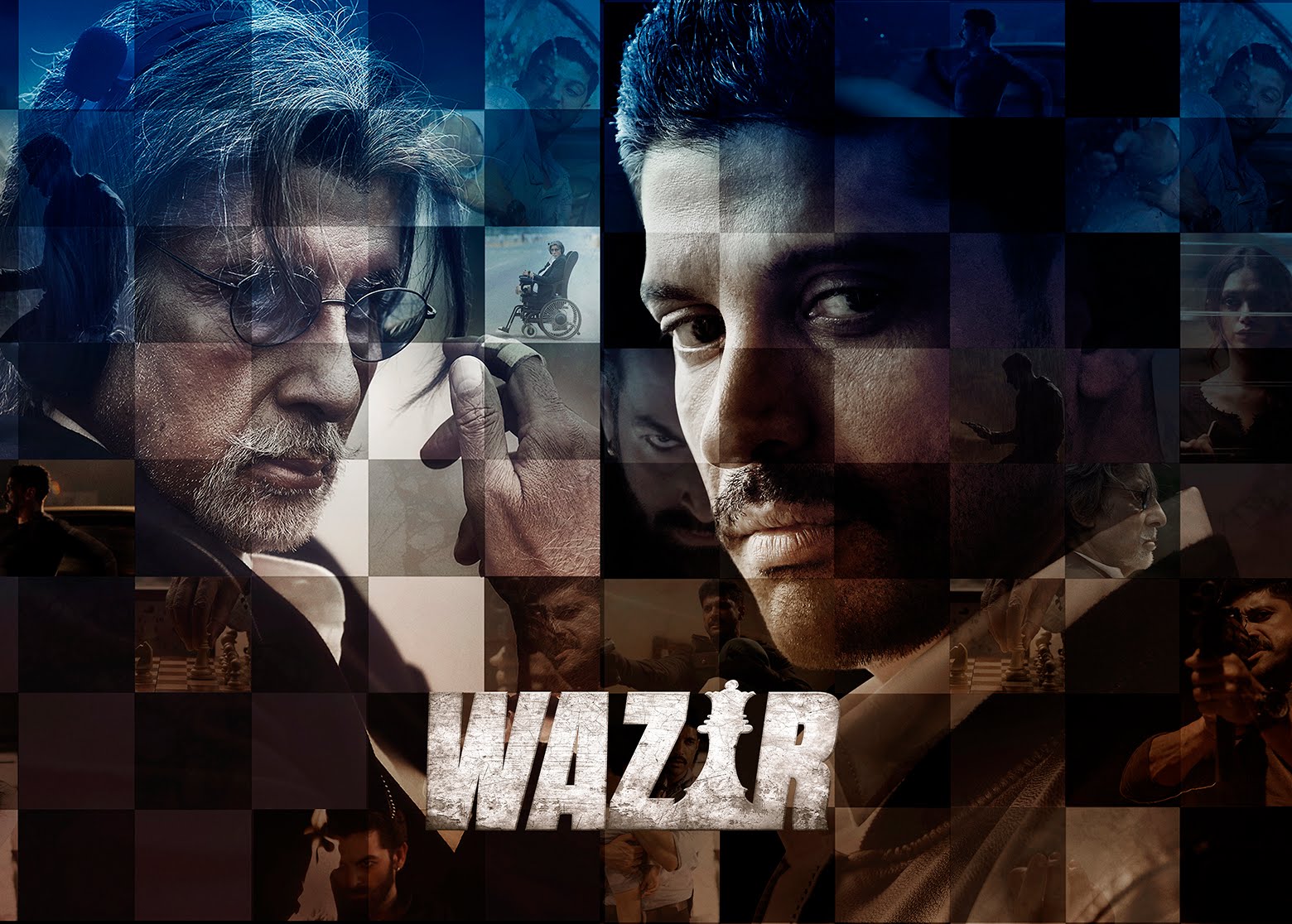
    Wazir is an action thriller based on a story by Vidhu Vinod Chopra. Set in Delhi but tied up with Kashmir, the film follows an ATS officer Danish Ali (Farhan Akhtar) as he tries to uncover the links between a terrorist organisation and the politician who is secretly funding them. Things very soon spiral out of control and professional pursuits become personal vendettas when his daughter dies in the crossfire. Estranged from his wife Ruhana (Aditi Rao Hydari) and debilitated by grief, he befriends a wheelchair bound chess master Pandit Omkarnath Dhar (Amitabh Bachchan).

    Chess is central to the narrative and the metaphors of chess colour every aspect of it. The scenes where the, at first detached Danish is defeated by five year olds are fun to watch. They are a pressure-valve from the rather dark narrative. While these chess games make Danish and Omkar close friends, they also create an empathetic space wherein both seek understanding and closure as fathers because they are beset by a sense of impotence due to fate’s manipulations.

    The film is a meta-narrative; a story within a story or maybe many stories because every character seems to be presenting a story and strangely enough each story is like a move in a chess game – calculated. The characters then become like pieces on a chess board, some also try to be the players. A little fore knowledge of chess may make certain things apparent like how the Elephant can by castling defend the King or how the Wazir (Bishop) can take on the powers of a Queen. Deciphering this make it something to chew on.

    One has to draw parallels with Suniel Shetty’s character in Main Hoon Na who says something to the effect of ‘all wars are personal’ – this is central to the film.

    However, an analogy for the film is that of the soufflé that didn’t rise. It is delectable and most would devour their portions but it lacks something. A short story is a tightly packed narrative and since a film cannot be so compact, it needs to be more expansive. Yet at times the film needlessly explains itself. That makes it a little tedious to a viewer.

    The cinematography is beautiful but the editing could have been tighter. John Abraham’s character is wasted in the film but Sartaj (Anjum Sharma) forms a good foil to Danish’s impetuosity. Danish is a problematic character because he charges blindly into a situation and his reaction at the penultimate moment of the film is incongruous in terms of human behaviour. This could be seen as a flaw in the narrative structure.

    The characters are on the whole well-crafted with Omkarnath Dhar standing out as the showman and Yazaad Qureshi (Manav Kaul) as a pivotal character. A scene that is testament to Kaul’s abilities is when he calmly sits down and rolls up his sleeves, all the while keeping a civilised appearance and calmly questioning his daughter. It leaves a knot in the stomach that threatens to overwhelm the viewer’s composure.

  • The List: Films on Food #SherylPuthur

    We should look for someone to eat and drink with before looking for something to eat and drink – Epicurus

    Food is denial. Food is pleasure. Food is honest. Food is sinful. Food is expression. There are many ways we label what we eat and would like to eat. So closely connected with bodily functions, it has been rejected, upbraided and worshipped. So presenting, a collection of films that excite the sensory organs – Films on Food.

    Food is the near-perfect beginning to a New Year. The films are placed in the order of release, with the oldest first. It is the reader’s decision as to what makes their list and what doesn’t. The table has been set, please enjoy your meal!

    Babette’s Feast (1987)

    babette's feast

    Director: Gabriel Axel Screenplay: Gabriel Axel Story: Karen Blixen

    Gabriel Axel’s adaptation of Karen Blixen’s short story Babette’s Feast has fable-like qualities. Set in a desolate landscape, the Jutland Coast, it narrates the story of two elderly sisters Martine (Brigitte Federspiel) and Philippa (Bodil Kerr), the daughters of the deceased puritan pastor of the village. The story delves into their past to explain how they came to employ a French housekeeper Babette (Stephane Audran). The story comes a full circle with Babette’s celebratory feast in honour of the birth anniversary of the pastor. The feast juxtaposes a fine food connoisseur against the simple folk of the pastor’s austere sect, who believe extravagant food is sinful. There is displayed in the film, paternal selfishness and a loss of the original idea of what the religion was to stand for but the beauty of the film is that it does not condemn but accepts. The meat preparations may seem unpalatable to vegetarians but there is so much more to it than just that. Pope Francis has claimed this to be his favourite film.

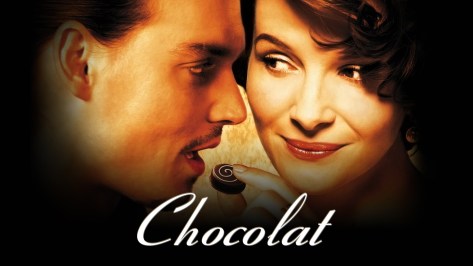
    Chocolat (2000)
    chocolat

    Director: Lasse Hallstrom Screenplay: Robert Nelson Jacobs Story: Joanne Harris

    Set in a quiet French town that believes in tranquillity especially during the season of lent, the film follows Vianne (Juliette Binoche) and Anouk (Victoire Thivisol), who like the wily north wind blow surprising changes into the lives of the townspeople. The film is rather obviously about chocolate but also living life as opposed to seeing the time on earth as only a preparation for the heavenly abode. Life is not for flagellation alone but pleasure as well.

    The film sells the idea that chocolate could be the answer to every ailment and the viewer willingly buys it because it is so exquisitely presented.

    For more, read my full review of Chocolat.

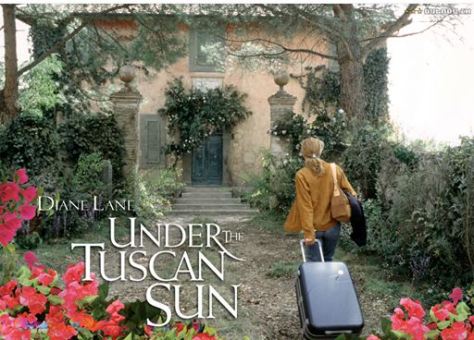
    Under the Tuscan Sun (2003)
    Under the tuscan sun

    Director: Audrey Wells Screenplay: Audrey Wells Story: Frances Mayes

    Most would catalogue this movie into films on Travel. While it is true that it is about travelling to Tuscany, it is also a film about self-discovery.

    Frances Mayes (Diane Lane), a writer and book critic, goes through a painful divorce, battling insecurity and lack of self-worth. A gift by her friends sees her on a trip to Tuscany. There, she makes the impulsive decision of buying an Old Italian villa because she feels it’s a sign. In the process of restoring the villa, she begins to heal and more importantly, build valuable relationships, with the workers, her neighbours, potential love interests and Katherine (Lindsay Duncan), the enigmatic English female actor who doles out advice by the Great Fellini and vociferously defends vanilla ice cream’s power ‘to change fate’. Traditional Italian families still believe in the sit down dinner because as Placido (Roberto Nobile) points out “it is unhealthy to eat alone.” Sharing a meal and having someone to cook for is the warmest idea of community.

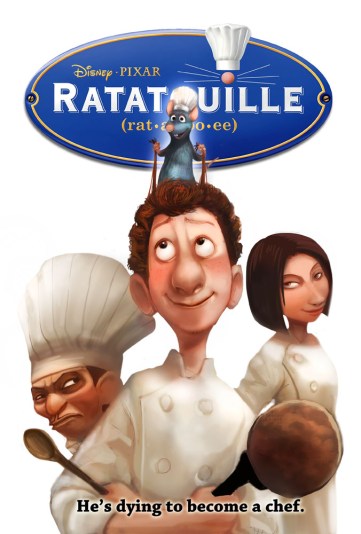
    Ratatouille (2007)
    sotm_ratatouille_movie_poster_by_froggiechan-d3f89tr

    Director: Brad Bird Screenplay: Brad Bird Story: Jan Pinkava; Jim Capobianco; Brad Bird

    Remy (Patton Oswalt) is a rat who has a wonderful sense of smell and the creative mind for cooking. Of course, the chances of a rat being allowed to cook in a restaurant are next to impossible, which is why a chance relationship with Alfredo Linguini (Lou Romano) the garbage boy, results in a partnership that lets each have what they want. Throw in a couple of short-sighted avaricious villains, a frightening sallow-faced food critic Anton Ego, voiced by Peter O’Toole and – Bon appétit!

    The signature line of the film, in Chef Gusteau’s words – Anyone can cook!

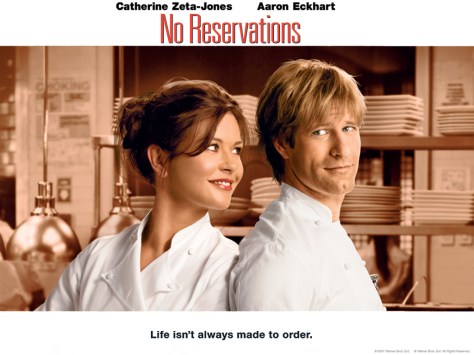
    No Reservations (2007)
    Aaron_Eckhart_in_No_Reservations_Wallpaper_6_1024

    Director: Scott Hicks Screenplay: Carol Fuchs; Sandra Nettlebeck

    No Reservations is about two chefs who end up working in the same kitchen to interesting results. Kate Armstrong (Catherine Zeta-Jones) is a fastidious head chef of a popular restaurant. The untimely death of her sister makes her the guardian of her nine-year old niece Zoe (Abigail Breslin). From being someone who doesn’t allow people and relationships to interfere with her work she now has to deal very closely with grief and more importantly, her niece’s grief.

    Added to that disturbing state of affairs, is the entry of the new sous-chef her boss Paula (Patricia Clarkson) hires. Nicholas Palmer (Aaron Eckhart) is a carefree chef who is popular in his own right but wishes to work under Kate and hence joins the restaurant. Kate is suspicious of his motives but slowly begins to warm to him. The rest of the film follows the characters as they journey towards a sense of completeness. While not particularly moving, the obsessive love for cooking displayed by Kate is awe-inspiring. Especially her early morning visits to get the best ingredients for her dishes, making it a point to choose them herself.

    Julie and Julia (2009)
    julieandjulia

    Director: Nora Ephron Screenplay: Nora Ephron Story: Julie Powell; Julia Child; Alex Prud’homme

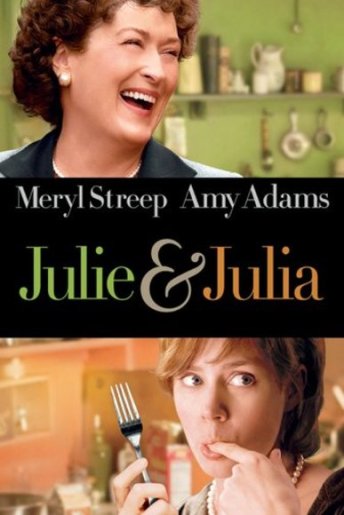
    Julie and Julia is based on two true stories – that of Julia Child and the other of Julie Powell. They have both moved to a different place because of their husbands work. While Julia (Meryl Streep) happens to love France, Julie (Amy Adams) hates her new home. Both women find themselves in a rut professionally, and use food to find themselves – one as a cook and the other as a writer. What is really beautiful about the film is that Julia Child’s journey which took place post World war helps Julie Powell find herself as she decides to make all of Child’s recipes and blog about it. The relationships of the characters with each other even through space and time and most certainly with food, defines the film.

    Stanley ka Dabba (2011)
    Stanley-Ka-Dabba-Movie-48982_65

    Director: Amole Gupte Story: Amole Gupte

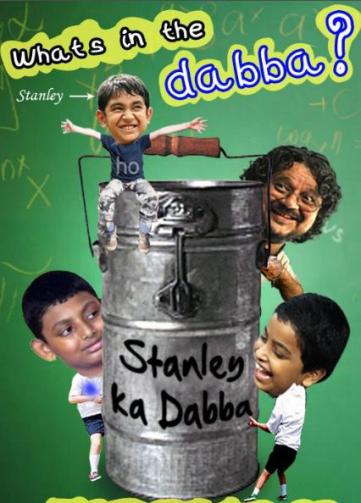
    Stanley ka Dabba is a children’s film with heart. It says so much but does so without being preachy. A sense of nostalgia coupled with a vague sense of unease accompanies the viewer as they follow Stanley’s story. The film opens with Stanley (Partho Gupte) coming rather early to school with marks that look suspiciously like bruises. However, Stanley is a storyteller who can spin a yarn about just anything and that makes him well-loved. He doesn’t carry a dabba (tiffin) to school so one begins to suspect the state of affairs at home. One poignant scene shows him filling his stomach with water because he has no food.

    There is also a teacher Babubhai Verma (Amole Gupte) nicknamed Kadoos (grumpy) who also does not carry a dabba but eats from others. He steals from the tiffins of his colleagues or else bullies students into sharing their food. His mannerisms are disturbingly that of a child abuser and within the narrative an important metaphor.

    Food is central to the film but it is about the simple meal a child would carry to school in a dabba. It states the value of a home cooked meal.

    Salt and Pepper (2011)
    salt-n-pepper-look

    Director: Aashiq Abu Screenplay: Syam Pushkaran; Dileesh Nair

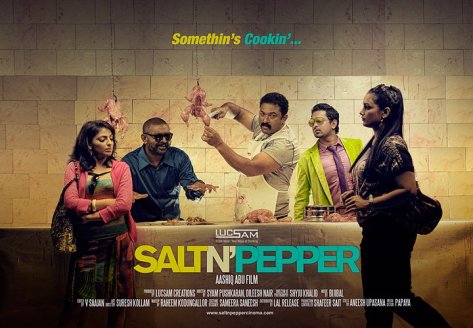
    The title of the film is a pun on food and age. It follows Kalidasan (Lal), a middle-aged archaeologist who is a food connoisseur. His closest relationship besides his work and food is with his cook Babu (Baburaj). Even his nephew Manu Raghav (Asif Ali) loses precedence in front of these. A missed call by Maya (Shweta Menon), a dubbing artiste, leads to a misunderstanding between Kalidasan and her. Eventually, their shared love for food becomes the foundation stone for a telephone friendship. The conversations follow the histories of various dishes especially Joan’s Rainbow cake. Their own romance and that of the secondary couple display classic elements of Shakespearean drama. The fact that love has no age makes this film comfort food.

    Ustad Hotel (2012)
    ustad

    Director: Anwar Rasheed Screenplay and Dialogues: Anjali Menon

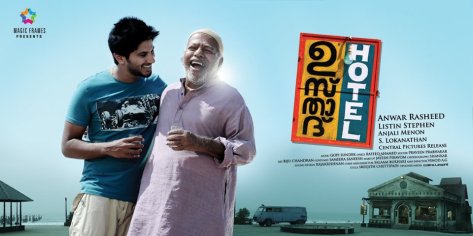
    Ustad Hotel is Faizi’s story. The beauty is, Faizi’s (Dulquer Salman) story starts long before he was born. His one defining memory is shown to be, his grandfather Kareem ikka (Thilakan) feeding baby Faizi sweet milk. Food in all its forms makes up this movie. Be it the conversations on love and philosophy over a cup of sulemani chai between Kareem ikka and Faizi, or that being a good cook is about satisfying the heart.  Conversely, there is a stigma attached to becoming a chef in the rich orthodox Muslim community. Chef = the guy who makes biryani at a feast. Hence, it’s not an honourable profession. It makes Faizi a poor match for Shahana (Nitya Menen). The film is then about changing stereotypes and fixed notions of what your destiny is.

    The film with its evocative camera work and vivid dialogues brings forward a mouth-watering array of Calicut cuisine.

    The Lunchbox (2013)
    The_Lunchbox-410999655-large

    Director: Ritesh Batra Screenplay: Ritesh Batra

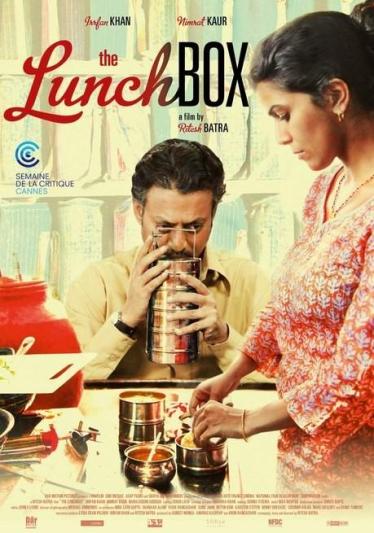
    Originally planned as a documentary on the Dabbawalas of Mumbai, it developed into a love story between a cantankerous office worker and a house wife. Saajan Fernandes (Irrfan Khan) is due for retirement and has shut himself post the death of his wife. Ila (Nimrat Kaur) is trying to regain her husband’s interest in her by making delicious lunches for him. However, the lunchbox, in a one in a million chance gets wrongly delivered to Saajan. On realising her mistake, Ila writes a note explaining herself and that starts off an exchange of experiences through notes, accompanied with delicious lunch.

    The film does a lot of things differently. It shows a connection being drawn through the old fashioned means of writing a letter. It is a portrayal of loneliness and the need for validation from another human being.

    Chef (2014)
    Chef-2014-full-movie-hd-online

    Director: Jon Favreau Screenplay: Jon Favreau

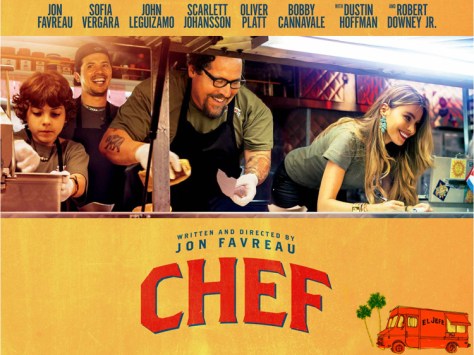
    A head chef Carl Caspar (Jon Favreau) in a fine dining restaurant drags his reputation through the dirt after engaging in an online slingfest with a popular food critic who pans his cooking. Post his rather public meltdown, he walks away from the restaurant and finally agrees to his ex-wife Inez’s (Sofia Vergara) decision to start a food truck. The road trip that he sets on is as much about finding his creative centre as it is about mending his dented relationship with his son Percy (Emjay Anthony).

    The film abounds in clichés but certain things set it apart, for instance his relationship with his ex-wife who is still very supportive. The surprise element like the legendary chemical X is Robert Downey Jr. who plays Marvin, Inez’s ex-husband. He literally lights up the screen. And yes, the food. If it was humanly possible to put your hand through the screen and grab a cubano you would do it. It is your junk food fantasy film.

     

  • Bajirao Mastani (2015) #SherylPuthur


    Bajirao-Mastani-wallpaper-3

    Directed By: Sanjay Leela Bhansali

    Written By: Prakash Kapadia

    Cast:

    Ranveer Singh – Bajirao I

    Priyanka Chopra – Kashibai

    Deepika Padukone – Mastani

    Tanvi Azmi – Radhabai

    Vaibbhav Tatwawdi – Chimaji Apa

    Milind Soman – Pant

    Aditya Pancholi – Pratinidhi

    Ayush Tandon – Nanasaheb/ Balaji Bajirao

    Mahesh Manjrekar – Chhattrapati Shahu

    Irrfan Khan – Narrator

    Language: Hindi; Marathi                       Genre: Action; Romance; Drama

    Bhansali’s Bajirao Mastani is a true love story of epic dimensions brought out from the shadows to which history has confined it to appease powerful yet blinkered mindsets.

    Bajirao (Ranveer Singh) is a young warrior of an illustrious lineage who is elected to the office of Peshwa in the Maratha Empire despite his youth, because of his breadth of vision and intelligence. Willing to take risks and making impulsive decisions, he embarks on several successful military campaigns. While not accompanied by his wife Kashibai (Priyanka Chopra), her devotion to him is his strength.

    It is the impulsive campaign to Bundelkhand that brings Bajirao face to face with Mastani (Deepika Padukone), a princess of Bundelkhand. He falls in love with her but realises that a union between them is unlikely so he returns, pushing away thoughts of her. Mastani, however, takes a particular act of his as a sign and follows him to Pune. It is here that all the subterfuge against this unacceptable union begins. It is helmed by Bajirao’s mother Radhabai (Tanvi Azmi) and her son Chimaji Apa (Vaibbhav Tatwawdi).

    It is almost frightening to witness how fanatical people can be about ritual purity, religion and the ilk. It is ironical too because the people oppose the Mughal Empire and Muslims but use Urdu-influenced Hindi in official and personal contexts. A significant line in this context is by Bajirao when he said (it’s not a verbatim quote) that yes he fights against the Mughal Empire because he is against them and what they do, not their religion. This is a telling statement in the current socio-political situation as people get blindsided by belief systems that have almost hypnotic qualities. The film is thus subtly critical of the times.

    However, what was a letdown is that film focuses on the interior intrigues of Shaniwar Wada (Peshwa’s house) as opposed to the Maratha Empire. The character of the Pratinidhi (Aditya Pancholi) thus becomes a little underused because there were many political intrigues that involved the Peshwa and him in opposing factions.

    Strangely enough, for a movie titled Bajirao Mastani, Mastani seems to be in the shadows and Kashibai is much more prominent. The filmmaker is sympathetic to Kashibai’s plight because she is the simple-hearted woman who finds her faith in Bajirao shattered by the entry of another woman. She believed that he could never do anything wrong and was a moral, upright man. One of the opening sequences, show her in conversation with her friend whose husband was executed by Bajirao for spying against him. It is Kashibai’s vehement refusal to accept any slight against her husband that makes the scene poignant.

    It is then fitting, that a woman like Mastani, whose story has frequently been the focus of erasure or sidelining by forces then and now, should still be cloaked in mystery. Bajirao-Mastani’s love story is affecting because even if the orthodox society of his times chose to see her as his mistress, he saw her as his lawfully wedded wife and did everything to give her and their son, equal rights. Their love story in the film hasn’t been given much time to develop, say unlike the romance in Hum Dil De Chuke Sanam. This could be a bit of disappointment but then again, it is a film for the 21st century audience.

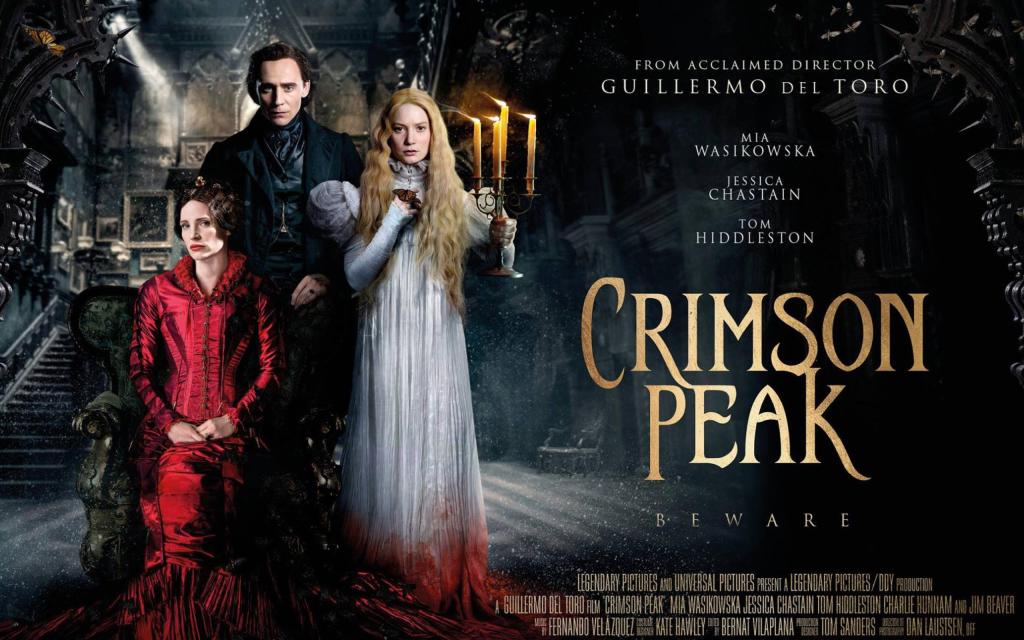
    Interestingly, the film posters give the first clues about the portrayals in the film – the left side of any image is seen as less eye-catching because generally humans see the right side as more dominant. So it is appropriate then that Kashibai is to the left of the viewer, however, her image is more forward-positioned. Mastani is appropriately to the right, yet her image is withdrawn from the viewer’s gaze. Bajirao’s is a centred image, very squarely placed – like someone whose position in history cannot be shaken.

    Bajirao’s relationship with Kashibai is eloquently played out by the actors. Their marriage is based on friendly camaraderie and shared confidences. Nevertheless, their intimacy plays out in a rather traditional manner with Kashibai being the recipient of her husband’s desire. On the other hand, Mastani, probably because of her experiences as a warrior, is more straightforward about her feelings and passionate in her expression.

    The film performance-wise and casting-wise is impeccable. The casting of Milind Soman as Pant was a refreshing change and his interactions with Bajirao have a drawing power to them. Even the interactions between Radhabai and Kashibai are noteworthy and reveal the extent of their filial devotion. All the characters hold their own in the narrative.

    And it is Ranveer Singh’s finest performance to date. He is Peshwa Bajirao in every frame, though the song Malhari is a little discomfiting.  It is a great listen but if he was Bajirao in every frame, in this song he was more of a controlled Ranveer Singh. Pinga however, is actually brilliant, so pay close attention to the lyrics.

    A film made for modern audiences; it may seem slightly fast-paced in terms of narrative but still possesses a well-meshed screenplay and flawless camera-work with all the grandeur of a Bhansali film.