Month: October 2015

  • Chocolat (2000) #SherylPuthur

    chocolat

    Directed By: Lasse Hallstrom

    Written By: Joanne Harris; Robert Nelson Jacobs

    Cast:

    Juliette Binoche – Vianne Rocher

    Victorie Thivisol – Anouk Rocher

    Alfred Molina – Comte de Reynaud

    Judi Dench – Armande Voizin

    Hugh O’Conor – Pere Henri

    Lena Olin – Josephine Muscat

    Peter Stormare – Serge Muscat

    Johnny Depp – Roux “river-rat”

    Language: English                                                          Genre: Romance-Drama

    Chocolat opens with a beguiling fog that slowly reveals a quaint French village atop a hill, surrounded by walls, looking much like fort. The fog seems reminiscent of the steam that surrounds a vessel on the stove, which you brush aside to continue with your creation. What you discover is that food, in every manifestation (even metaphorical), is present in the film. Food and its close associate denial.

    Set fifteen years after the Second World War when the world was recovering, yet hadn’t quite found its joie de vivre, the story follows a young chocolatier and her daughter who arrive in this village that is beginning its Lenten period of fast and abstinence. It is a village that believes in tranquillity and Vianne (Juliette Binoche) and Anouk (Victorie Thivisol) destroy it by being different.

    The Mayor of the village Comte Reynaud (Alfred Molina) both practises and enforces moral austerity on the people. Vianne’s open flouting of the Lenten rules by opening a chocolaterie, not attending mass and flaunting her unwed mother status, leads him to a covert operation of ostracising her from the community.

    He exercises ideological control over the villagers by editing the Lenten sermons of the village priest Pere Henri (Hugh O’Conor). It would be folly to see him as a cardboard villain because the irony is that he believes that he is justified and doing it for the good of the people. He is also quite the gentleman and is actually shocked at the seamier side to people’s lives such as when he finds out that Josephine (Lena Olin) is actually being beaten by her husband Serge (Peter Stormare) and hence left him.

    The film thus critiques the practise of being morally right and quick harsh judgement. It also presents how society ensures that people follow the norms laid out by inflicting mental harassment. In this it deviates harshly from true Christian principles of accepting everyone, of not creating hierarchies of morality and of community welfare. It thus makes religion un-enjoyable.

    Religion is about joy but people are quick to assume that flagellation of the self will make one superior. One can notice that those who do this – remaining austere by force have no joy and are actually grappling with dark emotions. It seems dark all the more because they are unable to forgive themselves for possessing it.

    The confessional then becomes an important motif in the film; some being forced to enter it on the assumption that by just going through the motions of it, it will result in miraculous effects. But most villagers congregate there to confess that they felt pleasure.

    Pleasure is given a lot of bad press but there is nothing wrong with feeling pleasure. Eating good food, living life on your terms does not make one a sinful hedonist. (If you want to get a glimpse of hedonism, watch The Libertine – it documents the life of the Second Earl of Rochester). For some reason, people correlate more misery with better chances of going to heaven. This is why Pere Henri’s Easter sermon about the humanity of Jesus Christ as opposed to his divinity makes sense. He lived, ate, drank, had friends, yet people brush that aside and focus only on the forty days of fast and the agony on the cross.

    So my take back from the film would be this quote – “We can’t go around measuring our goodness by what we don’t do, by what we deny ourselves, what we resist and who we exclude. I think we’ve got to measure goodness, by what we embrace, what we create and who we include.”

    After all, once you understand and respect pleasure, you can be forgiving and open-minded. Pleasure, correctly understood, is liberating.
  • A writer #SherylPuthur

    Soft sunlight

    Sheets of paper

    Warm coffee

    And a smudgy pencil

    – it makes my day.


    I scribble I doodle

    I fill the pages.

    I sip the coffee

    and bite into the chocolate

    – the crushed cocoa melts.


    I wonder I dream

    I illustrate the scenes.

    My characters move

    they breathe, they feel

    – I am their God, I hold their strings.


    I’m not heartless

    or withdrawn.

    I’m involved, I feel

    They feel what I feel

    – A literary mirror to me.


    I write I read

    I cut I erase

    I experience a world

    far brighter than mine

    – A portal to another life.

  • Thank You for Smoking (2005) #SherylPuthur

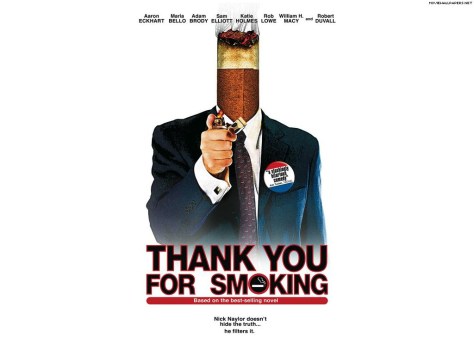
    Thank-You-For-Smoking-thank-you-for-smoking-547315_1024_768

    Directed By: Jason Reitman

    Written By: Christopher Buckley

    Cast:

    Aaron Eckhart – Nick Naylor

    Cameron Bright – Joey Naylor

    Katie Holmes – Heather Holloway

    Maria Bello – Polly Bailey

    David Koechner – Bobby Jay Bliss

    William H. Macy – Senator Ortolan Finistirre

    Robert Duvall – Captain; Founder of The Academy of Tobacco Studies

    K. Simmons – “B.R” Nick’s boss

    Language: English                                                           Genre: Comedy-Drama

    Thank You for Smoking is an adaptation of a novel of the same name. And as its name indicates it is satirical and has a lot to say about smoking.

    Nick Naylor (Aaron Eckhart) is a lobbyist and the Vice-President of The Academy of Tobacco Studies. In his official position, he defends tobacco from its negative publicity by arguing cleverly. As he tells his young son Joey Naylor (Cameron Bright), that if you argue correctly, you are never wrong – after all, the irony of the Nobel peace prize is that no one remembers him as the inventor of the dynamite but as the one who instituted this prestigious award.

    This takes him through buy-out deals with people whose negative experiences with smoking could harm the stance of his company – tobacco smoking has benefits. It also puts him on the hit list of the anti-smoking campaign Senator Ortolan Finistirre (William H. Macy), who is excessively righteous and believes smoking is a moral problem.

    To protect tobacco, Nick Naylor is thrust in the direction of smart advertising by wanting prominent movie stars to smoke after a lovemaking scene to show that smoking is cool. Interestingly, the movie producer’s office is called Entertainment Global Office or EGO. There are quite a few puns strewn in the film like the fact that his son studies in St. Euthanasius School – reminding or ironically presenting the idea of ‘voluntary death’ – a critique of smoking.

    What’s really exciting about the film is the various moral questions it throws up. The whole idea of moral judgement – who gets to decide what will be the standard followed and the punishment for deviation. How far would you go to make things right? Would you tamper with existing facts and rewrite history? And, is it right to go overboard and decide what is good for everyone?

    It also brings up the paradox of choice – what if circumstances give you limited options and there is a strong moral bias against one option – what will you choose? Also, with advertising trying to make everything desirable, are you really choosing or have you been told you NEED this?

    Thank You for Smoking is the other side of the story – it is the story of the hated, the despised and the suspected. Eckhart’s character is someone who is detached from the machinations of society despite his deprecating statements to Heather Holloway (Katie Holmes) about everything being about the mortgage. He believes that his calling is to speak for the truly downtrodden – tobacco. What is refreshing about the film is that it doesn’t give you a run of the mill resolution, last minute changing of spots. It is realistic, quirky and satirical. And yes, certainly a little preachy but it expects you to think.