Suspect X (2008) #SherylPuthur

Directed By: Hiroshi Nishitani

Written By: Keigo Higashino; Yasushi Fukuda

Cast:

Shinichi Tsutsumi – Tetsuya Ishigami

Masaharu Fukuyama – Manabu Yukawa

Kou Shibasaki – Kaoru Utsumi

Yasuko Matsuyuki – Yasuko Hanaoka

Miho Kanazawa – Misato Hanaoka

Kazuki Kitamura – Shunpei Kusanagi

Dankan – Kuniaki Kudo

Keishi Nagatsuka – Shinji Togashi

Language: Japanese                                                   Genre: Mystery-Thriller


After Drishyam released there were many reports of how the film was inspired by the Japanese film Suspect X. Naturally curious, I decided to watch it. There are conceptual similarities but while Drishyam is the story of a family, Suspect X is a love story.

Tetsuya Ishigami (Shinichi Tsutsumi) is a washed out, reclusive high school mathematics teacher who seems to be shuffling in and out of his house feeling like he has made no impression on the world. He seems to have a soft corner for his pretty next-door neighbour, the owner of a bento shop – Yasuko Hanaoka (Yasuko Matsuyuki), a single mother.

There seems to be limited interaction between them till he overhears a violent scuffle in her house after the arrival of her abusive ex-husband Shinji Togashi (Keishi Nagatsuka). He knocks to find a dead body and then starts the cover up.

The cops, Kusanagi (Kazuki Kitamura) and Utsumi (Kou Shibasaki) are stumped because they cannot break the alibis Hanaoka and Misato, her daughter (Miho Kanazawa) have created. So they turn to the genius physicist of Teito University, Yukawa sensei (Masaharu Fukuyama) for help. Yukawa sensei in the beginning of the film is shown solving a rather complex murder case which was masked as a high profile accident.

Yukawa and Ishigami, known as geniuses in their fields, are revealed to be friends from college. But now, they are on the opposite sides. What follows is a mind game between the two – almost eerily reminiscent of the mind games between Light and L in the manga/anime Death Note.

The whole story begins to take on the form of a power play. Suddenly, everything is suspicious. In every corner, something is lurking and the ever-present sense that something is not quite right – is cloying. Even the fact that Ishigami is helping Hanaoka and Misato – why?

The film throws light on the hidden lives that people live. How being non-expressive for cultural reasons does not imply that people do not feel. In the penultimate moment when Ishigami actually shows emotion, it is a gut-wrenching scene that leaves your senses shocked.

Even if you think, as you watch the film that you’ve solved it, the equation isn’t complete because the X factor is still an unknown quality.

PK (2014) #SherylPuthur

pk_motion_amir_khan_poster

Directed By: Rajkumar Hirani

Written By: Abhijat Joshi; Rajkumar Hirani

Cast:

Aamir Khan – PK

Anushka Sharma – Jagat “Jaggu” Janani Sahni

Sushant SinghRajput – Sarfaraz Yousuf

Boman Irani – Cherry Bajwa

Saurabh Shukla – Tapasvi Maharaj

Sanjay Dutt – Bhairon Singh

Parikshit Sahni – Jayprakash Sahni

Language: Hindi                                            Genre: Satirical Comedy-Drama

Hirani’s PK has been in the news for being controversial for its take on religion but I think PK can be considered revolutionary for other portrayals.

The premise of PK revolves on the idea that PK (Aamir Khan) is an alien from another ‘gola’ who arrives naked except for a rather garish ‘locket’ that is actually his remote – a transmitter that connects him to his spaceship. In a predictable turn of events, a poor Indian, desperate to make a quick buck, flicks the green locket and makes a dash for it, leaving PK with no hope of return.

Thus begins his efforts to first understand the culture, the language and the norms of the people. The discourse on language and its nuances is quite interesting. Words can mean different things depending on it context which ties up with the fact that words make up only 7% of our communication. The rest is body language and intonation, which can also be cultural. Which means it can be easily misunderstood.

Now PK’s locket is transformed into a religious symbol by Tapasvi Maharaj (Saurabh Shukla), a guru who has been tainted by his power and does make rather bigoted statements. So PK teams up with Jaggu (Anushka Sharma) and Cherry (Boman Irani), to fight against the blind fundamentalism that dominates religion and mainly takes on Tapasvi Maharaj.

Through this entire section, there is much on fundamentalism, blind aping of rituals, the biases within us about ‘others’ as well as the extreme emotional attitude that accompanies religion. One thing I did take back is the thought that we see God as the Supreme Being who created us, yet we fight to defend Him. The irony.

But while it is a refreshing new perspective (after all, it is a humanoid alien giving us insight into our internal madness) – it is didactic.

The film seems instructive like a street play – bringing awareness and dispelling ignorance. And that can get a little tedious especially when it is already an ongoing debate that people are aware of. But yes, there are sections of our population that are ignorant. The humour of the film was innovative – ‘dancing cars’, the various mishaps but an overplayed joke ceases to be funny. You can laugh the first few times but at the fifteenth time, it is all you can do to stretch your lips into a ghost of a smile. Even the song sequences – they are like advertisement breaks in the narrative, disrupting the flow of the film.

However, the penultimate scene is the one I consider utterly beautiful and revolutionary. It is what I have dubbed ‘The Phone Call’ which is an apolitical dialogue between India and Pakistan. It is almost like the didactic discourse of the entire film is to deliver this knockout blow. It is of course, Indian cinema at its most surreal, imaginative and dramatic best. And I feel if you step into the theatre to watch PK, this scene makes it worth it.

The Secret in Their Eyes (2009) #SherylPuthur

the_secret_in_their_eyes01

Directed By: Juan Jose Campanella

Written By: Eduardo Sacheri; Juan Jose Campanella

Cast:

Ricardo Darin – Benjamin Esposito

Soledad Villamil – Irene Hastings

Pablo Rago – Ricardo Morales

Javier Godino – Isidoro Gomez

Guillermo Francella – Pablo Sandoval

Mariano Argento – Romano

Carla Quevedo – Liliana Coloto

Language: Spanish                                                     Genre: Crime Thriller


To see The Secret in Their Eyes as only a crime thriller would be limiting and hence it would be hard to justify the Oscar for Best Foreign Film. To say it was about loss, regret, guilt and most definitely love would come closer to the truth.

The film starts off with a man writing out a story. He is visualising his scene with painstaking detail. It is an ordinary breakfast vividly described because it is the last breakfast Ricardo Morales (Pablo Rago) and Liliana Coloto (Carla Quevedo) shared before she was found raped and murdered. And he is unable to write it.

We then realise, the writer is Benjamin Esposito (Ricardo Darin), a retired investigator and that this was a cold case that stayed with him at the end of his career. The irony is, he is trying to play the omniscient narrator of events that he is not entirely sure how they unfolded. Plus, it is a series of events in which he played a decisive role, so there is no objectivity despite the distance in time.

He approaches the judge who worked on the case with him, Irene Hastings (Soledad Villamil) to discuss his doubts, the subtle melancholia (writers are very lonely people) and his troubles writing. She advises him to start either with the memory he recalls most vividly, since this was 20 years ago or to start at the very beginning.

Largely, the film comes to us in flashbacks and there is a hint of something more than a brutal homicide that drew Esposito to write about that case, especially when we see that the ‘vivid memory’ for him was not Lilana Coloto’s brutalised body but meeting Irene Hastings for the first time. So the film does talk about how memories are much more vivid because we recall minute details as compared to the present, that seems rather plain. The colour palette of sequences in the past are brighter, pointing to the vividness of the memory.

The beauty of the film is that it does not let you dwell on those moments of shock, despair, revulsion because life is made of varied moments so that you could be having a terribly boring day and then walk into a disturbing homicide. And just when it seems that your whole day is marred by that moment, you meet that person you have a soft corner for and everything darker gets blunted.

The film is not a whodunit. Esposito, Sandoval and Hastings know the murderer and have the confession. It is a question of justice being meted out. It is about regret because Esposito revisits this ‘event’ in his life because he knows what Morales did to keep his wife’s memory alive and to see she received justice. But he, on the other hand gave up on the woman he loved, too easily.

And if the film is about the unpredictability of life, then the penultimate moment of the film will throw you off because of what it reveals about the human psyche.


Love in Disguise (2010) #SherylPuthur

loveindisguise_ancient4

Directed By: Leehom Wang

Written By: Leehom Wang; Xin-Yi Du; Hung-Chieh Chen

Cast:

Leehom Wang – Du Ming Haan

Liu Yifei – Song Xiaoqing

Joan Chen – Joan

Yike Zeng – Xiaotao

Qiao Zhenyu – Mu Fan

Chen Han-tien – Wei Zhibo

Language: Mandarin                            Genre: Musical; Romantic-Comedy


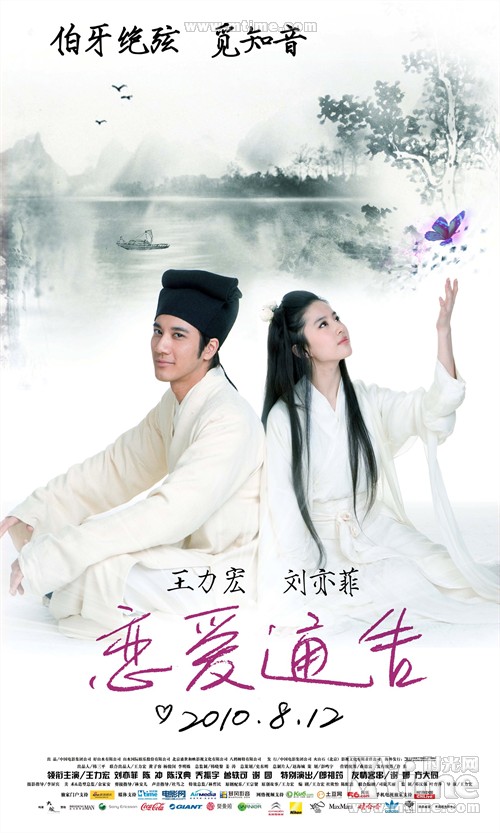
Leehom Wang’s musical romantic-comedy – Love in Disguise is an impressive film by a debutant director.

The storyline is simple, rather clichéd yet the treatment is ultimately what matters and the conviction. Love in Disguise follows the life of famous pop-star Du Ming Haan (Leehom Wang) dealing with the usual pitfalls of fame – two-faced supporters, crazed fans, inquisitive paparazzi and an understanding manager Joan (Joan Chen).

A running gag of the film is DMH’s actual response and what he wishes to do but cannot because it would ruin his reputation and antagonize fans. Such as when asked about his relationship status with another famous personality, in his mind he assaults the journalist but in reality gives a measured response.

Things change when he encounters the music of a guzheng, played by a classical Chinese music student Song Xiaoqing (Liu Yifei). The music calls to him and he has visions. He goes in search of the music to the Far East Music Academy dragging his friend and band member Wei Zhibo (Chen Han-tien) along. They enroll as students, disguised like rustic villagers, which leads to hilarious situations.

The film uses illustrations to express an artist’s imagination and in some places very anime-like emotions. The relationship between DMH and Song Xiaoqing draws on the story of Boya and Ziqi – Boya was a qin player and Ziqi, the only one who could truly understand and visualize his music. They were friends and musical soul-mates. The entire sequence is presented like a traditional Chinese drama.

What stands out is the idea, that your soul-mate need not have a non-platonic connect with you. It just becomes a relationship that draws out the best out of you, and helps you see different heights.

Wang’s music connects because it fuses traditional Chinese instruments with hip-hop, R&B and western classical – a style he calls ‘chinked-out symphony’. For an Indian viewer, it might be a little low on the melodrama and they would want more comic sequences but it is a fun film and the music – let’s just say, I have Leehom Wang on repeat on my player.


Australia (2008) #SherylPuthur

australia_ver5_xlg

Directed By: Baz Luhrmann

Written By: Baz Luhrmann; Ronald Harwood; Stuart Beattie; Richard Flanagan

Cast:

Nicole Kidman – Lady Sara Ashley

Hugh Jackman – Drover

David Wenham – Neil Fletcher

Brandon Walters – Nullah

David Gulpilil – King George

Bryan Brown – Lesley ‘King’ Carney

Language: English                      Genre: Epic Historical; Drama; Romance


Baz Luhrmann’s Australia, was his next production after the hugely successful Moulin Rouge. It even starred Nicole Kidman, though alongside fellow Australian actor Hugh Jackman.

The film uses the tropes of oral storytelling and the bright colour palette of a children’s story. The narration is by a child and tells of the rich aboriginal culture that existed in Australia and the white-washing it received with the entry of the white Australians. The story is thus set on the experiences of the children of the Stolen Generations.

The film is well shot and gripping in parts however, it fails in that one thing that makes a Baz Luhrmann film stand out and take the audience away – passion. The film lacked the overwhelming yet focused passion that made Romeo + Juliet and Moulin Rouge such great successes. Both these films seduced the viewer with the frenzied passion, romance and looming tragedy that made up their narrative.

Agreed that Australia’s theme was ‘overcoming the odds’ but the focus slipped and sharpened in the flow of the narrative. Hence some of the adventurous moments take away from the crux of the film. It is a beautiful attempt by an Australian director to talk about the experiences of the Stolen Generation.

What stood out is the characterisation that takes the story forward. Lady Sara (Nicole Kidman) is an aristocratic British lady, who comes to Australia to settle her husband’s affairs and starts a new life. She unlike others of her background believes that the ‘half-caste’ children should not be sent away. But somewhere to emphasise that we will bring some aspect of prejudices from an alien culture, she does not believe Nullah (Brandon Walters) should leave her and go on his walkabout with his grandfather because she possesses western notions of education and safety. Drover (Hugh Jackman) on the other hand, consciously chose a non-white tradition to identify with and is hence more understanding.

It is about how far can you push aside your prejudices, doubts and accept people on their terms. After all, it is not uniformity that will knit us together, but acceptance.

So watch the film for how Baz Luhrmann has made the Australia of multiple narratives stand out.

Brief Encounter (1945) #SherylPuthur

Brief Encounter

Directed By: David Lean

  Written By: Noël Coward; Anthony Havelock-Allan; David Lean; Ronald Neame

Cast:

Celia Johnson – Laura Jesson

Trevor Howard – Dr. Alec Harvey

Stanley Holloway – Albert Godby

Joyce Carey – Myrtle Bagot

Cyril Raymond – Fred Jesson

Everley Gregg – Dolly Messiter

Language: English                                                         Genre: Drama; Romance


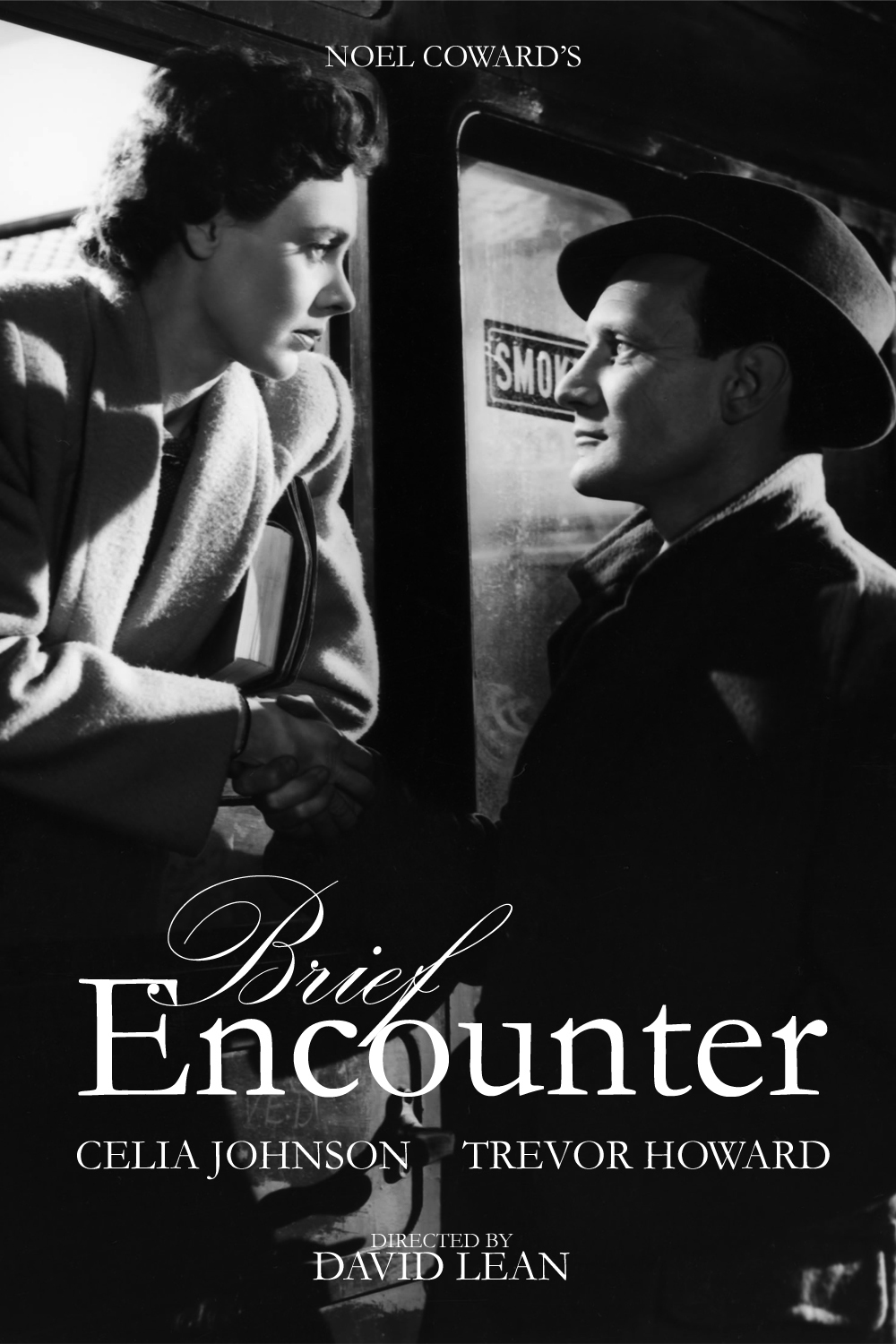
Milford station refreshment room, where commuters rest while they wait for their trains, is the setting for David Lean’s 1945 black and white film – Brief Encounter. The film is set to Rachmaninoff’s Piano Concerto No. 2 and the haunting melody of the piece which starts with the train steaming into the station, sets the mood of the film.

Starring Celia Johnson, Trevor Howard, Stanley Holloway and Joyce Carey, it is a bittersweet romance between two married strangers who meet under the most ordinary circumstances and over succeeding weeks find themselves drawn to each other, unable to let go and unable to stay.

The film could have easily become the sordid love story of a bored housewife but is saved by Lean’s camera work and the poignancy of Celia Johnson’s narration. The beauty of the film is that it functions on one level as a silent film. In the sense that the viewer depends on the subtle but expressive emotions flitting across Laura’s face to really experience the ‘brief encounter’. Even the narration is carefully worded; honestly portraying the confusion, the romantic aspirations and the moral apprehensions of Laura Jesson. You experience her dilemma of being happily married yet in love with someone else.

The basis of the dilemma is “middle-class morality” as Alfred P. Doolittle famously stated in the film My Fair Lady (a role incidentally played by Stanley Holloway). You can see how the romance between Laura (Celia Johnson) and Dr. Harvey (Trevor Howard) is contrasted by the romance between Mr. Godby and Ms. Bagot. Their relationship functions on more liberal lines. The interesting thing is also that Ms. Bagot’s choices take her desires and ambitions more into consideration when compared to Laura.

An interesting scene or rather moment in the film, which can also be considered quite symbolic, is when Laura is seated in her front room, and her mind goes back to the moment when it all began – the scene slowly dissolves into the Milford refreshment room but there is a lingering after-image of Laura staring into the refreshment room.

Brief Encounter is an interesting choice for a DVD on a dreamy afternoon because as a movie it is well made – editing, both sound and film, cinematography and the inspired direction brings the story together but more importantly, for Celia Johnson who gives a moving portrayal as Laura Jesson. Unfortunately, she has a limited filmography, so watch it for her. That’s just in case, you’re not a David Lean fan.


Drishyam (2013) #SherylPuthur

1523308_638169002888773_1776440072_o

Directed By: Jeethu Joseph

Written By: JeethuJoseph

Cast:

Mohanlal – Georgekutty

Meena – Rani George

Ansiba Hassan – Anju George

Esther – Anu George

Kalabhavan Shajon – Constable Sahadevan

Siddique – Prabhakar

Asha Sharath – IG Geetha Prabhakar

Language: Malayalam                                                     Genre: Drama; Thriller


The film opens with a bus journey and it is when the story progresses that the significance of the event is understood. It then becomes clear that Jeethu Joseph has not wasted even one shot in the film. Everything fits together to form this ‘picture’. In fact, even the word ‘drishyam’ means a picture/visual. The film is then a meta film – a film within a film. Narrative and directorial control is displayed in the film.

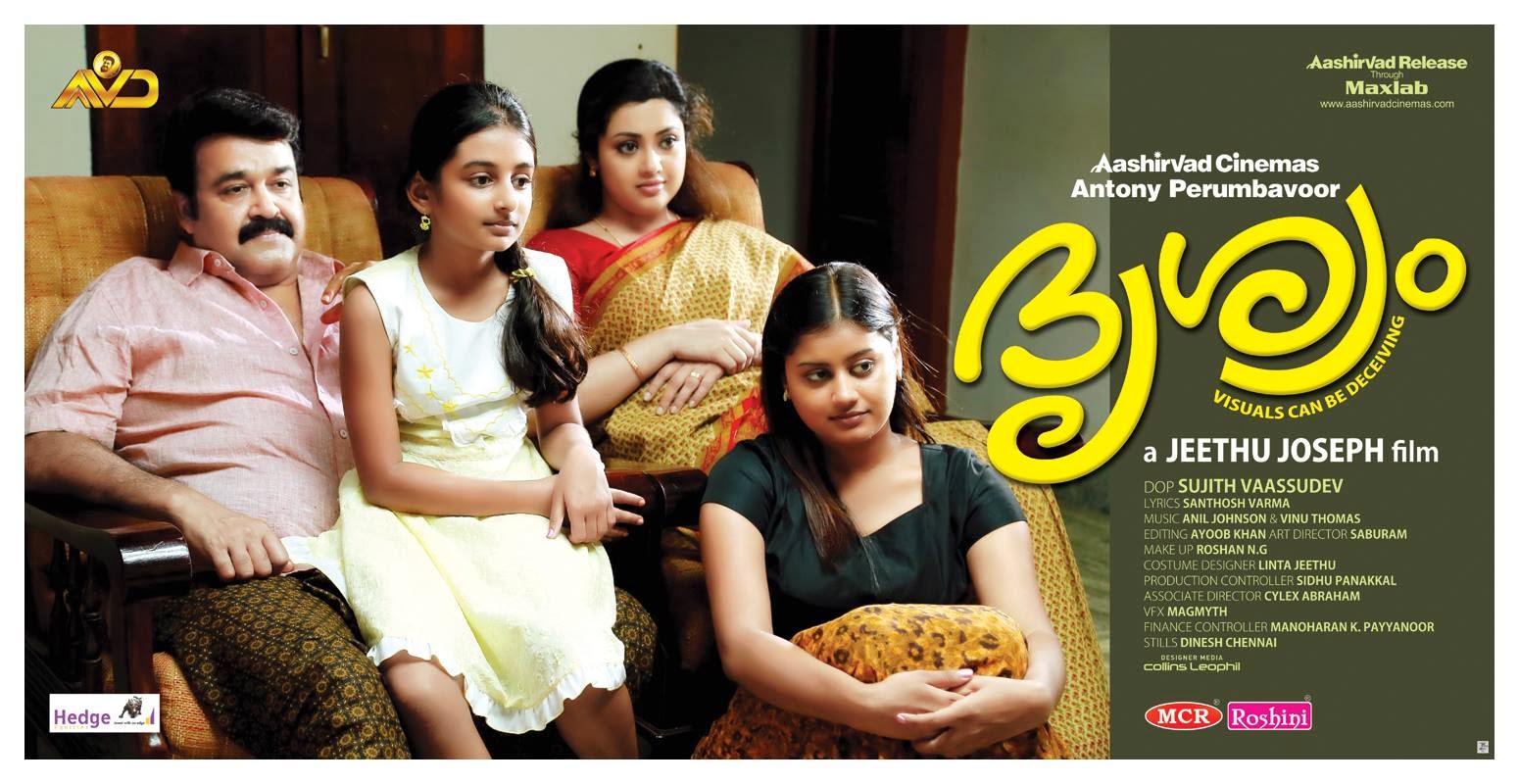
Georgekutty (Mohanlal) is someone who spends his life watching movies while waiting for work assignments (he works as a cable TV operator in a small village). But these film-viewing exercises are not only entertainment; he learns a lot from them as demonstrated in a scene early in a movie where he expounds knowledgeably about habeas corpus.

Every scene follows logically and you wonder what jigsaw is it all fitting into. It begins to seem as though the point of no return isn’t happening soon enough or that the setting is taking a while but surprisingly you’re not bored and once the moment comes, the story hurtles forward. The film seems to have created a genre of its own – a how-done-it not a whodunit.

Georgekutty is the second director in this meta film where he directs the action in a masterly fashion and sometimes, like some directors is taken by surprise at the initiative of his ‘performers’. The start of this second film is nicely shown through the closing of his eyelids in the opening sequence, much like a camera and the opening of his eyelids towards the end, stands for the end of his ‘drishyam’.

In essence, it is the story of a family. A family that is slightly dysfunctional with a lackadaisical approach to the duties of family life. It is about how tragedy brings about the realization that they need to reaffirm their bonds as a family and stand together.

Watch it for the well-crafted package it is and the sensitive portrayal of grief, family life – of various kinds of families and what a difference a close-knit family can make in times of adversity. Also, for the well-crafted dialogues that express, yet mask; fail to implicate but do not fail to impress the viewer with its nuances.

Reading Kubrick’s Lolita and A Clockwork Orange

Aim of the Paper:

The aim of the paper is to study Lolita and A Clockwork Orange alongside each other. It also seeks to understand Kubrick’s unique reading of the texts making him the new ‘auteur’ of these two texts.

Reading Kubrick’s Lolita and A Clockwork Orange

Vladmir Nabokov’s Lolita and Anthony Burgess’s A Clockwork Orange have different settings and themes and intentions, yet, there is a sense of similarity that comes through when these two texts are brought together. A common point to the two books might be what drew Stanley Kubrick to making a film version of them. A possibly trite statement with relation to this can be that Nabokov is of Russian origin and in A Clockwork Orange, the youth slang that Burgess invents – Nadsat, also drew on Russian.

Both novels (or in the case of A Clockwork Orange, novella) reveal stylistic similarities. The narrators; who directly address the readers – Humbert Humbert addresses them as “Ladies and gentlemen of the jury” (9; ch. 1) while Alex addresses the readers fondly as “O my brothers” (3; ch 1). This is considered a mark of their unreliability since they ‘break the fourth wall’, in fact, they also figure on a popular list of ten unreliable narrators in literature because of their barely veiled insanity. They are also considered to have grandiose notions of themselves because in their address they use language eloquently – in Humbert’s case, it is a complex and artistic rendering of English and Alex prefers to use a “Russo-Anglo-American patois” (xvi; Introduction to A Clockwork Orange, Morrison).

The language used by the two narrators aim at masking the potentially disturbing acts within the texts. It is not that the texts do not disturb the reader but in the case of Lolita where Humbert uses a complex and artistic form of English, veiling everything and still stating everything, one marvels at the beauty of expression and almost, but not entirely, forgets that he is discussing sordid details of their relationship such as “the haggled-over handjobs, the pricing of fancy embraces” (320; Afterword, Raine). That Humbert does play with language is clear from the text when he says, “Oh, my Lolita, I have only words to play with!” (32; ch. 8).

Even Burgess’ Nadsat aids in alienating the reader from the experiences related by Alex, though as mentioned, one is not entirely cut away from the experience.

That Humbert Humbert and Alex are sexual deviants is rather clear. Also, by letting them narrate their own stories; irrespective of how both Nabokov and Burgess felt about the acts, (which they felt called upon to explain) the portrayal is sympathetic. They then move from the space of the perpetrator to the space of the victim with ease. Owing to Humbert’s description of the thwarted romance with Annabel, the reader realises that Lolita’s entry into his life and his sexual satisfaction through her is a balm for his ailing heart. One even hopes that Lolita can love him as much so that both are in a happy place. With Alex, his plight post the Ludovico treatment does put the reader in the uneasy space of sympathising with Alex for what he is being put through despite his earlier actions and obvious relishing of ultra-violence.

The books converge on another interesting aspect – the portrayal of the medical profession; to be precise, the mental health professional. There is a thinly veiled contempt of the psychologist and the related psychobabble. The premise of A Clockwork Orange is that for evil or for good, one must be able to choose for oneself. Burgess uses the prison Charlie to bring out this notion, “He has no real choice, has he? Self-interest, fear of physical pain, drove him to that grotesque act of self-abasement. Its insincerity was clearly to be seen. He ceases to be a wrongdoer. He ceases also to be a creature capable of moral choice” (94; ch. 7). The diatribe is motivated by Burgess’ aversion to Skinner’s behaviour psychology experiments.

Nabokov was not fond of the “Viennese medicine man” and may have liberally thrown symbols around for the practising Freudian. Humbert is also shown to take “enjoyment in trifling with psychiatrists: cunningly leading them on; never letting them see that you know all the tricks of the trade; inventing for them elaborate dreams…never allowing them the slightest glimpse of one’s real sexual predicament” (34; ch. 9).

The novels and how they can be studied simultaneously has been discussed, now to move onto the films.

Stanley Kubrick’s Lolita was made in 1962 when the censorship laws were severe and they restricted his depiction of the novel.  While the screenplay was chiefly written by Nabokov himself (something Burgess unfortunately or fortunately was not allowed to do) Kubrick exercised his director’s intuition in the filming. He did away with much of the narrator’s voice except in few places.

By doing away with Humbert’s past and his preoccupation with “nymphets”, the focus is entirely on Lolita having affected him specially. The only tribute to the novel Humbert’s obsession with nymphets and his eloquent descriptions of their “nacreous” limbs is the fetishising of Lolita’s body. However again, the focus is on Lolita because at Camp Climax, Humbert does not look for “nymphets” among the girls there. Therefore, the opening shots or credits of the film show Humbert’s hand reverently taking Lolita’s foot (a common sexual fetish are the feet) and proceeding to apply nail paint on it. This takes about two minutes of the screen time. It is also the only instance of visual dismembering of the female body, unlike A Clockwork Orange wherein the women are only objects where the focus lies either on their bare breasts or their screaming mouth (artistically portrayed in slow motion).

Kubrick even portrays Humbert as an essentially protector figure when he has Lolita ask Humbert to always be around as she would not want to be left in foster care or homes for juvenile delinquents, unlike in the novel where Humbert impresses upon Lolita the need for secrecy because if found out she would be sent away and he would be in jail.

Since Humbert Humbert is portrayed as a sane, restrained man with certain old-world charms, his mental deterioration is solely the result of losing Lolita, unlike the novel which mentions his previous bouts of insanity. Kubrick then makes Humbert a more acceptable character, however, the portrayal owes a lot to the censorship of those times and Kubrick felt quite hemmed in, so it is possible that if reworked he would have changed things considerably. Then again, Humbert would have continued to have a sympathetic portrayal and maybe much of the sexual action would not have been left to the audience’s imagination.

He also made the film in black and white, maybe pointing to a world where a middle-aged man can experience ‘true love’ for a young girl, and it would not be a sham. It might again connect to Humbert’s sophisticated old-world image as though he were a dying breed in this world of crass commercialism.

A Clockwork Orange might represent British popular culture in a dystopic world; Alex however, is not fond of pop music. He is instead a lover of classical music, especially the Ninth Symphony by Beethoven. He associates the music with sharper sensations and a clearer purpose for ultra-violence. In the film, Alex’s conditioning is graphically represented with musical accompaniment, and at first the purpose for the “special films” is not expressed. But once the purpose is understood and we notice that Alex makes an awful retching sound every time he is confronted with the Ninth Symphony, one wonders if Kubrick is not trying to condition his viewers to a particular response. The retching sounds are disgusting enough to inspire bile in the viewer’s stomach to surface, so every time Alex is unable to beat off his assailants or hears the music or is in anyway tormented we are conditioned to feel his torment. It maybe Kubrick’s ways of assuring that his viewers are with him in sympathising with Alex.

As Roger Ebert points out in his review of the film, there may be other ways in which Kubrick tries to alter the viewer’s perception of the character of Alex. Firstly, through the use of wide-angle lens – “Used on objects that are fairly close to the camera, this lens tends to distort the sides of the image. The objects in the center of the screen look normal, but those on the edges tend to slant upward and outward, becoming bizarrely elongated. Kubrick uses the wide-angle lens almost all the time when he is showing events from Alex’s point of view; this encourages us to see the world as Alex does, as a crazy-house of weird people out to get him. When Kubrick shows us Alex, however, he either places him in the center of a wide-angle shot (so Alex alone has normal human dimensions,) or uses a standard lens that does not distort. So a visual impression is built up during the movie that Alex, and only Alex, is normal” Kubrick also shoots Alex “from above, letting Alex look up at us from under a lowered brow” and emphasises on eyes through lighting giving him a “slightly scary, messianic look”(Ebert).

An ongoing controversy with relation to A Clockwork Orange has been the ending. The US versions of the text had omitted the last chapter and Kubrick claimed to have not read it. Hence did not include it in the film. The original ending has Alex grow out of his violent youth stage, but unlike how it is assumed, it is not a hopeful ending because Alex acknowledges that he will have a son who will go ahead and “do all the veshches I had done, yes perhaps even killing some poor starry forella…I would not be able to really stop him. And nor would he be able to stop his own son, brothers” (140; ch. 7). This might tie up with the reading by John Galt, that to begin with Alex has already been conditioned to violence by the society he lives in and hence the conditioning by the state and Dr. Brodsky does not stick and as Alex points out in the end (of the film), “I was cured all right”, when he could listen to the Ninth Symphony and contemplate having violent sex in the snow in front of a crowd of people dressed as though they were at Ascot.

This ending however ties up with the main premise of the story that human autonomy is important even to the extent of making violent decisions. It then becomes Kubrick’s critique of society especially since Alex imagines the so-called civilised members of society being appreciative of his final act. Making the society twisted and government corrupt, shifts the blame from Alex onto the society at large. It results in the viewer’s possible sympathy to the moral dilemma of A Clockwork Orange.

While the two films have drawn on two rather popular works of literature and irrespective of how the two writers respond to the film versions, they can still be considered quintessentially Kubrick. So the film texts can draw on authorship more from Kubrick because he has realised it as he understood it and not necessarily as they intended it – making him the new ‘auteur’ of the texts.

Bibliography:

  1. A Clockwork Orange. Dir. Stanley Kubrick. Perf. Malcolm McDowell, Patrick Magee and Michael Bates. Columbia-Warner, 1971. DVD.
  2. “A Clockwork Orange.” Wikipedia. Wikimedia Foundation, 19 Jan. 2014. Web. 20 Jan. 2014.
  3. Burgess, Anthony. A Clockwork Orange. London: Penguin Group, 2000. Print.
  4. Ebert, Roger. “A Clockwork Orange.” rogerebert.com. Ebert Digital LLC, 11 Feb. 1972. Web. 16 Jan. 2014.
  5. Galt, John. “A Psychological Analysis of Stanley Kubrick’s A Clockwork Orange.” voices.yahoo.com. Yahoo Contributor Network, 5 Aug. 2007. Web. 18 Jan. 2014.
  6. Lolita. Dir. Stanley Kubrick. Perf. James Mason, Shelley Winters, Sue Lyons and Peter Sellers. Metro Goldwyn Mayer, 1962. DVD.
  7. “Lolita.” Wikipedia. Wikimedia Foundation, 10 Jan. 2014. Web. 20 Jan. 2014.
  8. Nabokov, Vladmir. Lolita. London: Penguin Group, 2000. Print.
  9. Nastasi, Alison. “10 of Literature’s Most Unreliable Narrators.” Flavorwire. N.p., 18 Aug. 2013. Web. 23 Jan. 2014. <http://flavorwire.com/410468/10-of-literatures-most-unreliable-narrators/&gt;.


Protected by Copyscape Duplicate Content Detection Software

© [Reading Kubrick’s Lolita and A Clockwork Orange] and [sherylputhur.wordpress.com], [2013 onwards]. Unauthorized use and/or duplication of this material without express and written permission from this blog’s author and/or owner is strictly prohibited. Excerpts and links may be used, provided that full and clear credit is given to [Sheryl Puthur] and [sherylputhur.wordpress.com] with appropriate and specific direction to the original content.

Ram-Leela (2013) #SherylPuthur

ram-leela_138302361750

Directed By: Sanjay Leela Bhansali

Written By: Sanjay Leela Bhansali

Cast:

Ranveer Singh – Ram

Deepika Padukone – Leela

Richa Chadda – Rasila

Supriya Pathak – Dhankor Baa

Gulshan Devaiah – Bhavani

Language: Hindi                                                             Genre: Romance; Drama

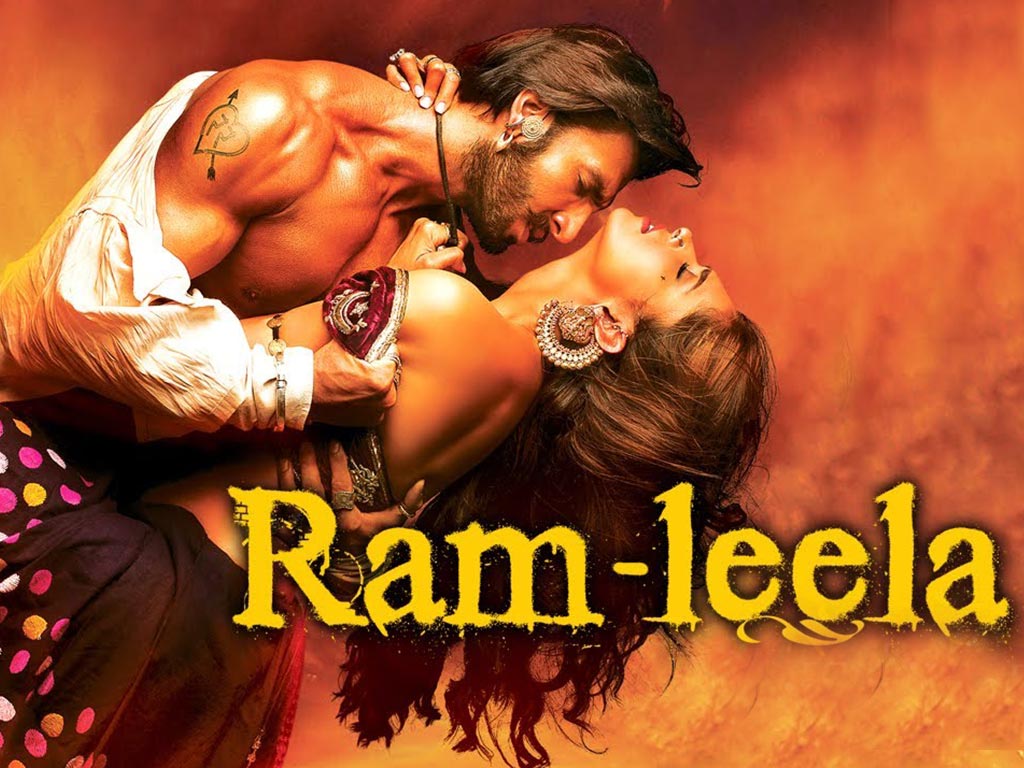
Ram-Leela set out to be the quintessential Indian romance but something stops it from making the mark. It had everything one expects from a Bhansali film – the grandeur of cinema, a visual cornucopia, a romance, beautiful music, great performances – but

And this three letter word ‘but’ peppers any reading of Ram-Leela. I’m going to borrow words from a director friend who described the film succinctly, ‘it is a beautiful film in a frame-by-frame shot – but – where (and this is my voice interrupting) is the logical continuity?

As I was watching I kept feeling that major portions of their romance got chopped up on the editing table because I couldn’t quite understand why they fell in love. The reason why Romeo and Juliet worked (on which this film is ostensibly based) is because of the innocence of the characters. They were too young and not yet jaded by life, so the idea that they loved each other was somehow believable. Ram and Leela are not that convincing.

At the outset it is established that the film is based on Shakespeare’s Romeo and Juliet and especially inspired by Baz Luhrmann’s adaptation (guns, modern settings yet culturally appropriate). What is really interesting to behold is that Bhansali has fused the storylines of popular sagas of star-crossed lovers into one narrative and oddly enough they flow well into each other. It is l suppose his tribute to every love saga written. Beginning with Heer-Ranjha, where the hero, a pampered younger son who is a lover of music and does not believe in fighting; to Romeo declaring his love in a garden of statues. It is also Layla-Majnun (Majnun means madman, referring to his madness when he loses her). There is even a nudge in the direction of West Side Story in the sexual assault on Rasila (Richa Chadda) when she takes a message from Leela (Deepika Padukone) to Ram (Ranveer Singh).

The film moves beyond the narrative of star-crossed lovers and I think tries to say something about India. The portrayal of women and the treatment meted out to them. How violence to women is a sport – the most telling incident being when Kesar (Barkha Bisht) is chased by Bhavani (Gulshan Devaiah) and his henchmen. It is set to music and is eerily reminiscent of Aishwarya Rai in the song sequence Man Mohini from Hum Dil De Chuke Sanam racing to place the last tile and being chased by the other players.

Unlike Bhansali’s other films, the male protagonist has received a much bigger opening. In fact, the image of Ram dominates the film – the painting on the wall in the streets of the Rajaris, of him in his warrior pose. Is it that the Indian male fails to fit into the mould he created (ideal, just, pure, and kingly)? That they are just parodies who worry more about prowess and are unable to take a stand? Conversely then do ineffectual boyfriends make chauvinistic husbands? It is ironic then that the male protagonist is called Ram.

Or maybe like the recurrent motif of the film – the peacock, it is about the male of the species being showier than the female.

There is much being displayed about male and female power relations within the narrative. Dhankor Baa (Supriya Pathak) the matriarchal head of the Sanera family where the men toe the line and the daughter has a freer rein. But the daughter –in law wishes for more time with her husband but his hands are still knotted to his mother’s skirt. Even within the relationship of Ram and Leela, he encourages her initiative before marriage but then becomes controlling after marriage. And she knuckles under.

It speaks about female desire and here the women take up stronger initiative to fulfil their desire but the men seem to hold back from a real fulfilment and prefer a wish fulfilment hence the preponderance of reference to porn. The film is Indian machismo on display for us. It can be considered a move towards a different Indian sexuality in the uninhibited display of love between Ram and Leela.

As a romance the film does not entirely work for me but if I read further into it, and maybe even do an orientalist reading, I might reach somewhere.

Celluloid (2013) #SherylPuthur

CELLULOID Malayalam Movie REVIEW

Directed By: Kamal

Written By: Kamal

Cast:

Prithviraj – J.C. Daniels

Sreenivasan – Chelangatt Gopalakrishnan

Mamta Mohandas – Janet

Chandni – Rosie

Language: Malayalam                                                            Genre: Biopic

Malayalam cinema is known for its mature handling of the medium and its introduction of themes ahead of their times. It then seems fitting that the Father of Malayalam cinema – J.C. Daniels would be a pioneer in this regard.

However, as forward as the themes of Malayalam cinema were and are it is balanced out by a rigidity of thought and caste prejudices. At present it may be slight in comparison to earlier times but it still exists and so the film functions simultaneously as a critique of Kerala society.

Celluloid follows the ill-fated career of J.C. Daniels (Prithiviraj) who has a dream to make the first Malayalam film. It follows his journey to erstwhile Bombay to meet with Dadasaheb Phalke (Nandu Madhav), who explains various aspects of film making. After a few delays, he manages to get hold of the equipment and a British cameraman, and begins his filming. Since he sold his land to finance the film, to keep costs low, he directed, acted, edited and also wrote the screenplay.

Unlike his contemporaries, his film Vigathakumaran was not based on mythology but was a social drama. Ironically, his own life resembled a social drama because when Bombay-based actor Lana proved difficult to work with he got Rosie (Chandni) a Dalit Christian (the term is ironic since the latter ought to cancel out the former but…) to act instead. She played a Nair lady but when the film was screened the orthodox upper-caste men took offence at the idea of a lower-caste woman playing a Nair woman and boycotted the film.

The film parallels J.C. Daniels life with the investigation of the journalist Chelangatt Gopalakrishnan (Sreenivasan) into the film career of this obscure dentist who was once known as J.C. Daniels, the director of Vigathakumaran.

The relationships portrayed in the film have been beautifully sketched out such as the love based in friendship shared by J.C. Daniels and his wife Janet (Mamta Mohandas). A strong woman who stands by her husband and remains the factor that keeps them knitted together. Her sisterly treatment of Rosie, ignoring the caste barriers makes for some of the most moving scenes within the film. A scene that stood out for me, for its poignancy, was decking Rosie in the attire of a Nair lady and her amazement at their ‘presumption’ that it was normal to treat her as equal.

A technically sound film, it uses film conventions to create symbolism within the film such as the shadow play on the whitewashed walls that eases with breathing. The narrative of the life continued in a closed carriage.

The film is about idealism, regret, apathy at the sight of continued failure and the slight flicker of hope that stays sometimes like a disease and sometimes like a blessing. It is also about the burning need to tell a story – to find expression.

Over and above, though it is a tribute to the first filmmaker in Malayalam. A technically sound film, its obvious use of technique is in itself a tribute to J.C. Daniels – whose first film in some sense set the base for the future of Malayalam cinema.