Who Rules The World (2022) #SherylPuthur

Directed By: Yin Tao; Yu Yonggang; Shi Zhanli

Written By: Based on Let’s Try The World by Qing Lengyue

Cast: Yang Yang; Zhao Lusi; Leon Lai Yi; Zhang Haowei; Liu Ruilin; Huang Yi; Xuan Lu;Zhang Fengyi; Carman Lee; Jiang Kai; Zhang Tianyang; Wang Xuan; Zhao Zhuoting; Jiang Feng;  Ai Mi; An Yuexi; Wang Gang; Du Zhiguo; Li Jiulin; Ma Yue; Fu Bo Han

Language: Mandarin                                                     

Genre: Wuxia; Fantasy; Romance

Number of Episodes: 40

Run Time: 45 minutes each

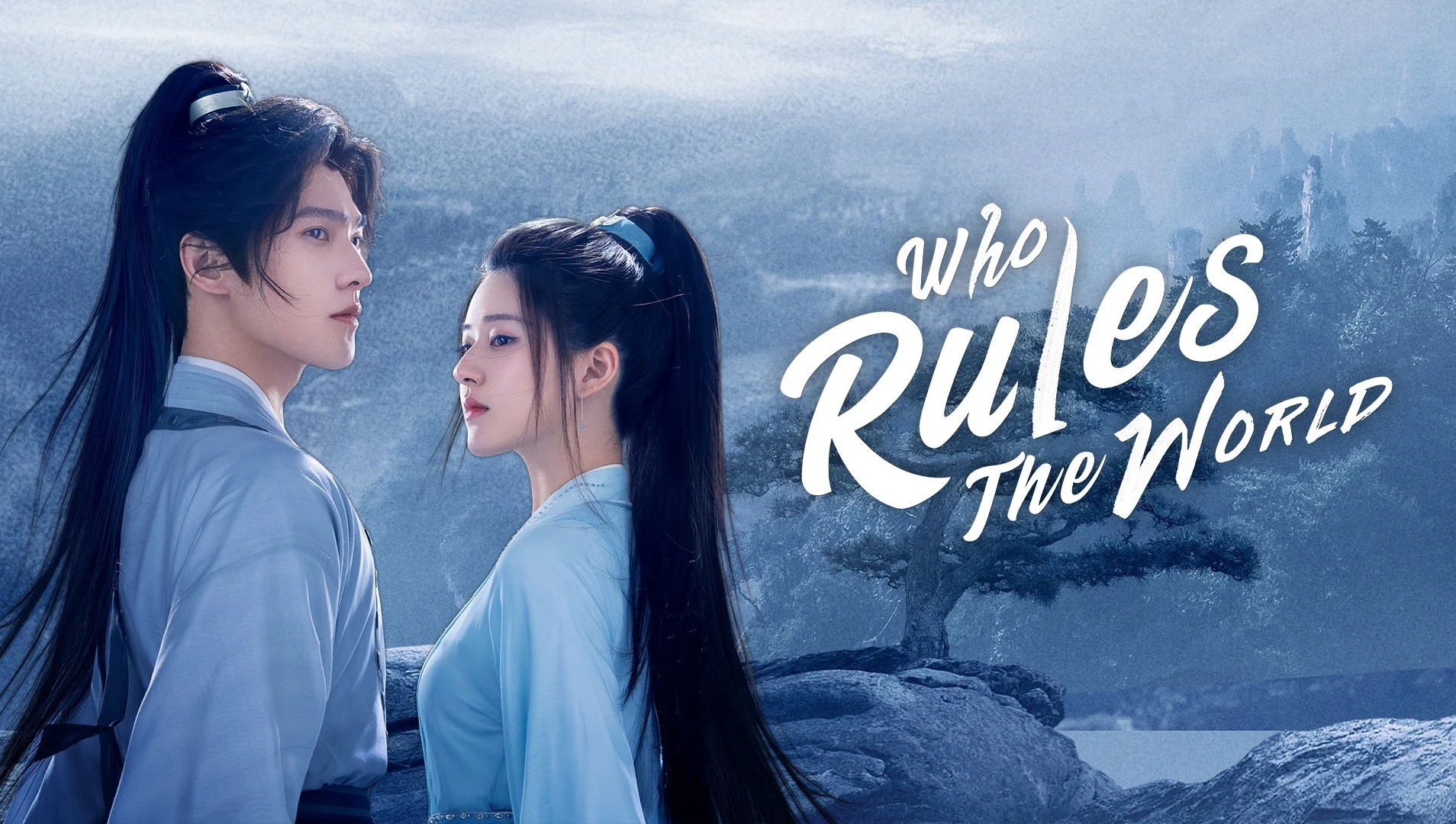
A Chinese wuxia fantasy drama with an engrossing world-building, Who Rules The World follows two renowned members of the martial arts world Hei Fengxi (Yang Yang) and Bai Fengxi (Zhao Lusi) as they use their powers for justice. They each follow the code of honour in the martial arts world but differently – Hei Fengxi is elegant, restrained and calculating. Bai Fengxi is majestic, unbridled and altruistic. They have clashed on number of occasions but are, despite the sarcastic repartees, respectful of each other’s abilities. Since this is wuxia and they are martial artists, they have god-like abilities. They also understand each other intimately; a meeting of minds that comes from duelling and so are much like soulmates.

However, just as much as the series emphasises the connection or the red thread of fate that ties the two together, it equally depicts the unrest that is fermenting in the world.

The Dadong Empire holds the Empyrean Token which gives it the right to rule the world. The other six states – Yongzhou, Jizhou, Qingzhou, Youzhou, Shangzhou and Beizhou, function autonomously but must respond to the call of the emperor (Du Zhiguo). This system has worked well for decades. But when the story begins, we see that each of the states are vying for power and waiting for a crack in the force of the empire that they can exploit. So, when the Empyrean Token is stolen, it sets the wheels in motion for the fight for the title of ruler of the world or emperor.

But nothing is as it seems. For when Bai Fengxi ends up entrusted with the Token, by a dying commander of Jizhou, who requests her to hand it over to the crown prince Huang Chao (Leon Lai Yi), Hei Fengxi who examines it, reveals that it is a fake. The idea that a fake token could be circulating means that there is more to this than meets the eye and that there might be deeper plots underfoot. This incidentally is the central theme of the series because none of the characters are necessarily who they seem. Nearly all of them are hiding another identity.

Hei Fengxi and Bai Fengxi themselves seem to have a greater stake in this fight. They are not nearly as disinterested as they should be as members of the martial arts world. It is implied that they have close connections to one of the six states – Yongzhou for Hei Fengxi and Qingzhou for Bai Fengxi.

The series goes into the inner workings of each of the states and the internal politics aimed at fulfilling personal greed. We see battles for succession within the states and how it spills over into world politics. Equally how external forces try to interfere in these battles so that it works to their advantage – to annex a state embroiled in civil conflict. Especially in the case of Yongzhou, through the figure of the third prince Feng Ju (Liu Ruilin), we see how self-destructive it becomes, through his fascinating portrayal of jealousy and cynicism.

The series explores ambition and the compromises one makes to fulfil it. On the other, it also shows what might happen when you discover something more important than the desire for power.

Who Rules The World continually surprises the viewers in the turns it takes. The pace is measured in the beginning so that the viewers can follow the world-building but the deeper it goes into the political machinations in the narrative, it starts to hurtle ahead, with each subplot taking the action further. The chemistry of the lead actors brings out the sense of timelessness to the romance as well the maturity of people who have grown together. It finally is about what do you truly fight for and what makes you a ruler of the world.

Puella Magi Madoka Magica (2011) #SherylPuthur

Directed By: Akiyuki Shinbo; Yukihiro Miyamoto

Written By: Gen Urobuchi

Voice cast: Aoi Yuki; Chiwa Saito; Kaori Mizuhashi; Eri Kitamura; Emiri Kato; Ai Nonaka; Yuko Goto; Tetsuya Iwanaga; Ryoko Shintani; Seiko Yoshida; Junko Iwao

Language: Japanese                                                       

Genre: Dark fantasy; psychological thriller

Number of Episodes: 12

Run Time: 24 minutes each

Puella Magi Madoka Magica is an anime of the magical girl sub-genre and yet it takes every such narrative and turns it on its head; not just in its story but in its aesthetic as well. The story follows a middle schooler Madoka Kaname and her friend Sayaka Miki as they encounter an eerily cute magical being Kyubey. Kyubey offers them a contract that will fulfil any one wish of theirs in exchange for the power to be a magical girl that will battle witches.

Kyubey is especially interested in Madoka because he believes that she will be a magical girl to rival all the ones before her since he senses immense power from her. At the same time, there is a mysterious transfer student Homura Akemi who will stop at nothing to ensure that Madoka does not sign a contract; including attempting to hurt Kyubey.

A senior Mami Tomoe takes Madoka and Sayaka under her wing and decides to show them what it means to be a magical girl and fight for justice. But things go horribly wrong once they start to encounter witches because witches seem to have the power to warp reality and create a new violent dimension. This dimension is overpoweringly strange and seems to feed off despair. Despite the fears that set into the girls, Kyubey continues to insist, forcefully and not without a little subterfuge that they take up this important role. Especially since there is a rumour that a great witch Walpurgisnacht will approach the city.

The overall feel of the anime is a sense of unease and dread as though everyone has an agenda one should be wary of, including Kyubey which is a change from the average magical girl anime where the magical creature is a trustworthy mentor.

The aesthetic of the series is reminiscent of the Cardcaptor Sakura but like a dulled, gloomy, depressive version. The witch sequence art style is particularly fascinating. The clashing styles, the created reality feeling is great. It fuses a certain psychedelic cartoon style and gives it an amoral violent makeover.

The series is definitely dark and explores the darker side of human emotions and specifically those that impact young teens who are at a time in their life when they feel strong conflicting emotions and are yet to learn how to regulate them, making them easy prey to amoral beings with ideas of ‘greater good’. It also shows through characters like Kyouko Sakura that it is rather easy for young people to get jaded when forced to grow up and learn the despair of the world firsthand.

At 12 episodes, it is an impactful series that creates a paradigm shift in the magical girl genre.

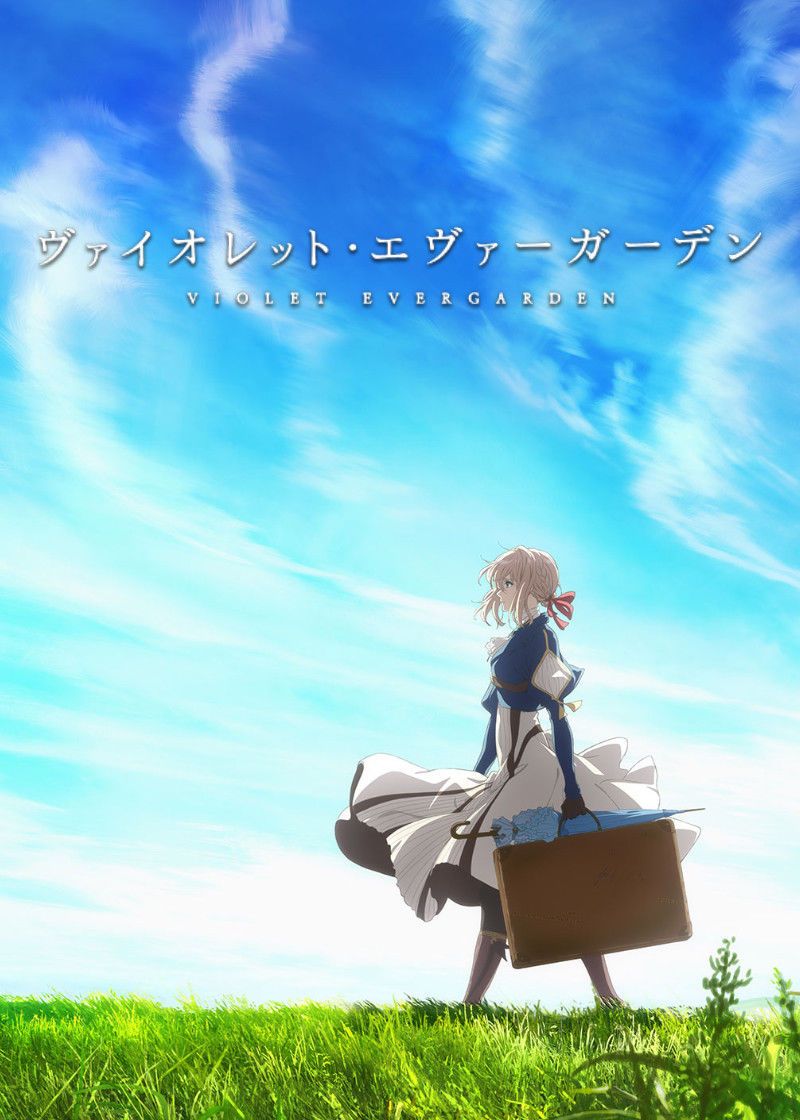
Violet Evergarden (2018) #SherylPuthur

Directed By: Taichi Ishidate; Haruka Fujita

Written By: Kana Akatsuki

Voice cast: Violet Evergarden – Yui Ishikawa; Gilbert Bougainvillea – Daisuke Namikawa; Claudia Hodgins – Takehito Koyasu; Cattleya Baudelaire – Aya Endo; Benedict Blue – Koki Uchiyama; Erica Brown – Minori Chihara; Iris Cannary – Haruka Tomatsu; Dietfried Bougainvillea – Hidenobu Kiuchi; Luculia Marlborough – Azuka Tadokoro; Leon Stephanotis – Yuto Uemura

Language: Japanese                                                      

Genre: Coming of Age; Fantasy; War

Number of Episodes: 13 + Special

Run Time: 24 minutes each

Violet Evergarden begins where the war that ravaged the continent ends. Set in an alternate steampunk world with kingdoms that was torn apart by a four-year war. The war has ended but not without leaving its scars on the people. Not the least of which is Violet (Yui Ishikawa) herself. She lost her arms in the final decisive battle between Leidenshaftlich and the Gardarik Empire. A battle she witnessed at close quarters as the Leidenshaftlich soldier maiden or as she was considered, a weapon.

Post the war, she suffers from PTSD but doesn’t know it; purely because no one has treated her like a person. The one person who did, her superior officer Gilbert Bougainvillea (Daisuke Namikawa), is nowhere to be found and no one tells her where he is. His friend Claudia Hodgins (Takehito Koyasu), a former Lt. Colonel in the army who started a postal company decides to help her gets settled in because Gilbert asked him to look out for her. Especially if he did not return after the war. 

She decides to work for his company as an Auto Memory Doll – a female scribe who write letters on behalf of other people. Her reason to become one has to do with the fact that she wants to be able to understand people’s emotions. She feels if she does this, she may understand why Gilbert told her, “I Love You” – words she finds hard to comprehend.

A child soldier and an orphan, raised on the battlefield and growing up under violent circumstances that are barely hinted at but obvious in how she seems emotionless like the doll she looks like and is referred to due to her occupation.

Growing up as feral child and branded a weapon by Dietfried Bougainvillea (Hidenobu Kiuchi) who hands her over to his younger brother Gilbert as a ‘present’ – a tool to use during the war. Startled at the child he beheld, he decides to teach her to read and write, treating her as a person even though no one else does.

Her inability to perceive emotions comes in the way of her relationships with people as well as her letter writing but her guileless responses and innocently worded thoughts have a piercing clarity to them. Each letter writing experience helps the people involved tap into memories that they have not acknowledged to themselves and they also teach Violet how to understand her own emotions.

Since it is set right after the war, many of the letters have to do with coping with grief; grief of loss, grief of surviving, grief of being unable to communicate and the grief of not knowing whether you could survive. Much of the story is then about rebuilding; not just physically as a land but as a people.

With Luculia Marlborough (Azuka Tadokoro), Violet learns to write letters that while succinct touch the heart of the matter. With Leon Stephanotis (Yuto Uemura), she learns that recording words of the scholars past can preserve knowledge for time to come. Of course, not all the learning is from Violet’s side. Dietfried, who dislikes Violet for many reasons, not the least of which has to do with his brother’s disappearance, comes to understand the value of kindness.

A story about reclaiming, restoring and healing; Violet Evergarden restores letter-writing, heartfelt communication, the joy of the written word and love.

Nevertheless (2021) #SherylPuthur

Directed By: Kim Ga-ram

Written By: Jung Seo (Webtoon writer); Jung Won

Language: Korean                                                         

Genre: Romance; Drama

No of Episodes – 10

Run-time – 60-70 minutes

Cast:

Han So-hee – Yu Na-bi

Song Kang – Park Jae-eon

Chae Jong-hyeop – Yang Do-hyeok

Lee Yul-eum – Yoon Seol-a

Yang Hye-ji – Oh Bit-na

Kim Min-gwi – Nam Gyu-hyun

Lee Ho-jung – Yoon Sol

Yoon Seo-ah – Seo Ji-wan

Jung Jae-kwang – Ahn Kyung-joon

Han Ee-ddeum – Min-young

Yoon Sa-bong – Jung Sook-eun

Nevertheless follows the lives of young arts students in a university who are figuring out their complicated love lives amidst a modern world of cynicism and lack of commitment.

There are four plotlines with the central story focusing on Yu Na-bi (Han So-hee) and Park Jae-eon (Song Kang). The series starts by detailing Na-bi’s rather painful and humiliating break-up with her ex – an older artist. This coupled with her experience growing up with a mum who has never found stable connections, has made her a cynic, unwilling to believe in the possibility of romantic love. And yet, a chance meeting with Jae-eon, a young, attractive and suitably mysterious man makes her want for more. He draws her into a passionate non-relationship relationship that both approach from very different spaces.

Jae-eon is charming and his entry into any room considerably raises the sexual tension because he is simultaneously flirtatious and indifferent to everyone. But even Jae-eon recognises that Na-bi affects him in a manner unlike others.

Na-bi’s friend, Bit-na (Yang Hye-ji) rather perfectly compares him to a flower, beautiful, present but not exclusive – something that really underscores their bond. And since Na-bi means butterfly, it becomes a recurring motif in the series.

Nevertheless explores toxicity in relationships and does so realistically by exposing its many facets. In the sense, some people are just toxic to everyone because of how they interact; it may be gaslighting, putting them down, manipulation, stringing them along and more. But sometimes, even if you are not the toxic one in your primary relationship, your half-hearted response to someone else could make you the toxic one over there, such as Na-bi with her childhood friend Yang Do-hyeok (Chae Jong-hyeop). Hence the title track has a male and female take on it. 

Other such toxic spaces would be Seo Ji-wan’s (Yoon Seo-ah) possessive ‘friendship’ of Yun Sol (Lee Ho-jung) which is matched by her unwillingness to actually be there for Sol. Or Bit-na’s simplistic definition of being a couple that leaves Nam Gyu-hyun (Kim Min-gwi) unfulfilled and unhappy.

 In contrast to this we see the older graduate students and teaching assistants Ahn Kyung-joon (Jung Jae-kwang) and Min-young (Han Ee-ddeum) who probably with relative stability (not that they have everything figured out) show a mature development. However, the series doesn’t claim that age or time means that you will figure things out – case in point being Na-bi’s mum and Jae-eon’s mum.

But, one of the nicest things about hope in romance comes from Na-bi’s aunt Jung Sook-eun (Yoon Sa-bong) who mentions that she admires her sister for her willingness to try again and again every time she meets someone and there is a spark.

Nevertheless looks at the possibility of resolution and it doesn’t have to do with one person changing but with them finding a middle ground. Any relationship that fails to commit or forces one person to give up their essential needs becomes toxic and yet, if love can colour your world brighter, it can teach you hope.

The series has beautiful camera work that uses close-ups of the eyes and lips to show heightened emotion such as desire and sometimes to show disconnection. It thus mimics the style of a webtoon. Added to the intimacy created by the camera is the soft sensual lighting that makes the series a sensory experience especially when coupled with the beautiful haunting OST.

Steins;Gate (2011) #SherylPuthur

Directed By: Hiroshi Hamasaki; Takuya Sato; Tomoki Kobayashi

Written By: Jukki Hanada

Voice cast: Rintaro Okabe – Mamoru Miyano; Kurisu Makise – Asami Imai; Mayuri Shiina – Kana Hanazawa; Itaru “Daru” Hashida – Tomokazu Seki; Suzuha Amane – Yukari Tamura; Luka Urushibara – Yu Kobayashi; Faris NyanNyan – Haruko Momoi; Moeka Kiryu – Saori Goto; John Titor – Hiroshi Tsuchida; Yugo “Mr Braun” Tennouji – Masaki Terasoma; Nae Tennouji – Ayano Yamamoto

Language: Japanese                                                       

Genre: Psychological thriller; science fiction

Number of Episodes: 25

Run Time: 24 minutes each

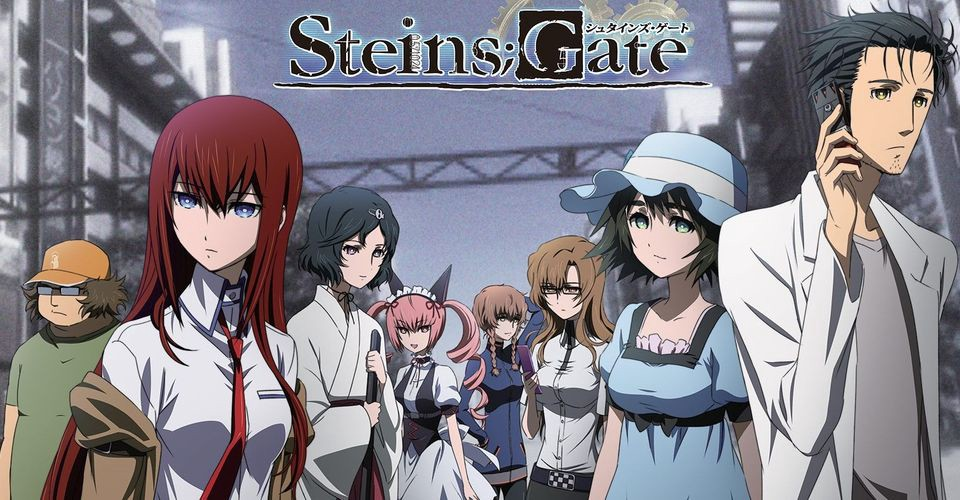
Steins;Gate is an animated series that deals with time travel. It is about a group of friends who run a ‘future gadgets’ laboratory wherein they make a phone microwave that allows them to send mails to the past and affect the future as a result. The lab is headed by self-proclaimed mad scientist Rintaro Okabe (Mamoru Miyano), the super hacker Itaru “Daru” Hashida (Tomokazu Seki) and his childhood friend and ‘hostage’ Mayuri Shiina (Kana Hanazawa) who calls herself Mayushi.

The series starts off with a science conference on time travel and this is the first time we are introduced to the name ‘John Titor’, an enigmatic figure who claims to be from 2036. His theories become the base for the scientific plausibility of time travel. Titor is also the reason they start looking for an old computer, the IBN 500. Supposedly because it can decode the time research done by the organisation SERN.

The conference is where Okabe meets Kurisu Makise (Asami Imai), a science prodigy, for the first time. She eventually becomes a lab member and helps him perfect the device that sends their “d-mails” – futuristic messages. Kurisu even helps Okabe create other gadgets that become pivotal to the storyline. However, their first meeting ends on a traumatic note when he finds her in a pool of blood, sends Daru a message about it and accidentally sets off a d-mail that alters events.

Steins;Gate camouflages itself as a comic series because even when Okabe realises that he is the only one who is able to remember events before and after time alteration, his eccentric mannerisms and the fascinating characters he meets, hoodwink us.

For instance, Suzuha Amane (Yukari Tamura), the part-timer who works for Okabe’s landlord Yugo Tennouji (Masaki Terasoma), calls herself a warrior and eventually becomes a lab member. Moeka Kiryu (Saori Goto), a socially awkward young woman who prefers to communicate only through text messages becomes another lab member especially when Okabe and she find out that they are both in search of the IBN 500.

The changes wrought by the d-mail are minimal at first but much like the butterfly effect, everything begins to spiral out of control pretty fast and they are left dealing with consequences they did not anticipate. As the story progresses, one realises that even the seemingly delusional stories they tell each other become a mask for latent concerns.

 The series starts off as a story about an oddball group but quickly snowballs into a fast-paced thriller where time becomes an entity to combat. It is a series with undercurrents of violence that throws up questions about identity and morality.

Flower of Evil (2020) #SherylPuthur

Directed By: Kim Cheol-kyu

Written By: Yoo Jung-hee

Language: Korean                                                          

Genre: Suspense; Drama

No of Episodes – 16

Run-time – 60-70 minutes

Cast:

Lee Joon-gi – Do Hyeon-su/Baek Hee-sung

Moon Chae-won – Cha Ji-won

Jang Hee-jin – Do Hae-su

Seo Hyeon-woo – Kim Moo-jin

Kim Ji-hoon – Baek Hee-sung

Son Jong-hak – Dr. Baek Man-woo

Nam Gi-ae – Gong Mi-ja

Choi Young-joon – Choi Jae-sub

Choi Byung-mo – Do Min-seok

Jung Seo-yeon – Baek Eun-ha

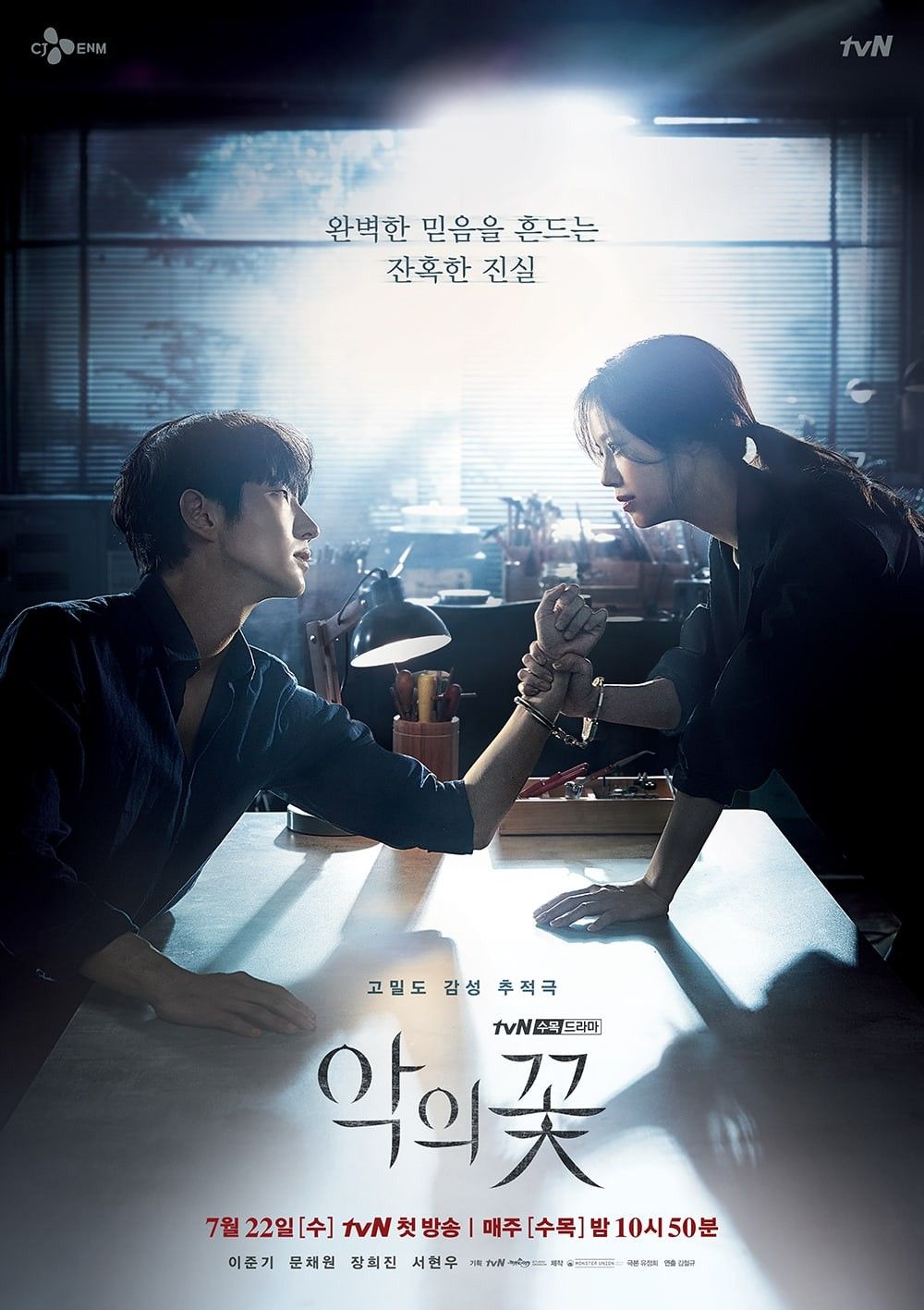
Flower of Evil is a thriller drama about a man on the run, Do Hyeon-su (Lee Joon-gi) who is living under the assumed identity of Baek Hee-sung, with his devoted detective wife Cha Ji-won (Moon Chae-won) and their young daughter Baek Eun-ha (Jung Seo-yeon).

 You find yourself as a viewer thinking oh this will be a cat and mouse narrative because Ji-won in the course of her investigation is bound to come closer to finding out the real identity of her husband, whose real name Do Hyeon-su is implicated in two different horrific crimes – one, the murder of the village headman, and the other, allegedly, as his serial killer father Do Min-seok’s (Choi Byung-mo) accomplice.

As the story progresses however, one begins to wonder if all the assumptions made up till that point were simplistic because nothing is as it seems. Hyeon-su was adopted by Dr Baek Man-woo (Son Jong-hak) and his wife Gong Mi-ja (Nam Gi-ae) after their son Baek Hee-sung (Kim Ji-hoon) hit Hyeon-su with his car. Hyeon-su took his place when Hee-sung fell into coma and yet how? Why did they readily adopt him? Is there a connection that exists or were they just being humane? Else, could it be that as someone up for a promotion as hospital director Dr Baek needed to maintain their public image…many questions emerge.

The series effectively uses foreshadowing to explore the dilemmas that will affect Ji-won. The opening cases that she investigates with her partner Choi Jae-sub (Choi Young-joon) has on one hand, a woman wilfully choosing to ignore her husband’s possible subterfuge so as to maintain her façade of a happy family and on the other, the exposure of a supposedly loving caregiver’s psychopathic tendencies.

We also see Hyeon-su being tormented by the shade of his father, an eerie figure with black orbs for eyes, bottomless, pitiless and seemingly drawing him towards violence because the vision shows up every time he’s at the crossroads of a decision – one violent and the other, socially acceptable.

There is also Do Hae-su (Jang Hee-jin), Hyeon-su’s older sister, for whom time stopped the moment her father, was revealed to be a serial killer. She, at pretty much the same time, lost her boyfriend Kim Moo-jin (Seo Hyeon-woo) who backed away and her brother, who fled the village after the headman’s murder. Her separation from him has worn her out in worry.

Kim Moo-jin’s fear might have destroyed his relationship with Hae-su, yet his intimate connection with the siblings leads him to become a journalist that writes on the killings that shook his village. However, his need to write about the killings hides a sinister truth, one that threatens to be revealed when he inadvertently comes into contact with Hyeon-su, which sets off the narrative.

The series has been frequently described as a story about human suffering and that is an apt description in that it sheds light on the depravity within humans, the need to justify dishonourable decisions and being groomed into a world of violence. It looks at the scars that trauma can leave on the very fabric of a person’s soul and possibly what innocence really is.

Masterfully directed, the series does not let up on the tension even when one has a sense of where each piece fits. There is no lazy resolution to the story; it pushes to violent despair to see if after that hope can still exist.

A Place Further Than the Universe (2018) #SherylPuthur

Directed By: Atsuko Ishizuka

Written By: Jukki Hanada

Voice cast: Mari Tamaki – Inori Minase; Shirase Kobuchizawa – Kana Hanazawa; Hinata Miyake – Yuka Iguchi; Yuzuk Shiraishi – Saori Hayami; Gin Todo – Mamiko Noto; Kanae Maekawa – Yoko Hikasa; Yumiko Samejima – Lynn; Mugumi Takahashi – Hisako Kanemoto

Language: Japanese                                                      

Genre: Adventure; Comedy; Drama

Number of Episodes: 13

Run Time: 24 minutes each

A Place Further Than the Universe is a Japanese animated series. Classed as an adventure and subtitled as the story that leads to Antarctica, the series focuses on four high-school students who want to be a part of the civilian Antarctica expedition.

Mari Tamaki (Inori Minase) or known to her friends as Kimari is a high-school student whose insatiable curiosity about life and need for adventure is thwarted by her paralysing fear of failure. Her desire to live her youth fully finds expression when she meets Shirase Kobuchizawa (Kana Hanazawa), a school-mate. Shirase wants to travel to Antarctica so that she can find her mother Takako Kobuchizawa, a civilian researcher who went missing three years ago during a blizzard in Antarctica.

Shirase’s dogged pursuit of her implausible dream makes her the butt of jokes on the school campus but Kimari’s decision to stick by Shirase and be a part of her dream becomes the catalyst for the narrative.

Their enthusiastic conversations are overheard by Kimari’s colleague Hinata Miyake (Yuka Iguchi) at the convenience store she part-times at. Hinata is a high-school student who dropped out because of certain events. She wants to be a part of Shirase and Kimari’s plan so that while she waits to take her college entrance exams, she can be a part of something momentous.

Their decision to crash the meet-up for the Antarctica Civilian Research group introduces them to Yuzuki Shiraishi (Saori Hayami), a freshman high-school student who is also a popular child actress. Yuzuki’s mother/manager wants her to accompany the civilian team and do a broadcast show on living in Antarctica.

Conceptually, the story sounds laughable and yet it builds the credibility of the narrative bit by bit as the faith and desire of the holders of the dream grow. Much like a bildungsroman, the series draws on different experiences to chart growth and learning. More so, since it is centred around loss; not just for Shirase but even the adult researchers like Gin (Mamiko Noto), Kanae (Yoko Hikasa), Yumiko (Lynn), and many other members who were part of the previous ill-fated expedition.

The series is an emotional experience but it doesn’t become trite or matter of fact even when the viewers are able to sense a reveal. True to the idea of an adventure, the backdrop of the animation is dynamic and detailed, giving us a realistic insight into what the daily grind of living on a ship or working on one of the most desolate landscapes could be about.

The story has the ability to connect across age and culture largely due to its realistic characterisation, scenery and in the sense of catharsis it conveys. It also continually gives us a sense of possibility.  Kudos to its intimate portrayal of relationships such as that of Kimari and Megumi (Hisako Kanemoto), on the strains that form and the insecurities that build when people choose to follow their own path.

Record of Youth (2020) #SherylPuthur

Directed By: Ahn Gil-ho

Written By: Ha Myung-hee

Language: Korean                                                               

Genre: Drama; Slice of life

Number of Episodes: 16

Run time: 60-75 minutes

Cast:

Park Bo-gum – Sa Hye-jun

Park So-dam – An Jeong-ha

Byeon Woo-seok – Won Hae-hyo

Kwon Soo-hyun – Kim Jin-woo

Shin Ae-ra – Kim Yi-young

Ha Hee-ra – Han Ae-seok

Han Jin-hee – Sa Min-gi

Shin Dong-mi – Lee Min-jae

Lee Chang-hoon – Lee Tae-su

Park Soo-young – Sa Young-nam

Lee Jae-won – Sa Gyeong-jun

Record of Youth is a 2020 South Korean slice of life drama. It explores the struggles and successes of 20-somethings who want to make it in the entertainment industry.

Offering a commentary on South Korea’s classist society that divides people into ‘silver spooners’ and ‘dirt spooners’ based on their upbringing, the series uses recurring motifs to highlight the difference between how we are perceived and what we want to portray.

Sa Hye-jun (Park Bo-gum) is a model who aspires to be an actor. To him, acting becomes a space to break away from socio-economic limitations because as he puts it, to the actor, a spoon is just an instrument; it doesn’t decide your fate. His father Sa Young-nam (Park Soo-young) is a carpenter who is in debt, while his mother Han Ae-seok (Ha Hee-ra) works as a housekeeper at his friend Hae-hyo’s (Byeon Woo-seok) house. Hae-hyo does come from privilege but his life is micro-managed by his mother Kim Yi-young (Shin Ae-ra), who sees her children’s success as an extension of her identity. Their friend Kim Jin-woo (Kwon Soo-hyun) is a photographer who dreams of owning his own studio but is expected to work for a photographer who is publicly dismissive of him. An Jeong-ha (Park So-dam) became a make-up artist after quitting her corporate job, something that is frequently brought up.

None of them are working for the sake of livelihood alone but because they have dreams they wish to fulfil. These dreams do come at a price, for the series explores the loneliness and anxiety of the youth who have to deal with the burden of expectation such as Jeong-ha, whose mother expects her to follow the conventional route and be a salary-woman and as such she cannot confide her professional choices with her. Even the many intimate relationships portrayed in the series are affected by socio-economic factors.

The youth of the story are unlike the generations before them and the script uses conversation to discuss this gap. The communication in the parents’ generation uses internal monologue to express what they truly feel versus what they actually say. The next group, such as the ones closer in age or temperament – Hye-jun’s brother Sa Gyeong-jun (Lee Jae-won) and his manager Lee Min-jae (Shin Dong-mi), frequently mutter under their breath or speak in low undertones. The ‘youth’ however, expresses themselves openly which works against them. After all, society upholds manipulation and doublespeak.

A recurring motif is that of the characters being shown and then shown through the mirror. This mirroring of the self and the reflection discusses the idea of perception – self and the other(s). Interestingly, the word ‘mirroring’ is actually mentioned a couple of times by Sa Gyeong-jun when he explains his responses to the malicious online comments on Hye-jun.

Since the lead actor enlisted just before the series released, many of the performances discussed in Record of Youth seem to be a nod to his career as an actor up till this point. It does bring up the enlistment requirement for young men and their concerns regarding their careers.

As a slice of life drama, it is realistic in how it depicts relationships both platonic and non-platonic, the anxiety of career choices, and the fears/ excitement of life. As a record of the modern youth, it comments on class structures and dreams, joining a host of recent releases from South Korea that focuses on these divisions.

Grimm TV Series (2011-2017) #SherylPuthur

Created By: Stephen Carpenter, Jim Kouf & David Greenwalt

Cast:

David Guintoli – Det. Nick Burkhardt

Silas Weir Mitchell – Munroe

Russell Hornsby – Det. Hank Griffin

Bitsie Tulloch – Juliette Silverton

Sasha Roiz – Captain Sean Renard

Reggie Lee – Sergeant Drew Wu

Bree Turner – Rosalee Calvert

Claire Coffee – Adalind Schade

Language: English                                                       

Genre: Fantasy; Police Procedural drama; Horror

Run Time: 43 minutes

Number of Seasons: Six (123 episodes)

The Grimm TV Series gives a new spin to the Brothers Grim fairytales. In the series, a Grimm is someone born with the ability to see Wesen (the German word for creature), even if they masquerade as humans.

As a descendant of the Grimms, Det. Nick Burkhardt (David Guintoli) not only possesses the ability to see Wesen but also enhanced strength and other abilities that set him apart from other humans. However, since he was brought up with no knowledge of his ancestry and works as a cop, he feels duty-bound to help people and has fewer of the prejudices common to his people.

His aunt’s re-entry into his life awakens his powers enabling him to see the true face of Wesen. At first he finds it disorienting and as a homicide detective begins to be suspicious of Wesen motives to strange murders.

In fact, Monroe (Silas Weir Mitchell), a Blutbad (wolf-like Wesen) whom he suspects of being a murderer, in turn accuses Nick of being one since he’s a Grimm. Interestingly, Monroe speaks of the alternate folktales Wesen tell about evil Grimms who hunt innocent Wesen children. This in many ways is a reminder that prejudices work both ways and could be dangerous.

His growing friendship with Monroe and other friendly Wesen keep him from viewing his world in the black and white manner of the Grimms. But the strange murders he and his human partner Det. Hank Griffin (Russell Hornsby) solve with the help of the cynical Sergeant Drew Wu (Reggie Lee) frequently have a Wesen angle to it, which he finds increasingly hard to keep to himself. Monroe becomes his unofficial partner because of Wesen involvement, along with occasional help from Rosalee (Bree Turner), a Wesen pharmacist.

His worlds – Human and Grimm clash more and more as the story progresses bringing the violence closer home to affect his long-term partner Juliette Silverton (Bitsie Tulloch) who gets drawn deeper and deeper into his world as seasons progress.

 What makes the series relatable is that it plays out real life concerns in this fantastical space – racial prejudice, white-supremacist attitudes, pure-blood fixations, political ambitions et cetera.

There are many enemies in the series, some join forces, some shift loyalties depending on who they are fighting. Some antagonists are closer home such as Captain Sean Renard (Sasha Roiz), Nick’s senior officer, who with the help of his hexenbiest (witch-like Wesen) partner Adalind Schade (Claire Coffee), is interested in controlling Grimm powers for his ambitions.

The series builds slowly with season 1 using familiar fairytales which midway through begins to be occasionally predictable. But if season 1 uses Red Riding Hood, Cinderella and other stories; season 2 broaden the scope by looking at fairytales from different cultures, making the episodes more complex.

What does not change however, is that the season cliff-hanger is revealed in literally the last two minutes of the final episode – every single season. So even if it seems predictable in season 1, the story takes an unimaginable turn at the penultimate moment.

There are many factions that come into play in the story and their involvement keeps building up making the threats of the story multi-faceted. There is a quest element to the story as well which adds to the suspense. With the characters classed as grey with no one being particularly good, including the main lead; the duality makes the characterisation realistic.

The final season is slightly rushed but much shorter than the previous season. It however ties up loose ends making it a compact narrative.

The King: Eternal Monarch (2020) #SherylPuthur

Directed By: Baek Sang-hoon, Jung Ji-hyun, Yoo Je-won

Written By: Kim Eun-sook

Cast:

Lee Min-ho – Lee Gon

Kim Go-eun – Jeong Tae-ul/ Luna

Woo Doo-hwan – Jo Yeong/ Jo Eun-sup

Kim Kyung-nam – Kang Sin-jae

Jung Eun-chae – Koo Seo-ryung

Lee Jung-jin – Lee Lim

Language: Korean                                             

Genre: Sci-fi; thriller; romance

Number of Episodes: 16      

Run Time: 60 – 70 minutes

The King: Eternal Monarch is a 2020 South-Korean sci-fi romance drama. The story is set in two parallel worlds – the Kingdom of Correa and the Republic of Korea. There are similarities between the two worlds, enough to cause some confusion as to where the characters are, but with differences that stand out as cues to remind the viewers. Since the narrative is about parallel worlds, it goes into the convoluted region of time-travel and the paradox of time.

The doorways between the worlds open twenty-five years before the story begins, when the mythical flute Manpasikjeok is split in two. This tears the fabric of the worlds, upsetting the balance. Lee Gon (Lee Min-ho), the young king of the Kingdom of Correa possesses half the flute while the other half belongs to Lee Lim (Lee Jung-jin), the traitor who fled after his unsuccessful coup.

Armed with tangible clues as to the existence of a parallel world, Lee Gon stumbles onto the doorway in a bamboo forest, and his entry into the Republic leads him to meet Jeong Tae-ul (Kim Go-eun), the woman who might be tied to his past. Jeong Tae-ul is a no-nonsense police officer, whose life gets thrown into chaos with his entry.

The two parallel worlds are in many ways mirror images of each other with there being a doppelganger of each person in the other world. Their family names may be the same but their personalities, lives and experiences are not. The more that Lee Gon and Jeong Tae-ul learn about each other’s worlds, the more imbalanced it begins to seem – why are strange murders occurring all over the Republic of Korea? Why are certain doppelgangers being targeted? Is it possible that in this race for power, they may find their memories and their existence wiped out?

The series is tightly paced switching as required from suspense to romance to comedy especially in the encounter between the king’s bodyguard Jo Yeong (Woo Doo-hwan) and Tae-ul’s childhood friend Jo Eun-sup (Woo Doo-hwan) – who are doppelgangers with diametrically opposed personalities and who may have to step into each others’ lives.

The relationship of the two protagonists is maturely handled because they are world-weary, duty-bound and far less frivolous than the average k-drama couples. They are light-hearted too because early in their relationship they establish the possibility that time may not always be in their favour.

In keeping with the political intrigues that are a staple of every monarchy-based drama, the kingdom has its fair share of power politics especially with the presence of the shrewd and manipulative Prime Minister Koo (Jung Eun-chae), who aims to win over the king to keep herself in power. Unfortunately, most of the battles of the kingdom get fought on Republic’s soil. Many of the characters become pawns in this battle, such as Jeong Tae-ul’s senior in the Violent Crimes Division, Kang Sin-jae (Kim Kyung-nam) who finds himself increasingly forced to take sides in a fight that he got unwittingly drawn into.

The writer, in the course of the story, introduces us to the various trajectories that the time-crossed love story could take. By exploring the possible futures they could have, the viewers are brought to an alternate conclusion of the narrative.

The series has been criticised for its complicated plot but most of the plot twists fit within the framework of the time paradox. An event that occurs could be an interaction between a future self and a present self. The lack of memory of such incidents is well within time travel narratives. The similarity between the two worlds became an issue but it is the sameness and unfamiliarity that creates a space for a revisionist history. There have been other criticisms levelled some of which can be chalked to production errors and others to a lack of awareness of the current socio-political temper.

With a captivating OST that reverberates with longing, and a smart plot peppered with metaphors of time, it bridges the unexplained in science with magic.