Love in Disguise (2010) #SherylPuthur

loveindisguise_ancient4

Directed By: Leehom Wang

Written By: Leehom Wang; Xin-Yi Du; Hung-Chieh Chen

Cast:

Leehom Wang – Du Ming Haan

Liu Yifei – Song Xiaoqing

Joan Chen – Joan

Yike Zeng – Xiaotao

Qiao Zhenyu – Mu Fan

Chen Han-tien – Wei Zhibo

Language: Mandarin                            Genre: Musical; Romantic-Comedy


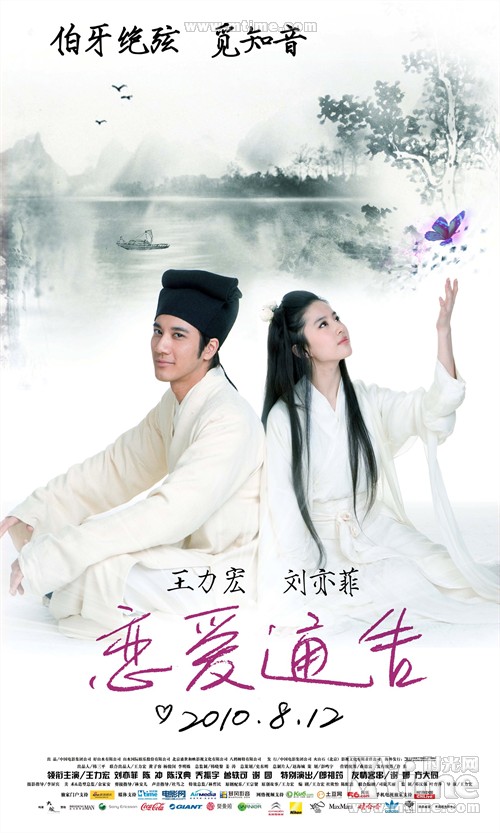
Leehom Wang’s musical romantic-comedy – Love in Disguise is an impressive film by a debutant director.

The storyline is simple, rather clichéd yet the treatment is ultimately what matters and the conviction. Love in Disguise follows the life of famous pop-star Du Ming Haan (Leehom Wang) dealing with the usual pitfalls of fame – two-faced supporters, crazed fans, inquisitive paparazzi and an understanding manager Joan (Joan Chen).

A running gag of the film is DMH’s actual response and what he wishes to do but cannot because it would ruin his reputation and antagonize fans. Such as when asked about his relationship status with another famous personality, in his mind he assaults the journalist but in reality gives a measured response.

Things change when he encounters the music of a guzheng, played by a classical Chinese music student Song Xiaoqing (Liu Yifei). The music calls to him and he has visions. He goes in search of the music to the Far East Music Academy dragging his friend and band member Wei Zhibo (Chen Han-tien) along. They enroll as students, disguised like rustic villagers, which leads to hilarious situations.

The film uses illustrations to express an artist’s imagination and in some places very anime-like emotions. The relationship between DMH and Song Xiaoqing draws on the story of Boya and Ziqi – Boya was a qin player and Ziqi, the only one who could truly understand and visualize his music. They were friends and musical soul-mates. The entire sequence is presented like a traditional Chinese drama.

What stands out is the idea, that your soul-mate need not have a non-platonic connect with you. It just becomes a relationship that draws out the best out of you, and helps you see different heights.

Wang’s music connects because it fuses traditional Chinese instruments with hip-hop, R&B and western classical – a style he calls ‘chinked-out symphony’. For an Indian viewer, it might be a little low on the melodrama and they would want more comic sequences but it is a fun film and the music – let’s just say, I have Leehom Wang on repeat on my player.

 

Australia (2008) #SherylPuthur

australia_ver5_xlg

Directed By: Baz Luhrmann

Written By: Baz Luhrmann; Ronald Harwood; Stuart Beattie; Richard Flanagan

Cast:

Nicole Kidman – Lady Sara Ashley

Hugh Jackman – Drover

David Wenham – Neil Fletcher

Brandon Walters – Nullah

David Gulpilil – King George

Bryan Brown – Lesley ‘King’ Carney

Language: English                      Genre: Epic Historical; Drama; Romance


Baz Luhrmann’s Australia, was his next production after the hugely successful Moulin Rouge. It even starred Nicole Kidman, though alongside fellow Australian actor Hugh Jackman.

The film uses the tropes of oral storytelling and the bright colour palette of a children’s story. The narration is by a child and tells of the rich aboriginal culture that existed in Australia and the white-washing it received with the entry of the white Australians. The story is thus set on the experiences of the children of the Stolen Generations.

The film is well shot and gripping in parts however, it fails in that one thing that makes a Baz Luhrmann film stand out and take the audience away – passion. The film lacked the overwhelming yet focused passion that made Romeo + Juliet and Moulin Rouge such great successes. Both these films seduced the viewer with the frenzied passion, romance and looming tragedy that made up their narrative.

Agreed that Australia’s theme was ‘overcoming the odds’ but the focus slipped and sharpened in the flow of the narrative. Hence some of the adventurous moments take away from the crux of the film. It is a beautiful attempt by an Australian director to talk about the experiences of the Stolen Generation.

What stood out is the characterisation that takes the story forward. Lady Sara (Nicole Kidman) is an aristocratic British lady, who comes to Australia to settle her husband’s affairs and starts a new life. She unlike others of her background believes that the ‘half-caste’ children should not be sent away. But somewhere to emphasise that we will bring some aspect of prejudices from an alien culture, she does not believe Nullah (Brandon Walters) should leave her and go on his walkabout with his grandfather because she possesses western notions of education and safety. Drover (Hugh Jackman) on the other hand, consciously chose a non-white tradition to identify with and is hence more understanding.

It is about how far can you push aside your prejudices, doubts and accept people on their terms. After all, it is not uniformity that will knit us together, but acceptance.

So watch the film for how Baz Luhrmann has made the Australia of multiple narratives stand out.

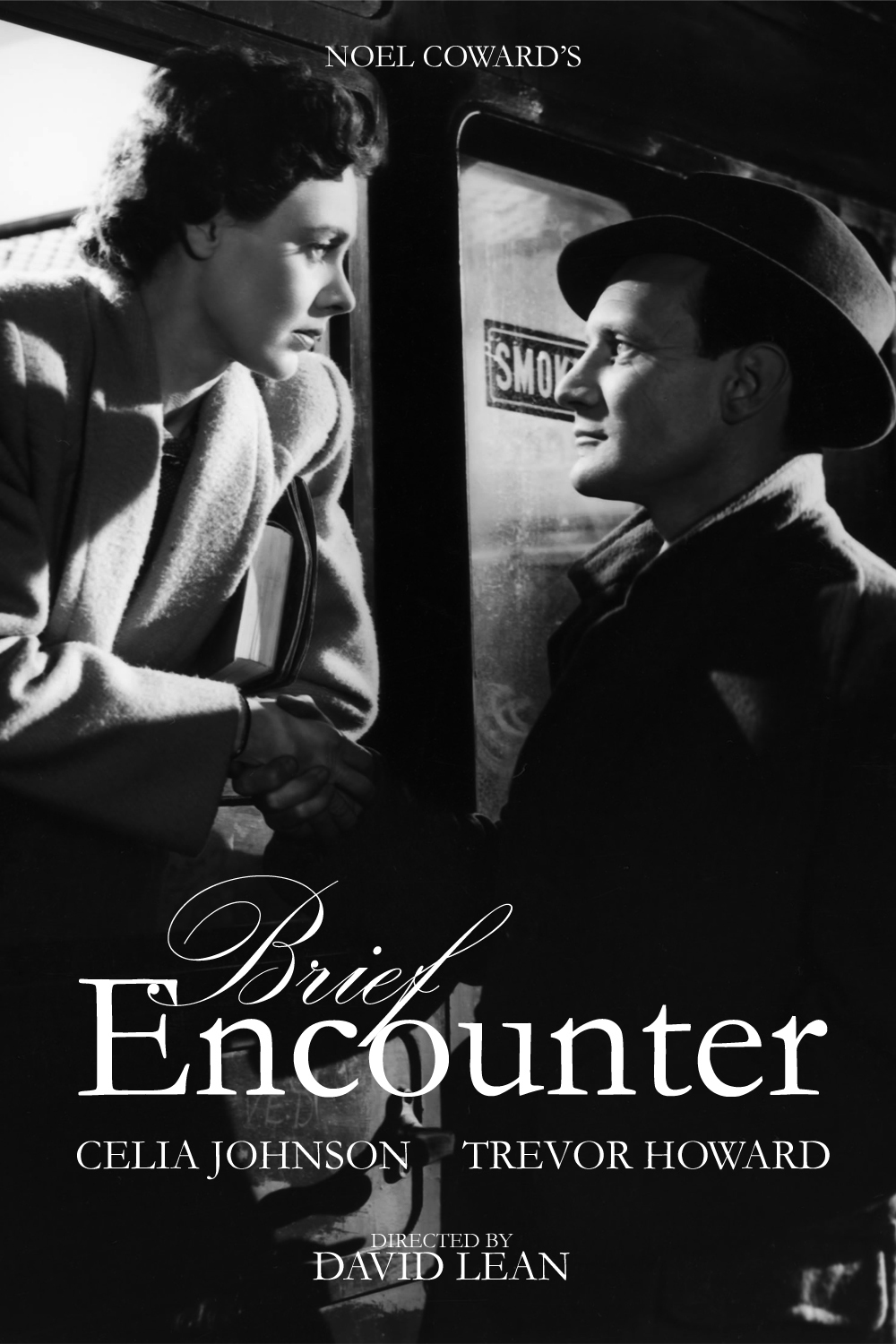
Brief Encounter (1945) #SherylPuthur

Brief Encounter

Directed By: David Lean

  Written By: Noël Coward; Anthony Havelock-Allan; David Lean; Ronald Neame

Cast:

Celia Johnson – Laura Jesson

Trevor Howard – Dr. Alec Harvey

Stanley Holloway – Albert Godby

Joyce Carey – Myrtle Bagot

Cyril Raymond – Fred Jesson

Everley Gregg – Dolly Messiter

Language: English                                                         Genre: Drama; Romance


Milford station refreshment room, where commuters rest while they wait for their trains, is the setting for David Lean’s 1945 black and white film – Brief Encounter. The film is set to Rachmaninoff’s Piano Concerto No. 2 and the haunting melody of the piece which starts with the train steaming into the station, sets the mood of the film.

Starring Celia Johnson, Trevor Howard, Stanley Holloway and Joyce Carey, it is a bittersweet romance between two married strangers who meet under the most ordinary circumstances and over succeeding weeks find themselves drawn to each other, unable to let go and unable to stay.

The film could have easily become the sordid love story of a bored housewife but is saved by Lean’s camera work and the poignancy of Celia Johnson’s narration. The beauty of the film is that it functions on one level as a silent film. In the sense that the viewer depends on the subtle but expressive emotions flitting across Laura’s face to really experience the ‘brief encounter’. Even the narration is carefully worded; honestly portraying the confusion, the romantic aspirations and the moral apprehensions of Laura Jesson. You experience her dilemma of being happily married yet in love with someone else.

The basis of the dilemma is “middle-class morality” as Alfred P. Doolittle famously stated in the film My Fair Lady (a role incidentally played by Stanley Holloway). You can see how the romance between Laura (Celia Johnson) and Dr. Harvey (Trevor Howard) is contrasted by the romance between Mr. Godby and Ms. Bagot. Their relationship functions on more liberal lines. The interesting thing is also that Ms. Bagot’s choices take her desires and ambitions more into consideration when compared to Laura.

An interesting scene or rather moment in the film, which can also be considered quite symbolic, is when Laura is seated in her front room, and her mind goes back to the moment when it all began – the scene slowly dissolves into the Milford refreshment room but there is a lingering after-image of Laura staring into the refreshment room.

Brief Encounter is an interesting choice for a DVD on a dreamy afternoon because as a movie it is well made – editing, both sound and film, cinematography and the inspired direction brings the story together but more importantly, for Celia Johnson who gives a moving portrayal as Laura Jesson. Unfortunately, she has a limited filmography, so watch it for her. That’s just in case, you’re not a David Lean fan.


Drishyam (2013) #SherylPuthur

1523308_638169002888773_1776440072_o

Directed By: Jeethu Joseph

Written By: JeethuJoseph

Cast:

Mohanlal – Georgekutty

Meena – Rani George

Ansiba Hassan – Anju George

Esther – Anu George

Kalabhavan Shajon – Constable Sahadevan

Siddique – Prabhakar

Asha Sharath – IG Geetha Prabhakar

Language: Malayalam                                                     Genre: Drama; Thriller


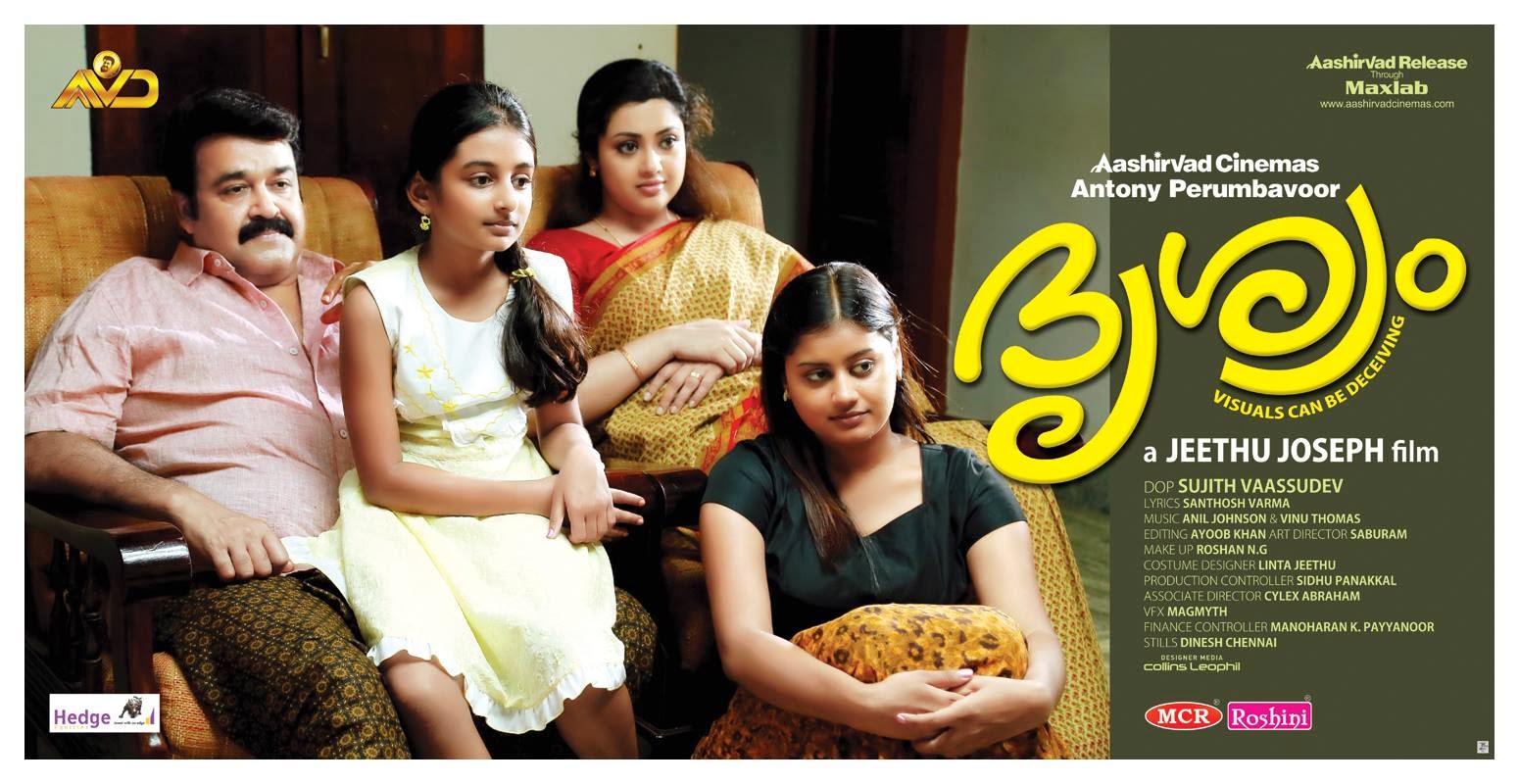
The film opens with a bus journey and it is when the story progresses that the significance of the event is understood. It then becomes clear that Jeethu Joseph has not wasted even one shot in the film. Everything fits together to form this ‘picture’. In fact, even the word ‘drishyam’ means a picture/visual. The film is then a meta film – a film within a film. Narrative and directorial control is displayed in the film.

Georgekutty (Mohanlal) is someone who spends his life watching movies while waiting for work assignments (he works as a cable TV operator in a small village). But these film-viewing exercises are not only entertainment; he learns a lot from them as demonstrated in a scene early in a movie where he expounds knowledgeably about habeas corpus.

Every scene follows logically and you wonder what jigsaw is it all fitting into. It begins to seem as though the point of no return isn’t happening soon enough or that the setting is taking a while but surprisingly you’re not bored and once the moment comes, the story hurtles forward. The film seems to have created a genre of its own – a how-done-it not a whodunit.

Georgekutty is the second director in this meta film where he directs the action in a masterly fashion and sometimes, like some directors is taken by surprise at the initiative of his ‘performers’. The start of this second film is nicely shown through the closing of his eyelids in the opening sequence, much like a camera and the opening of his eyelids towards the end, stands for the end of his ‘drishyam’.

In essence, it is the story of a family. A family that is slightly dysfunctional with a lackadaisical approach to the duties of family life. It is about how tragedy brings about the realization that they need to reaffirm their bonds as a family and stand together.

Watch it for the well-crafted package it is and the sensitive portrayal of grief, family life – of various kinds of families and what a difference a close-knit family can make in times of adversity. Also, for the well-crafted dialogues that express, yet mask; fail to implicate but do not fail to impress the viewer with its nuances.

Ram-Leela (2013) #SherylPuthur

ram-leela_138302361750

Directed By: Sanjay Leela Bhansali

Written By: Sanjay Leela Bhansali

Cast:

Ranveer Singh – Ram

Deepika Padukone – Leela

Richa Chadda – Rasila

Supriya Pathak – Dhankor Baa

Gulshan Devaiah – Bhavani

Language: Hindi                                                             Genre: Romance; Drama

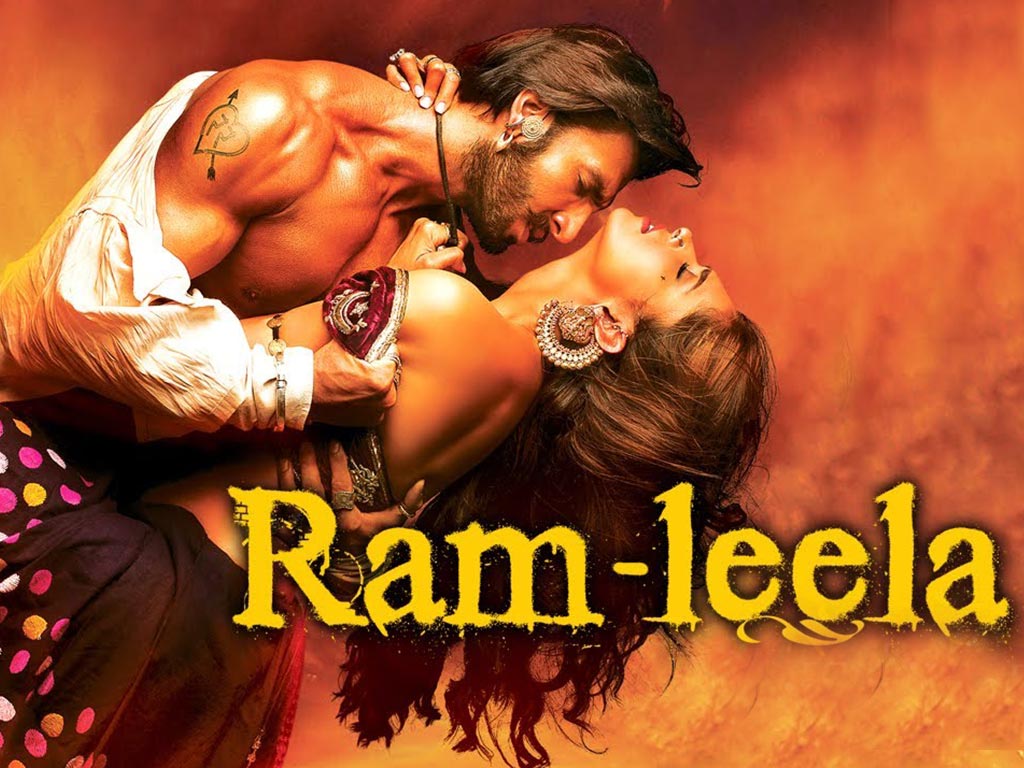
Ram-Leela set out to be the quintessential Indian romance but something stops it from making the mark. It had everything one expects from a Bhansali film – the grandeur of cinema, a visual cornucopia, a romance, beautiful music, great performances – but

And this three letter word ‘but’ peppers any reading of Ram-Leela. I’m going to borrow words from a director friend who described the film succinctly, ‘it is a beautiful film in a frame-by-frame shot – but – where (and this is my voice interrupting) is the logical continuity?

As I was watching I kept feeling that major portions of their romance got chopped up on the editing table because I couldn’t quite understand why they fell in love. The reason why Romeo and Juliet worked (on which this film is ostensibly based) is because of the innocence of the characters. They were too young and not yet jaded by life, so the idea that they loved each other was somehow believable. Ram and Leela are not that convincing.

At the outset it is established that the film is based on Shakespeare’s Romeo and Juliet and especially inspired by Baz Luhrmann’s adaptation (guns, modern settings yet culturally appropriate). What is really interesting to behold is that Bhansali has fused the storylines of popular sagas of star-crossed lovers into one narrative and oddly enough they flow well into each other. It is l suppose his tribute to every love saga written. Beginning with Heer-Ranjha, where the hero, a pampered younger son who is a lover of music and does not believe in fighting; to Romeo declaring his love in a garden of statues. It is also Layla-Majnun (Majnun means madman, referring to his madness when he loses her). There is even a nudge in the direction of West Side Story in the sexual assault on Rasila (Richa Chadda) when she takes a message from Leela (Deepika Padukone) to Ram (Ranveer Singh).

The film moves beyond the narrative of star-crossed lovers and I think tries to say something about India. The portrayal of women and the treatment meted out to them. How violence to women is a sport – the most telling incident being when Kesar (Barkha Bisht) is chased by Bhavani (Gulshan Devaiah) and his henchmen. It is set to music and is eerily reminiscent of Aishwarya Rai in the song sequence Man Mohini from Hum Dil De Chuke Sanam racing to place the last tile and being chased by the other players.

Unlike Bhansali’s other films, the male protagonist has received a much bigger opening. In fact, the image of Ram dominates the film – the painting on the wall in the streets of the Rajaris, of him in his warrior pose. Is it that the Indian male fails to fit into the mould he created (ideal, just, pure, and kingly)? That they are just parodies who worry more about prowess and are unable to take a stand? Conversely then do ineffectual boyfriends make chauvinistic husbands? It is ironic then that the male protagonist is called Ram.

Or maybe like the recurrent motif of the film – the peacock, it is about the male of the species being showier than the female.

There is much being displayed about male and female power relations within the narrative. Dhankor Baa (Supriya Pathak) the matriarchal head of the Sanera family where the men toe the line and the daughter has a freer rein. But the daughter –in law wishes for more time with her husband but his hands are still knotted to his mother’s skirt. Even within the relationship of Ram and Leela, he encourages her initiative before marriage but then becomes controlling after marriage. And she knuckles under.

It speaks about female desire and here the women take up stronger initiative to fulfil their desire but the men seem to hold back from a real fulfilment and prefer a wish fulfilment hence the preponderance of reference to porn. The film is Indian machismo on display for us. It can be considered a move towards a different Indian sexuality in the uninhibited display of love between Ram and Leela.

As a romance the film does not entirely work for me but if I read further into it, and maybe even do an orientalist reading, I might reach somewhere.

Celluloid (2013) #SherylPuthur

CELLULOID Malayalam Movie REVIEW

Directed By: Kamal

Written By: Kamal

Cast:

Prithviraj – J.C. Daniels

Sreenivasan – Chelangatt Gopalakrishnan

Mamta Mohandas – Janet

Chandni – Rosie

Language: Malayalam                                                            Genre: Biopic

Malayalam cinema is known for its mature handling of the medium and its introduction of themes ahead of their times. It then seems fitting that the Father of Malayalam cinema – J.C. Daniels would be a pioneer in this regard.

However, as forward as the themes of Malayalam cinema were and are it is balanced out by a rigidity of thought and caste prejudices. At present it may be slight in comparison to earlier times but it still exists and so the film functions simultaneously as a critique of Kerala society.

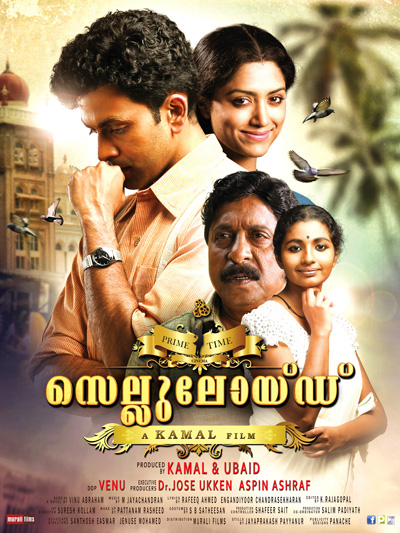
Celluloid follows the ill-fated career of J.C. Daniels (Prithiviraj) who has a dream to make the first Malayalam film. It follows his journey to erstwhile Bombay to meet with Dadasaheb Phalke (Nandu Madhav), who explains various aspects of film making. After a few delays, he manages to get hold of the equipment and a British cameraman, and begins his filming. Since he sold his land to finance the film, to keep costs low, he directed, acted, edited and also wrote the screenplay.

Unlike his contemporaries, his film Vigathakumaran was not based on mythology but was a social drama. Ironically, his own life resembled a social drama because when Bombay-based actor Lana proved difficult to work with he got Rosie (Chandni) a Dalit Christian (the term is ironic since the latter ought to cancel out the former but…) to act instead. She played a Nair lady but when the film was screened the orthodox upper-caste men took offence at the idea of a lower-caste woman playing a Nair woman and boycotted the film.

The film parallels J.C. Daniels life with the investigation of the journalist Chelangatt Gopalakrishnan (Sreenivasan) into the film career of this obscure dentist who was once known as J.C. Daniels, the director of Vigathakumaran.

The relationships portrayed in the film have been beautifully sketched out such as the love based in friendship shared by J.C. Daniels and his wife Janet (Mamta Mohandas). A strong woman who stands by her husband and remains the factor that keeps them knitted together. Her sisterly treatment of Rosie, ignoring the caste barriers makes for some of the most moving scenes within the film. A scene that stood out for me, for its poignancy, was decking Rosie in the attire of a Nair lady and her amazement at their ‘presumption’ that it was normal to treat her as equal.

A technically sound film, it uses film conventions to create symbolism within the film such as the shadow play on the whitewashed walls that eases with breathing. The narrative of the life continued in a closed carriage.

The film is about idealism, regret, apathy at the sight of continued failure and the slight flicker of hope that stays sometimes like a disease and sometimes like a blessing. It is also about the burning need to tell a story – to find expression.

Over and above, though it is a tribute to the first filmmaker in Malayalam. A technically sound film, its obvious use of technique is in itself a tribute to J.C. Daniels – whose first film in some sense set the base for the future of Malayalam cinema.

Yeh Jawaani Hai Diwaani (2013) #SherylPuthur

Image

Directed By: Ayan Mukerji

Written By: Ayan Mukerji

Cast:

Ranbir Kapoor – Kabir “Bunny” Thapar

Deepika Padukone – Naina Talwar

Aditya Roy Kapur – Avinash “Avi” Arora

Kalki Koechlin – Aditi Mehra

Kunaal Roy Kapur – Taran Saxena

Language: Hindi                      Genre: Coming-of-age; Romantic-Comedy

Ayan Mukerji’s next directorial venture Yeh Jawaani Hai Diwaani was announced under Dharma Productions and I was excited – a) it was Ayan Mukerji’s next after Wake Up Sid which I loved b) it had one-time couple Deepika Padukone and Ranbir Kapoor as the lead pair. Not that I thought they had a stunning chemistry in Bachna Ae Haseeno that I was dying to see them together rather that I wanted to see how they would deliver their onscreen romance after their rather public parting.

Then the media blitzkrieg started and the promotions (of which I saw a trailer and the song sequence Badtameez Dil) convinced me that the film was going to be a commercial potboiler not out of place in the Karan Johar repertoire and it didn’t disappoint. The film is Wake Up Sid meets Kabhi Khushi Kabhi Gham minus the excessive melodrama.

The film is very interior like Wake Up Sid and has some brilliant shots. The screenplay is well written and the cinematography is lovely. The film is peppered with songs and Pritam’s music is catchy and soulful – in one word, brilliant. The songs though well shot is like in any other Hindi film a music break. It adds to the story but should Ayan Mukerji have sought to remove it and put a scene, the song sequence wouldn’t have been missed.

The film is commercial and I thought it wouldn’t be able to recreate the magic of Wake Up Sid which did cater for a more niche audience but was nevertheless a mature film. However I enjoyed Yeh Jawaani Hai Diwaani because Ayan Mukerji manages to use clichés and spin something entirely different with it, giving viewers something new through the end.

The characters are well sketched out, resulting in some interesting performances by all involved including secondary characters. Though Dolly Ahluwalia who is in a blink and miss role could have been given more screen time and maybe more time on subplots would have made the film more memorable. All in all, a well cast film with the lead pair displaying wonderful chemistry though performance wise for me Deepika Padukone stood out.

Certain dialogues and scenes in the film just stood out for me, making them very memorable for me – Aditi’s private thoughts communicated to Kabir, Kabir’s conversation with his stepmom, Naina’s talk with Kabir where she changes the wording of his previously defensive statement making the meaning all the more poignant. So go catch the film, it is a light-hearted romance that is both fun and relatable, giving moments of hilarity and soul-searching.

I’ve stayed mum about this but for me the highlight of the film, when it started was seeing Madhuri Dixit….Dancing!

Aiyyaa (2012) #SherylPuthur

Image

Directed By: Sachin Kudalkar

Written By: Sachin Kudalkar

Cast:

Rani Mukerji – Meenakshi

Prithviraj – Surya

Subodh Bhave – Maadhav

Nirmiti Sawant – Mother

Language: Hindi                                                         Genre: Romantic-Comedy

So I did it. I finally watched Aiyyaa. I had two friends bulldozing me into watching it, for entirely different reasons. One had been pleasantly surprised with the film, developed a new actor crush (Prithviraj) and felt the film was badly marketed and was actually a good film. The other, couldn’t even finish watching the film and wanted me to see it to prove her point that it was utterly crappy.

So I watched it, forget without expectations, instead a certain amount of reluctance to put myself through it. But before I get into how much I did agree with my friends (and which one) I should say that though I thought I was going to expire on the spot with all that melodrama, my attention was piqued and I wanted to know what the film was about and what could prompt two respected Indian actors to do a film written definitely under the influence of some highly illegal substance (incidentally there are frequent references to illegal substances).

While the 80s-90s melodrama within the film took a toll on my sensibilities and I felt most parts of the movie could be divided into hoot-worthy and cringe-worthy, there was something about the film that got me through it and set me thinking.

Then it hit me. It’s about living in a world of dreams and finding fulfilment in it. And how real life is so different and people are not what we assume them to be. Love is as much a product of imagination as it is of emotions. It also reminded me of the Norwegian film Turn Me On, Dammit! While that was the story of a teenage girl’s sexual awakening and hence was far open in expressions of sexuality, Aiyyaa was peppered with sexual innuendoes (one that stands very vividly in my mind is the petrol bunk sequence). Meenakshi (Rani Mukerji) is an inexperienced girl who’s only recourse to fulfilment (read: sexual, psychological, emotional…) is through films and playing out her favourite actors, in that perfect world she finds an escape from her drab life. Surya (Prithviraj) balances out the drama by playing the understated intense artist who is unapproachable, and very masculine.

The feminine and masculine is in fact played out variously within the film through all the couples and make for an interesting reading into gender roles. Each couple is an exercise into understanding romance through different lenses. The understated Chasme Budoor romance, the Mills and Boon storyline, an S&M relationship….

It’s definitely a badly marketed film. The hilarious and cheesy Dreamum Wakeuppam song coupled with dialogue promo – Mujhe gore log nahi kale log pasand hai (I don’t like white-skinned people but prefer dark-skinned people) made the film out to be a south bashing exercise and left many trailer viewers disgruntled. It resulted in a lot of flak for Prithviraj, a south star who according to them dared do such an insulting film. I rather see it as a sign of his self-deprecating humour. And the film isn’t really anti-south and I actually liked the song – eye-popping costumes, sexplicit lyrics and all. And kudos to Rani Mukerji for picking up Tamil lines for her role.

So the film can be a satire on the marriage market, on gender roles, on deceptive appearances, and in it’s over the top melodrama, a satire on films. It is most of all a film that doesn’t take itself seriously and seems to play on the ‘is this reality or a dream’ logic (there is in fact a dialogue about that – very Brechtian).  A onetime watch (maybe), funny innuendo filled songs, catchy tunes, good choreography (Aga Bai) and yes, I loved the background music that plays when she’s thinking/in pursuit/dreaming of him. All in all, a garish and interesting surprise.