Five Minutes of Heaven (2009) #SherylPuthur

Five_Minutes_Of_Heaven_(2009)Directed By: Oliver Hirschbiegel

Written By: Guy Hibbert

Cast:

Mark Davison – Young Alistair

Kevin O’Neill – Young Joe

James Nesbitt – Adult Joe

Liam Neeson –Adult Alistair

Richard Dormer –Michael

Anamaria Marinca – Vika

Barry McEvoy – Joe’s Chauffeur

Richard Orr – Alistair’s Chauffeur

Language: English                                                          Genre: Drama; Thriller

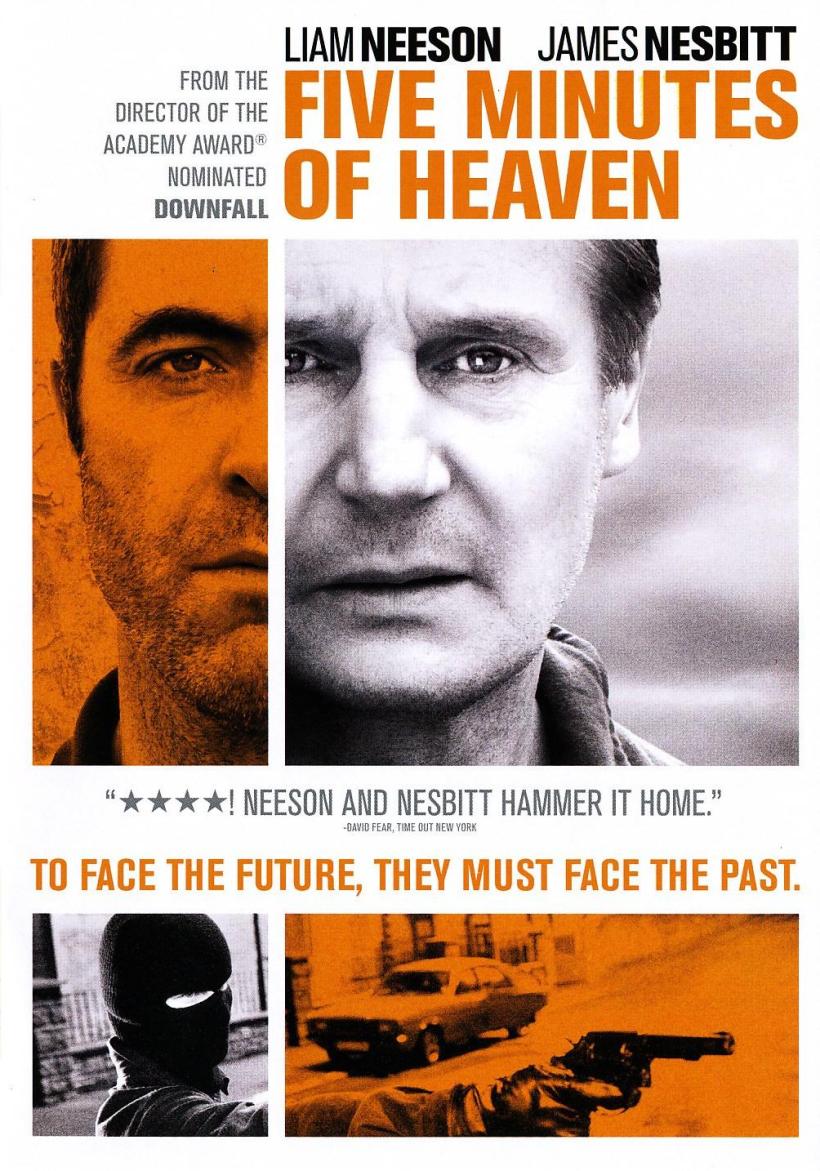
Five Minutes of Heaven is a fictional account of what would happen if two people, whose only connection was an act of violence, were thrown together.

Alistair Little (Mark Davison) is a seventeen year old lad who has been influenced by the UVF (Ulster Volunteer Force) to do something drastic that will right the wrongs done to the Protestants of Ireland, by the Catholics.

The UVF is loyal to the British Crown and believes in the idea of the United Kingdom. The IRA (Irish Republican Army), which is manned by Irish Catholics, believes in an independent status for Ireland. Both groups have been responsible for much violence in Northern Ireland, which is referred to as ‘The Troubles’.

Under Little’s leadership, his friends plan to kill a young Catholic man James Griffen, who the UVF intends as a warning to the IRA. Little shoots him down while he’s at home and this is viewed by his 8 year old brother Joe Griffen (Kevin O’Neill). Joe is shell-shocked by the violence and Little is sentenced to twelve years in prison.

Fast forward many years, a reconciliation project attempts to facilitate a conversation between the two. Little (Liam Neeson) has been working at rehabilitating children who have been pushed into violence and seems self-possessed. Joe (James Nesbitt) on the other hand, is fidgety and nervous.

The car journey the two make separately are very telling. Joe’s Chauffeur (Barry McEvoy) is unsure of his passenger’s mental state. Joe makes him stop so that he can smoke a cigarette and he keeps making disjointed conversation, attempting to be jovial. He frequently steps back into unwanted memories related to the aftermath of his brother’s murder. Alistair’s Chauffeur (Richard Orr) makes polite and general conversation with Alistair who seems strangely emptied out. There is blankness to his features. It is like he has been deadened by all the violence he has seen.

Alistair consented to the meeting because he understands that he has no right to ask for forgiveness but that Joe has every right to want to personally confront him. However, Joe does not want reconciliation with someone who destroyed his life and family. He wants to kill Alistair and experience his “five minutes of heaven”. Both want closure. It’s just that they want it differently. Alistair probably wants retribution or some kind of understanding that the past has changed his present and he is now a different person. Joe, on the other hand, hasn’t left the past because the memory of his mother cursing him for not having done anything haunts him.

Is reconciliation really a possibility post such traumatic experiences? Does a perpetrator really have the right to ask for forgiveness? And what is the price of vengeance? The film throws up very importantly, how far we are willing to be swept away by ideals and beliefs and, how one can be seemingly sane at the face of such an event.

The deliberate movements of the camera, the editing and the pared down, raw acting throws up in relief all these emotions.

It is a brief film with quiet yet tense action broken by intense moments. A tightly wound script, it is an important take on the turbulence in Northern Ireland.
De-Lovely (2004) #SherylPuthur

de-lovely

Directed By: Irwin Winkler

Written By: Jay Cocks

Cast:

Kevin Kline – Cole Porter

Ashley Judd – Linda Lee Thomas/Porter

Jonathan Pryce – Angel Gabriel

Kevin McNally – Gerald Murphy

Sandra Nelson – Sara Murphy

Allan Corduner – Monty Woolley

Peter Jessop – Diaghilev

Peter Polycarpou – Louis B. Mayer

Keith Allen – Irving Berlin

Language: English                                                            Genre: Musical Biopic


The scene opens and it looks suspiciously like a stage production, the lights slowly coming on, one after the other, to reveal an old man seated near a piano. Another person, dressed in a suit calls him out and he wheels himself out. The man now seated near the piano ready to play the music is Cole Porter and we realise that the old man in the wheelchair was Cole Porter as well.

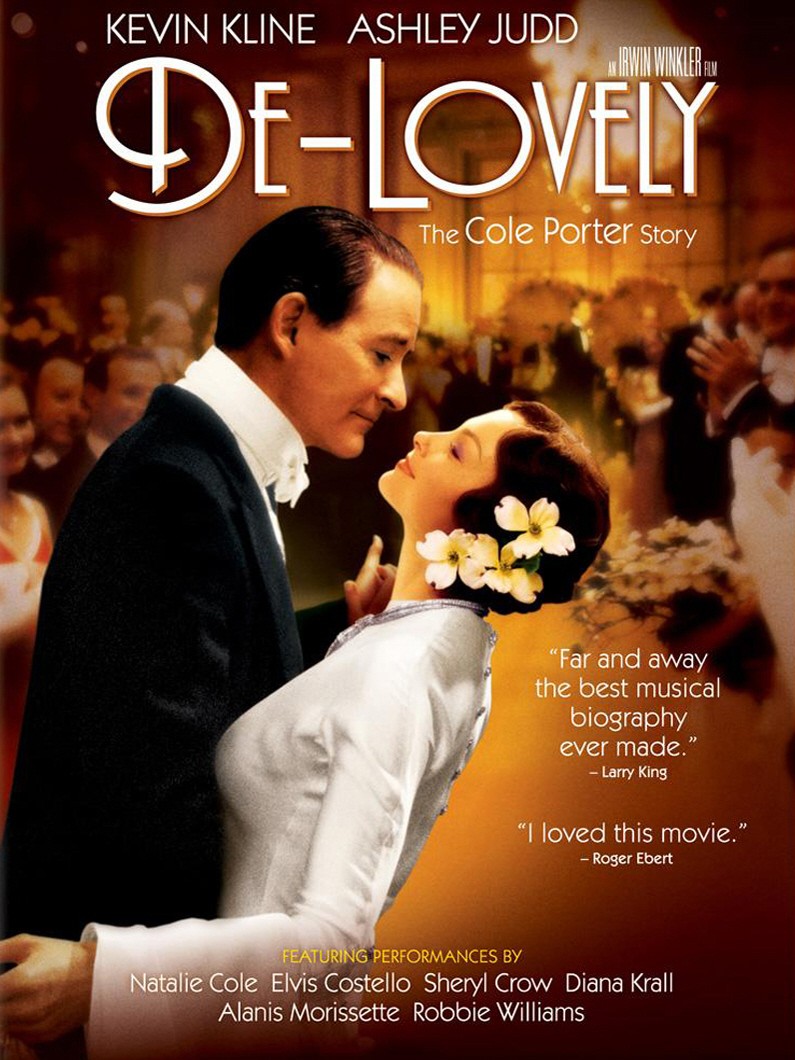
De-Lovely is a musical biography on Cole Porter that portrays his life, marriage, other relationships both professional and personal, and his career alongside his music. We see Cole Porter (Kevin Kline) meeting Linda Lee (Ashley Judd) and deciding to marry. There’s was an advantageous marriage because Linda, much like a manager does everything to promote his career. She believes implicitly in his music and his music’s ability to move people. She also uses the trajectory of his career to take him away from relationships she does not approve.

It is a strange portrait of a marriage, the usual ups and downs but also their rather particularly different dynamics, with his interest in men and her tacit acknowledgment of it. She wants him to be discreet but he is too flamboyant in his affections. Yet he cares deeply for her and she is in many ways central to his music.

The film is like a meta-narrative with the older Cole Porter feeling the need to portray things differently or finding the act of watching his life played out before him too disturbing. The director – Angel Gabriel (Jonathan Pryce) however, categorically tells him that he cannot interfere because his story will be reinterpreted based on what others feel. Also, once a story is in the public domain (and sometimes even when it’s not) one can take artistic liberties with a narrative. This is true of the film and every biopic.

However, while making the biography a review by the older self of the real-life persona is a refreshing take, it makes it hard for the viewer to relate to the characters on the screen because of the alienating effect of seeing the older Cole Porter questioning his life. It is nevertheless, more realistic in its portrayal than his contemporaries who romanticised his story. In fact, there is a scene in the film wherein Cole and Linda watch a private screening of Night and Day and wryly comment on how sugary a portrayal it is and yet how it is flattering to have yourself immortalised as Cary Grant.

One must also remember Brecht who spoke about how the alienation effect in theatre was necessary to keep the audience from being sucked into the story. Instead, they should reason and question what they are seeing. So also here, while watching De-Lovely one can’t help but ponder over their relationship and wonder why Cole and Linda chose to be with each other. It is thus a unique portrayal of a person’s life through their own eyes and their music.

De-Lovely has Cole Porter’s music performed by contemporary singers who play the role of club singers and actors in his productions, it shows how contemporary and popular his music still is.

A special mention: the make-up. It is very realistically done and shows the aging of the characters really well.

The Danish Girl (2015) #SherylPuthur

danish girl

Directed By: Tom Hooper

Written By: David Ebershoff; Lucinda Coxon

Cast:

Eddie Redmayne – Lili Elbe/ Einar Wegener

Alicia Vikander – Gerda Wegener

Matthias Schoenaerts – Hans Axgil

Ben Whishaw – Henrik

Amber Heard – Ulla

Sebastian Koch – Dr. Warnekros

Language: English                                                   Genre: Biographical Drama


The film opens with the hauntingly empty yet darkly green Danish landscape. A series of lonely yet similar trees mark the spot and later feature in varying moods in the paintings of Einar Wegener (Eddie Redmayne). His wife Gerda (Alicia Vikander) on the other hand, finds it astonishing that he can paint the same landscape over and over again. She prefers painting portraits. Whatever they choose however, is revelatory of how they see; either introspective or else the female gaze.

Painting is the central motif of the film. It is also a metaphor of creation and storytelling. Just like how two colours are mixed on a palette to create a new colour and how a dab of fresh paint can be fused into a painting – the story similarly unfolds, slowly, deftly, leading to that moment of poignant awareness that you have grasped what the narrative is about.

Einar poses for his wife in stockings, holding a dress against his body because her model failed to turn up. For Einar, it is a strange sensation to watch how the clothes feel so beautiful against his skin. What starts as just a momentary experience becomes more and more the centre of their marriage. He secretly wears his wife’s nightdress and while perturbed, she encourages his exploration of sexuality by taking on a dominant and supposedly masculine role in their lovemaking. The female Einar – Lili Elbe, who Gerda introduces as Einar’s cousin begins to step into the public space more often. Then the barriers separating the private space from the public space, begin to come crashing down.

The ebb and flow of the narrative – the growing consciousness and the crashing reality is accompanied by Alexandre Desplat’s music which lends it a stirring quality like breakers on a desolate yet verdant coast.

The film portrays a different idea of marriage and poses a hard question – can you love someone so much that you would be willing to aid them in their journey of self-awareness, even it if erases you?

Alicia Vikander gives a powerfully moving portrayal of a woman who supports her husband’s need to be a woman even though as she puts it she “needs her husband…and I need to hold my husband.” Eddie Redmayne as Einar/Lili is devastatingly vulnerable in his exploration of the psyche of a person who realises that they are not living their true self. The film may seem lengthy to some and probably melodramatic in its portrayal but it is still a powerful exploration of identity and sexuality.

Sexuality is a misunderstood concept even today, though the very real possibility of being forcibly locked up because you’re a threat does not exist anymore.

The Danish Girl portrays how people are quick to classify something as abnormal and then attempt to suppress it, even harshly if required. It brings out also, the fragility of our identities. How a certain kind of realisation can change how we perceive things and how we are perceived. For instance, Einar in the beginning, dressed as a man walking out, is not noticed, but a slightly feminised version of his attire and mannerisms leads him to be assaulted on the streets. But what has been acknowledged in the narrative is the role of people like Hans (Matthias Schoenaerts), Ulla (Amber Heard) and Henrik (Ben Whishaw) who are sympathetic of another’s exploration probably out of an understanding of their frailty.

The unsettling question is how far have we chosen our own identity and how far would we take that exploration?

Related text: Kathleen Winter – Annabel

Centurion (2010) #SherylPuthur

Centurion

Directed By: Neil Marshall

Written By: Neil Marshall

Cast:

Michael Fassbender – Quintas Dias

Olga Kurylenko – Etain

Dominic West – Titus Flavius Virilus

Liam Cunningham – Ubriculius

David Morrissey – Bothos

J J Feild – Thax

Ulrich Thomsen – Gorlacon

Noel Clarke – Macros

Riz Ahmed – Tarak

Dimitri Leonidas – Leonidas

Imogen Poots – Arianne

Paul Freeman – Gnaeus Julius Agricola

Language: English and Gaelic   Genre: Historical, Action-war; Thriller

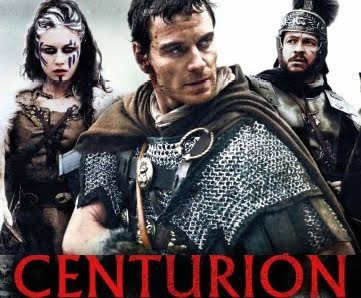
Centurion is a 2010 British action thriller war movie set in Scotland during the time of the Roman occupation of the British Isles. Rome had already conquered England and Wales and was trying hard to bring Scotland under them. The film focuses on the Ninth Legion whose fate is still unknown or unclear, giving an alternative reading to the story.

Stories have circulated about the fate of the missing Ninth Legion. Some scholars believe it happened on the main continent of Europe while fighting off a warring tribe, others that it was the Jews who routed them. But most scholars feel it may have happened on the British Isles while fighting off the Picts. The Picts were the ancient inhabitants of Scotland and were called Picti (painted people) by the Romans because they painted their faces, especially before war.

The film is from the perspective of a Roman centurion Quintas Dias (Michael Fassbender) whose garrison was ambushed and destroyed by the Pictish warriors, leaving him the sole survivor. Dias is tortured for information by Gorlacon (Ulrich Thomsen) a Pictish leader because he spoke the Pictish language.  He refuses to help them and escapes captivity seeking refuge with the Ninth Legion under General Titus Flavius Virilus (Dominic West).

Governor Agricola (Paul Freeman) wants the Ninth Legion to take some decisive action against the Picts and asks Virilus to make use of the skills of Etain (Olga Kurylenko), a Celtic Brigantian who can lead them into Pictish territory. They, however, are ambushed by the Picts. The end result – Virilus is taken captive.

The seven survivors of the ambush – Dias, Ubriculius (Liam Cunningham), Bothos (David Morrissey), Thax (J J Feild), Macros (Noel Clarke), Tarak (Riz Ahmed) and Leonidas (Dimitri Leonidas) decide to sneak into the Pictish village and rescue Virilus. What adds a trying measure of responsibility and guilt on Dias is the promise that Virilus demands of him. It is this journey, of fulfilling the promise and reaching to safety, fraught with danger and sure death that dominates the rest of film.

The film shows how the ruling faction – the Romans, is reduced to being the chased and the hunted. They are shown slowly descending into unethical behaviour just to survive, breaking whatever codes of honour they were expected to follow. Yet Dias does emerge as a throwback figure to the old order of chivalry, the ‘I give you my word’ kind of honour.

Etain on the other hand, comes across as a formidable opponent – a tracker and a hunter, she inspires fear yet plays an ambiguous role in the narrative making her a character you also sympathise with.

The Picts too have their flaws. It is in the character of Arianne (Imogen Poots) that it becomes most apparent. She is branded as a witch by Gorlacon, scarred and then made an outcast.

The film does not present one side as villains and another as the heroes but tries to present both sides as violent and sometimes, justified.

The engaging aspect of the movie is that the Picts are not projected as this barbaric tribe but given a voice to express their struggle against the foreign invaders – which is an alternative view to Roman Britain.  The general opinion projected about the Roman Empire in Britain has always been about pride in its still existing symbols like the holiday spot Bath for instance. This then highlights the resentment that probably still exists in Britain about the subjugation by the Romans.

There is much violence and gore in the film – torture scenes, decapitated heads but the spurts of blood seem more video game-like and hence not very realistic. Nevertheless, the violence is a little startling.

Centurion may have taken liberties with actual history, presenting characters that may have not actually been there during the time period of the story (Agricola). Also it may have not given much of a curve to the characters but it does seem realistic as opposed to The Last Legion which fused the Arthurian legend into the fate of the Ninth Legion making it supernatural and a tad bit unbelievable.


Shirley Valentine (1989) #SherylPuthur

f4ac6f53335a57a55e22ffc8482e9d03

Directed By: Lewis Gilbert

Written By: Willy Russell

Cast:

Pauline Collins – Shirley Valentine-Bradshaw

Tom Conti – Costas Dimitriades

Julia McKenzie – Gillian

Alison Steadman – Jane

Joanna Lumley – Marjorie Majors

Sylvia Syms – Headmistress

Bernard Hill – Joe Bradshaw

Tracie Bennett – Millandra Bradshaw

Gareth Jefferson – Brian Bradshaw

Gillian Kearney – young Shirley

Catherine Duncan – young Marjorie

Language: English                                   Genre: Romantic-Comedy; Drama


The interesting thing about Shirley Valentine is that it overturns the stock terms used to describe the genre and theme of the film – romantic comedy about a bored housewife who goes on a holiday to Greece and rediscovers herself; love and life. This description would be too simplistic.

The romance in this film isn’t about Shirley (Pauline Collins) being enamoured by the Greek bar owner Costas (Tom Conti) who helps her rediscover pleasure but it goes back to a far older and poetic meaning of romance or otherwise known as romanticism.

The Illustrated Dictionary of Essential Knowledge defines romanticism by saying it “stressed the value of personal emotion and imagination and freedom from the strict rules of form…” (72). It also laid emphasis on man’s, “innate powers of creativity, his spontaneity and his relationship with the natural world” (145).

When looked at from this lens, the film isn’t about a bored housewife (two words that carry its fair share of connotations) but about a woman who has given up on herself. Shirley is someone who has judged herself to be irrelevant or just a fixture in the house because she is in her eyes, a failure.

Her days are spent talking to the kitchen wall or ‘The Wall’ because there is no one else she can confide in. Making her husband Joe’s (Bernard Hill) routine dishes for tea is the other exciting diversion of her life.

The older Shirley also carries baggage from her high school days of not measuring up to the exacting standards of the headmistress (Sylvia Syms) who believed that the young Shirley (Gillian Kearney) was incapable of amounting to anything.  She felt unfairly compared to the school’s ‘perfect girl’ Marjorie Majors (Catherine Duncan).

However, a chance meeting with an older Marjorie Majors (Joanna Lumley) makes her realise that she does not the live the glamorous life Shirley assumed she would. And when Marjorie confesses that she envied her at school, it comes as a surprise to Shirley that a nonentity like her could be envied.  One realises that people love making assumptions about themselves, situations and others so the first step to rediscovery comes from breaking them.

The film shows that while visiting an exotic location for a holiday may be romantic, living there day-in and day-out takes some of the romance away. But the point of Shirley staying at Greece was not about an exotic experience alone but as a new take on life.  So doing even mundane activities like talking to ‘the wall’ or making chip and eggs for ‘unwilling to experiment’ British tourists are still charming.

A scene that was both hilarious and warm was when Joe begins talking to the wall. You notice a man who was once willing to experiment but responsibilities made him choose stability instead. Now when external circumstances force him to reconsider, it is with a sudden awareness that he is actually lonely and has been so for so long. So he converses with the wall to retain a connection with Shirley.

The reactions of her children add to the drama of the narrative but what takes it forward is her self-righteous neighbour Gillian’s (Julia McKenzie) open-hearted support of Shirley’s decision to take her life in her hands. It is moving to see the honest appreciation and the vicarious longing behind her action of gifting a silk robe.

By turns droll and stirring, the film is an honest and ordinary woman’s decision to fall in love with life. Not as a mother, or a wife or a lover but as Shirley Valentine. It falls within that special bracket of films about women who strike out on their own, either by choice or circumstance such as English Vinglish, Queen, Under the Tuscan Sun – to accept the changes in themselves; without guilt.

Special mention: the script – unemotional, funny yet warm it conveys a woman’s journey without the usual clichés of travel romances.

Me Without You (2001) #SherylPuthur

me-without-you michelle anna

Directed By: Sandra Goldbacher

Written By: Sandra Goldbacher; Laurence Coriat

Cast:

Anna Friel – Marina

Michelle Williams – Holly

Oliver Milburn – Nat

Kyle MacLachlan – Daniel

Trudie Styler – Linda

Allan Corduner – Max

Marianne Denicourt – Isabel

Deborah Findlay – Judith

Nicky Henson – Ray

Adrian Lukis – Leo Muller

Language: English                                                          Genre: Romance-Drama

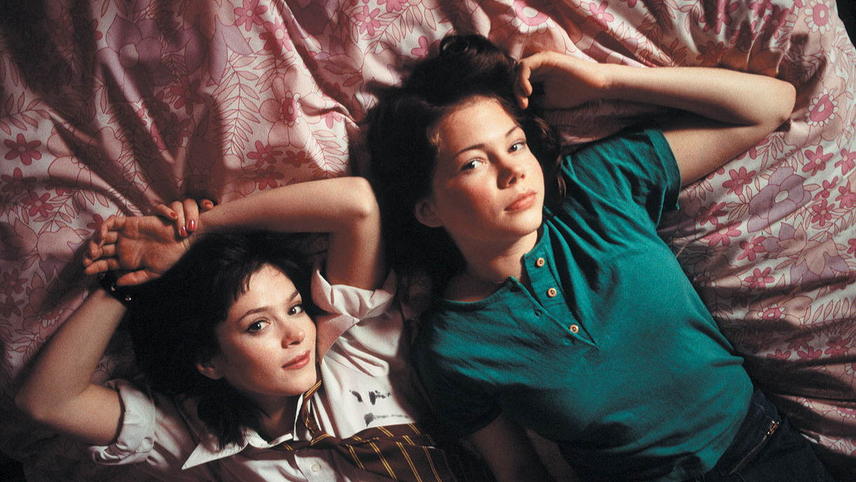
Me Without You is a poignant film about the toxicity of long friendships. It follows the friendship of Holly (Michelle Williams) and Marina (Anna Friel) from 1973 when they are 12 years old to 1978; 1982; 1989; 2001 – each time period marking an important curve to their relationship.

Marina and Holly each have something the other desires. They are not happy with their lives and want the other’s life. This discontent grows as they grow. Marina feels unloved because her parents are separated and seem particularly self-involved. Holly’s family is Jewish. Her mother is both overprotective and seems to highlight Holly’s insecurity about her appearance. Marina wants stability and Holly wants to be as beautiful and carefree as Marina.

When they are kids, their ‘admiration’ for each other’s life does not get out of hand. But with the passing of years they realise the truth of the circumstances around them and find they cannot hold on to childish fantasies anymore. It is then that their jealousy becomes obvious.

For Marina, her looks and outgoing personality becomes the superior ‘skill’ she can lord over Holly. But when ‘mousy’ Holly manages to attract the attention of Nat (Oliver Milburn), Marina’s brother, at a drugs and music party his girlfriend organises, Marina is unable to deal with it. She instinctively realises that they will probably be great for each other even though at that point Nat wouldn’t date her since he was with someone else but just maybe later. This is the point when the poison seeps in and there is no more childlike excitement at being ‘Harina’ – Holly+Marina.

However, there is an awareness that they need the other, so no one overtly rocks the boat but covertly they try to undermine the other. For instance, when they are studying at university Holly finds herself attracted to her professor Daniel (Kyle MacLachlan). Marina finds him silly but later makes it a point to seduce him and it is as though she wants to hit out at Holly. When this incident nearly escalates into a full-fledged fight, Marina instead of letting it damage their friendship deflects it by damaging the fledgling relationship Holly and Nat develop after he returns from his French sojourn.

Holly and Marina are frequently referred to as being each others’ mothers, Siamese twins, a married couple – hinting at their cloying proximity. A proximity, that is rather desperately maintained but has no real engagement.

A pivotal scene in the film, which marks Holly’s growing frustration at Marina’s controlling behaviour, and yet fear against openly voicing it out is when she mentions being puzzled at Marina’s decision to become Jewish after marriage since her fiancée is Jewish. Marina’s retort – “Why shouldn’t I be Jewish? Huh? It gives me a sense of identity” and Holly’s response in an undertone, “Really? Whose identity?” underscores what has happened to them.

In an unequal relationship, one will play the role of the manipulator and the other the victim. The victim will eventually either lash out or accept the victimisation and grow to use it as a cloak to garner sympathy resulting in possibly an even more warped personality. What would be healthier would be to claim individuality and strike out alone. However, it is hard when that said relationship is with your closest friend.

Me Without You isn’t saying that female friendships are warped or that the idea of childhood friends sticking together in a healthy manner is a fairytale but that true growth can only happen with some distance from those who know you too well. The truth is, they know only one aspect of you and would find it strange if you became something else. But moving away, isn’t to destroy an older relationship but to discover yourself in newer relationships.

Maybe why female friendships are more prone to manipulation has probably to do with female socialisation. Boys are socialised to ‘let out’ their frustrations especially with each other so they get into physical brawls when there is a tense moment. But girls are told to ‘rein in’ their emotions and hence let it fester.

I found this an incredibly moving and beautifully shot film because of the rounded characterisation, the chemistry between the lead characters and how the narrative keeps you hooked without being soppy. Also, the ending I find is interestingly open-ended.

Chocolat (2000) #SherylPuthur

chocolat

Directed By: Lasse Hallstrom

Written By: Joanne Harris; Robert Nelson Jacobs

Cast:

Juliette Binoche – Vianne Rocher

Victorie Thivisol – Anouk Rocher

Alfred Molina – Comte de Reynaud

Judi Dench – Armande Voizin

Hugh O’Conor – Pere Henri

Lena Olin – Josephine Muscat

Peter Stormare – Serge Muscat

Johnny Depp – Roux “river-rat”

Language: English                                                          Genre: Romance-Drama

Chocolat opens with a beguiling fog that slowly reveals a quaint French village atop a hill, surrounded by walls, looking much like fort. The fog seems reminiscent of the steam that surrounds a vessel on the stove, which you brush aside to continue with your creation. What you discover is that food, in every manifestation (even metaphorical), is present in the film. Food and its close associate denial.

Set fifteen years after the Second World War when the world was recovering, yet hadn’t quite found its joie de vivre, the story follows a young chocolatier and her daughter who arrive in this village that is beginning its Lenten period of fast and abstinence. It is a village that believes in tranquillity and Vianne (Juliette Binoche) and Anouk (Victorie Thivisol) destroy it by being different.

The Mayor of the village Comte Reynaud (Alfred Molina) both practises and enforces moral austerity on the people. Vianne’s open flouting of the Lenten rules by opening a chocolaterie, not attending mass and flaunting her unwed mother status, leads him to a covert operation of ostracising her from the community.

He exercises ideological control over the villagers by editing the Lenten sermons of the village priest Pere Henri (Hugh O’Conor). It would be folly to see him as a cardboard villain because the irony is that he believes that he is justified and doing it for the good of the people. He is also quite the gentleman and is actually shocked at the seamier side to people’s lives such as when he finds out that Josephine (Lena Olin) is actually being beaten by her husband Serge (Peter Stormare) and hence left him.

The film thus critiques the practise of being morally right and quick harsh judgement. It also presents how society ensures that people follow the norms laid out by inflicting mental harassment. In this it deviates harshly from true Christian principles of accepting everyone, of not creating hierarchies of morality and of community welfare. It thus makes religion un-enjoyable.

Religion is about joy but people are quick to assume that flagellation of the self will make one superior. One can notice that those who do this – remaining austere by force have no joy and are actually grappling with dark emotions. It seems dark all the more because they are unable to forgive themselves for possessing it.

The confessional then becomes an important motif in the film; some being forced to enter it on the assumption that by just going through the motions of it, it will result in miraculous effects. But most villagers congregate there to confess that they felt pleasure.

Pleasure is given a lot of bad press but there is nothing wrong with feeling pleasure. Eating good food, living life on your terms does not make one a sinful hedonist. (If you want to get a glimpse of hedonism, watch The Libertine – it documents the life of the Second Earl of Rochester). For some reason, people correlate more misery with better chances of going to heaven. This is why Pere Henri’s Easter sermon about the humanity of Jesus Christ as opposed to his divinity makes sense. He lived, ate, drank, had friends, yet people brush that aside and focus only on the forty days of fast and the agony on the cross.

So my take back from the film would be this quote – “We can’t go around measuring our goodness by what we don’t do, by what we deny ourselves, what we resist and who we exclude. I think we’ve got to measure goodness, by what we embrace, what we create and who we include.”

After all, once you understand and respect pleasure, you can be forgiving and open-minded. Pleasure, correctly understood, is liberating.

Thank You for Smoking (2005) #SherylPuthur

Thank-You-For-Smoking-thank-you-for-smoking-547315_1024_768

Directed By: Jason Reitman

Written By: Christopher Buckley

Cast:

Aaron Eckhart – Nick Naylor

Cameron Bright – Joey Naylor

Katie Holmes – Heather Holloway

Maria Bello – Polly Bailey

David Koechner – Bobby Jay Bliss

William H. Macy – Senator Ortolan Finistirre

Robert Duvall – Captain; Founder of The Academy of Tobacco Studies

K. Simmons – “B.R” Nick’s boss

Language: English                                                           Genre: Comedy-Drama

Thank You for Smoking is an adaptation of a novel of the same name. And as its name indicates it is satirical and has a lot to say about smoking.

Nick Naylor (Aaron Eckhart) is a lobbyist and the Vice-President of The Academy of Tobacco Studies. In his official position, he defends tobacco from its negative publicity by arguing cleverly. As he tells his young son Joey Naylor (Cameron Bright), that if you argue correctly, you are never wrong – after all, the irony of the Nobel peace prize is that no one remembers him as the inventor of the dynamite but as the one who instituted this prestigious award.

This takes him through buy-out deals with people whose negative experiences with smoking could harm the stance of his company – tobacco smoking has benefits. It also puts him on the hit list of the anti-smoking campaign Senator Ortolan Finistirre (William H. Macy), who is excessively righteous and believes smoking is a moral problem.

To protect tobacco, Nick Naylor is thrust in the direction of smart advertising by wanting prominent movie stars to smoke after a lovemaking scene to show that smoking is cool. Interestingly, the movie producer’s office is called Entertainment Global Office or EGO. There are quite a few puns strewn in the film like the fact that his son studies in St. Euthanasius School – reminding or ironically presenting the idea of ‘voluntary death’ – a critique of smoking.

What’s really exciting about the film is the various moral questions it throws up. The whole idea of moral judgement – who gets to decide what will be the standard followed and the punishment for deviation. How far would you go to make things right? Would you tamper with existing facts and rewrite history? And, is it right to go overboard and decide what is good for everyone?

It also brings up the paradox of choice – what if circumstances give you limited options and there is a strong moral bias against one option – what will you choose? Also, with advertising trying to make everything desirable, are you really choosing or have you been told you NEED this?

Thank You for Smoking is the other side of the story – it is the story of the hated, the despised and the suspected. Eckhart’s character is someone who is detached from the machinations of society despite his deprecating statements to Heather Holloway (Katie Holmes) about everything being about the mortgage. He believes that his calling is to speak for the truly downtrodden – tobacco. What is refreshing about the film is that it doesn’t give you a run of the mill resolution, last minute changing of spots. It is realistic, quirky and satirical. And yes, certainly a little preachy but it expects you to think.

Inglourious Basterds (2009) #SherylPuthur

Inglourious_Basterds_red_drawing

Directed By: Quentin Tarantino

Written By: Quentin Tarantino

Cast:

Brad Pitt – Lt Aldo Raine

Christoph Waltz – SD Standartenführer Hans Landa

Diane Kruger – Bridget von Hammersmark

Michael Fassbender – Lieutenant Archie Hicox

Daniel Brühl – Private First Class Fredrick Zoller

Eli Roth – Sergeant Donny “The Bear Jew” Donowitz

Til Schweiger – Sergeant Hugo Stiglitz

Julie Dreyfus – Francesca Mondino

August Diehl – Major Dieter Hellstrom

Mélanie Laurent – Shosanna Dreyfus

Sylvester Groth – Joseph Goebbels

Language: English                                                 Genre: War; Thriller; Drama


Tarantino’s Inglourious Basterds takes liberties with spellings and with history. Yet, does it in such a convincing manner that you need to rack your brains to remember things did not pan out exactly that way. It doesn’t help that Tarantino also produced a related black and white film that is at the centre of this film.

The film follows a chapter-wise narrative similar to that in Kill Bill. It depicts the violence that characterised the Nazi regime and the kind of witch hunt that ensued to eliminate the Jews. The menace of the SS is personified in the character of Hans Landa (Chirstoph Waltz). What makes him most frightening, is his polished demeanour and his amoral sociopathic tendencies.

It goes to prove that the truly terrible aspect of any ideology-regime that functions on torture is that the people who might be its most feared supporters (for their immense capacity for brutality) might not actually believe the ideology, but use the regime as a space to let loose their violent impulses.

However, the film also talks of the counter violence that could have and did occur. The group that was central to it were dubbed the Basterds. They comprised of Jews avenging crimes against their people. They were led by Lt. Aldo Raine (Brad Pitt) an American soldier of Apache Indian origin, who wanted his men to get him a ‘100 Nazi scalps’. Having scalps is a sign of bravery and also honour in the Native American culture. Nevertheless, it is a symbol of violence.

There is an important reference to rats in the film. Rats are important because on a ship when they start running away it means the ship is going to sink. Also rats scurry and hide so that they are not found out and killed. You realise when you watch the movie that there is a very thin line separating the rat from the righteous human who wants to kill it. For a time could come, when you could be considered a rat by someone else because of some preferences you have.

Tarantino as always presents violence with comic-horror. It takes away your revulsion for the violence or if not that, numbs you to the brutality on display – following a very Kubrick tradition. However, more than the violence on either side, it is that Tarantino presents the idea of history as a construct. The idea that history is written by the winner is known. Much of the history that we study has that bias. But how about reinterpreting history to serve some purpose?

Governments have done and still do modify history to present a better version of their country or the political parties they represent. This is dangerous because the children who learn this grow up with a skewed sense of the past and hence become easy targets of brainwashing.

Inglourious Basterds throws up a debate on history and how it is a construct, how far ideologies are truly followed and how the metaphor of the rat plays out from the first chapter to the last.

Beginners (2010) #SherylPuthur

Beginners

Directed By: Mike Mills

Written By: Mike Mills

Cast:

Ewan McGregor – Oliver Fields

Christopher Plummer – Hal Fields

Melanie Laurent – Anna Wallace

Goran Visnjic – Andy

Mary Page Keller – Georgia Fields

Kai Lennox – Eliot

China Shavers – Shauna

Cosmo – Arthur

Language: English              Genre: Romance; Slice of life; Comedy

Oliver Fields (Ewan McGregor) plays it safe as far as relationships go because he felt his parents’ marriage was dead (just like how his mother used to make him play dead as realistically as possible). But after becoming a widower, when his father Hal (Christopher Plummer) reveals that he is gay; things change. Hal is terminally ill, but gets himself a boyfriend Andy (Goran Visnjic) by advertising and joins various associations/ groups including a gay pride group.

The film goes back and forth in time and constantly compares life in the 1950s with the 2000s. Sort of like if life was a little strict then, people still tried because there were gay prides marches even then. However, now people have the freedom to love and yet they seem to be using this luxury to express a “sadness that our parents didn’t have time for”.

It explores the relationship between Oliver and Hal – who get closer with the honesty that characterises their new relationship; Hal and Andy – Andy who prefers older men after his father rejected him for being gay. Oliver and Anna (Melanie Laurent), a French actress he meets in a party and falls in love with. They realise they are similar in many ways including their fear of commitment.

It also explores the relationship that Oliver shares with Arthur (Cosmos), his Jack Russell – with whom he actually communicates. And how everyone, including Arthur, wants stability and commitment because Arthur keeps checking the status of Oliver’s relationship with Anna – ‘are we married yet?’

Even Oliver’s relationship with his mother Georgia (Mary Page Keller) is insightful. One can understand Oliver better because you realise both parents have had a hand in making him the person he is. They are both artistically inclined so he is a graphic artist. Oliver seems shy and introverted but he has a dramatic side to him that comes from his mother. Interestingly, both parents show this need to ‘come out’ and be honest. If Hal felt he had to be more than theoretically gay, Georgia felt she needed to be part of a grand narrative. Yet they are stifled by societal demands. Like Georgia who gets politely asked to leave the museum because of her socially unacceptable dramatic behaviour.

Hal tries to live as much as possible and tries to keep learning. Whereas Oliver tries to live vicariously by watching other lives or by trying to be part of something bigger, by writing graffiti that proclaim historical consciousness. So Oliver wants a grand story but settles for subversive ways of expressing it. It is probably about how he tries to bridge the gap between his realism and his desires – creating a meeting point between his parents’ personal ideologies.

The title is interesting because we are all beginners in love and we come armed with preconceived notions that do not necessarily turn out to be true. Also, we never see the title of the movie till the end of the film.

Highlights of the film for me, Christopher Plummer – there isn’t any self-consciousness or a half-joking approach in his portrayal of Hal Fields. He went on to receive the Oscar for Best Supporting Actor for this role. The relationship between Oliver and Arthur is also truly adorable because Oliver treats him as a thinking entity.

The film is based on the true story of director Mike Mills’ father who came out of the closet after the death of his wife. It is a sensitively handled story of something that is deeply personal. A special mention, the cinematography – it has a staccato quality that does not jar and melds so beautifully with the narrative.